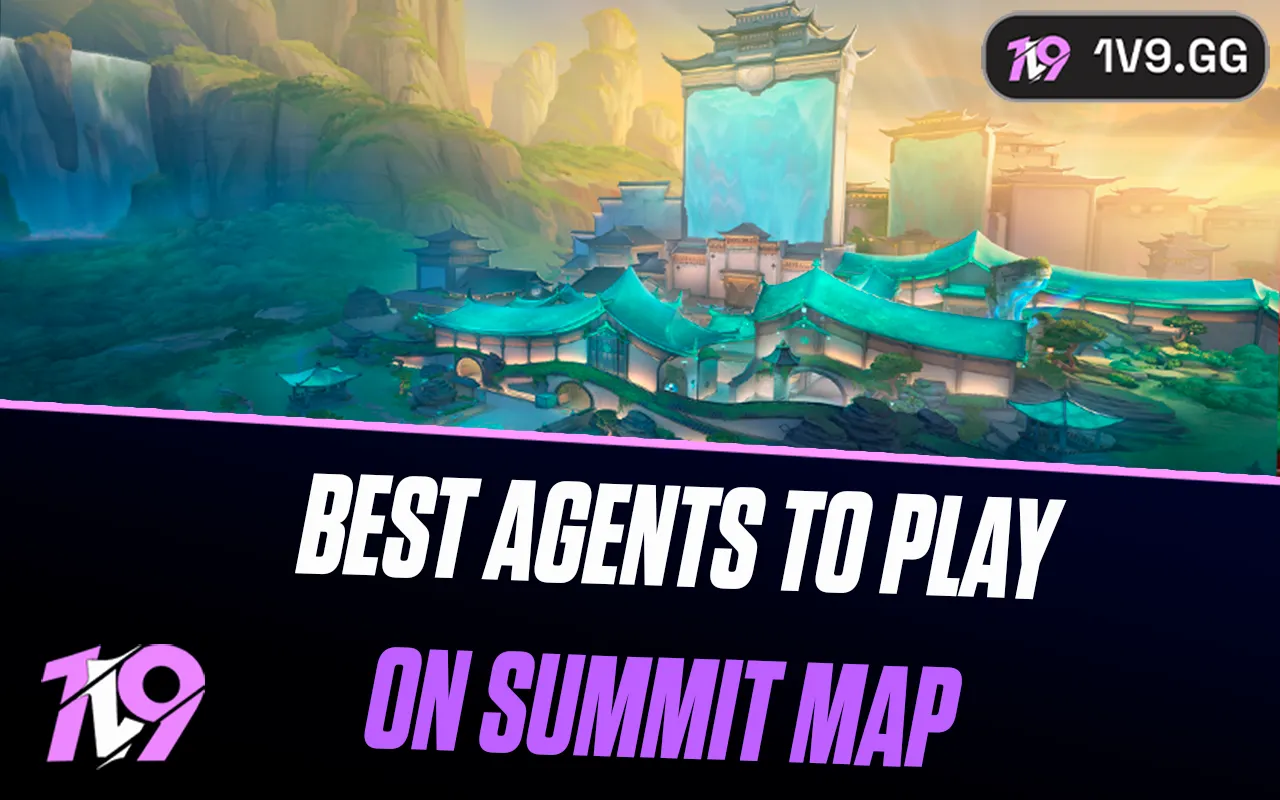


10 Best Agents to Play on Summit in VALORANT
Omen, Fade, Sage, Neon, and Cypher form our most dependable Summit lineup in VALORANT Patch 13.05. Omen supplies repeatable cover, Fade clears compressed spaces, Sage controls a route, Neon turns early information into space, and Cypher watches the gaps created by a three-lane map. Raze, Sova, Miks, Clove, and Chamber are strong alternatives when they better fit your team or your own practiced Agent pool.
Last verified:
Best VALORANT Agents for Summit at a glance
| Rank | Agent | Role | Best contribution on Summit | Main limitation |
|---|---|---|---|---|
| 1 | Omen | Controller | Flexible, rechargeable cover plus a wall-piercing setup tool | Badly timed teleports and smokes can isolate the entry |
| 2 | Fade | Initiator | Fast information and close-space clearing for executes and retakes | Predictable Haunts are easy to break |
| 3 | Sage | Sentinel | Route denial, plant cover, slows, healing, and recovery value | Provides no passive flank alarm |
| 4 | Neon | Duelist | Early lane pressure and quick rotations across the three-lane layout | Needs utility and trading distance behind her |
| 5 | Cypher | Sentinel | Flank information and persistent surveillance across split routes | Repeated setups become readable and breakable |
| 6 | Raze | Duelist | Corner clearing and explosive entry through tight approaches | Longer sightlines can punish an unsupported launch |
| 7 | Sova | Initiator | Long-lane scouting and safe utility conversion | Covered areas reduce simple scan coverage |
| 8 | Miks | Controller | Planned map-targeted cover plus team-focused stim, heal, or concuss utility | Gets less value from a team that will not coordinate targets and tempo |
| 9 | Clove | Controller | Aggressive smoke support and nearby post-death cover | Short post-death smoke duration and limited cast radius constrain rotations |
| 10 | Chamber | Sentinel | Opening picks and a basic flank alarm on prepared sightlines | Offers less route control than a utility-first Sentinel |
This is an editorial ranking for normal Competitive and Premier play, not a permanent statistical law. The current-pool context and Agent kits were checked in Patch 13.05, but the order still depends on rank, platform, composition, and player comfort. A practiced Sova is more useful than a first-time Fade chosen only because a table put her higher.
How we evaluated Summit picks
Summit rewards a lineup that can answer four problems: it must learn where defenders are, cross or deny exposed lanes, control a changing route, and still retake when the first plan fails. We ranked Agents on six factors:
- Reliable information: utility that clears angles or confirms a lane without donating the first death.
- Repeatable cover: smokes or screens that can support both the first contact and a late-round rotation.
- Space creation: entry tools that let teammates follow and trade, rather than movement used in isolation.
- Route control: traps, slows, or walls that make a three-lane attack easier to read.
- Retake value: utility that remains useful after a site is lost.
- Ranked practicality: a clear job that works without a full professional playbook.
We did not sort the list from one public win-rate snapshot. Low-pick-rate Agents can lead a small sample because specialists choose them, while a popular pick can look weaker because a much broader player pool uses it. Map fit and execution explain more than an isolated percentage.
Why these ten Agents work on Summit
1. Omen: the safest all-round Controller
Omen gives Summit a flexible baseline. Dark Cover can block the sightlines that matter for the current route, then recharge for a late execute or retake. Paranoia travels through geometry, so a teammate can follow it through a narrow approach instead of dry-peeking several defenders. Shrouded Step adds access to off-angles, but it is most useful as a deliberate reposition—not a coin-flip teleport into site.
His limitation is coordination. A smoke that hides the defender you wanted to pressure, or a Paranoia thrown before the Duelist is ready, can help the other team. Name the covered angle and the entry timing before committing.
2. Fade: fast information in compressed spaces
Fade turns Summit's pockets and bends into a shorter checklist. Haunt can reveal exposed defenders, Prowlers force a close holder to shoot or move, and Seize can keep a displaced player inside damaging utility. Nightfall is useful for a committed execute or retake because it can deny clear sound cues while your team closes distance.
Do not throw the same Haunt every round. A scan destroyed before it sees anyone is only a brief sound cue. Change height, timing, and the teammate whose utility follows it.
3. Sage: route control with immediate team value
Barrier Orb can protect a plant, create a temporary safe pocket, or force attackers to spend time and ammunition on one approach. Slow Orb is the lower-risk tool: use it after contact to delay the choke while the other defender rotates. Healing Orb and Resurrection keep Sage relevant even when the wall is not the center of the round.
Sage cannot alert you to a silent flank after she leaves. If she is the only Sentinel, assign a player or another piece of utility to cover the route her wall does not watch.
4. Neon: turns information into early space
Neon's speed matters on a three-lane map because she can contest a key junction early and rotate before a slower Duelist. Relay Bolt helps break a prepared angle, while Fast Lane gives the entry a path through exposed space. The value comes from creating a tradeable route for the team, not simply arriving first.
Patch changes can move Neon's risk quickly, so treat her placement as current to Patch 13.05. If your team cannot flash, scan, or trade behind her, Raze may provide more self-contained clearing.
5. Cypher: persistent information across split routes
Cypher reduces the number of paths your team must watch with a player. Trapwire can protect an attack flank or help a defender distinguish a commitment from a fake; Spycam checks a lane from relative safety; Cyber Cage buys a short reposition or pairs with a triggered wire. Neural Theft is strongest when the team is ready to use the reveal immediately.
Avoid depending on one viral setup. Opponents can prefire visible cameras and clear familiar wires. Rotate placements and keep at least one setup that prioritizes reliable information over a highlight kill.
6. Raze: the direct corner-clearing alternative
Paint Shells and Boom Bot make Raze a practical answer to tight pockets where a rifle clear would expose the entry to several angles. Blast Pack then converts that cleared space into a fast site take. She also pairs naturally with Fade's Seize or revealed targets.
Her entry becomes fragile across a long sightline. Clear the landing area first and make sure the second player is close enough to trade. An unsupported double satchel is movement, not space creation.
7. Sova: methodical lane scouting
Sova favors teams that want to take Summit in stages. Recon Bolt can contest a broad area, Owl Drone clears the first dangerous layer without risking a rifle, and Shock Bolt punishes a known plant or defuse position. Hunter's Fury converts information across geometry and can interrupt objective play.
Covered spaces and quick turns mean one easy Recon lineup rarely clears everything. Learn a small set of darts with distinct jobs—early lane information, site execute, and retake—rather than collecting lineups with no round plan.
8. Miks: coordinated tempo and map-targeted cover
Miks is a genuine current option the old article omitted. Waveform uses a map targeter to place smokes, while Harmonize can apply Combat Stim to Miks and an ally. M-pulse can be toggled between concussing enemies and healing allies, giving a coordinated pair a way to take or stabilize an important fight. Bassquake can disrupt players along a committed path.
That value requires a shared timing. If teammates take unrelated fights, the paired stim and choice between healing and concussing lose clarity. Pick Miks when somebody will play around the support window, not just because he is the newest Controller.
9. Clove: aggressive ranked cover
Clove suits a player who wants to smoke and fight near the team. Ruse handles the essential angles; Meddle helps punish opponents packed into a choke; Pick-Me-Up rewards a converted engagement. Clove can still place nearby smokes after dying, which can rescue an execute or retake.
Since Patch 12.05, a Ruse placed while dead lasts only six seconds, and the cast radius means Clove must die near the relevant area to keep helping. Do not treat post-death cover as a substitute for surviving the first contact.
10. Chamber: a precision specialist, not full site control
Chamber earns a place when a player can convert Summit's longer angles into an opening pick. Rendezvous gives that first duel an escape plan, Trademark provides limited flank information, and Tour De Force can lock a lane during a low-economy round.
He does not replace the delay and multi-route information of a utility-first Sentinel. If Chamber is the only flank watch, place Trademark for the team's need rather than as insurance for one personal angle.
A balanced Summit team comp
| Slot | Baseline pick | Round job | Useful alternative |
|---|---|---|---|
| Controller | Omen | Cover the execute, flash a choke, preserve a smoke for the late round | Miks for a coordinated pair; Clove for aggressive ranked play |
| Initiator | Fade | Clear close layers and identify the site setup | Sova for more methodical scouting |
| Duelist | Neon | Take first space and pull the trade line forward | Raze for direct corner clearing |
| Sentinel | Sage | Delay or reshape one contested route | Chamber if opening-pick pressure is the plan |
| Information Sentinel | Cypher | Watch the flank and make rotations easier to read | A second Initiator when the team can watch flanks manually |
The baseline uses two Sentinels because Sage and Cypher solve different problems: one changes the immediate route, while the other reports movement elsewhere. If your group wants faster executes, replace Sage with Raze or Sova. Do not remove the only Controller or the only dependable information tool just to fit a third Duelist.
How to use the comp on attack and defense
Attack: earn one lane before committing
- Use Cypher to protect the flank so five players do not keep turning around.
- Contest one important lane with Fade or Sova utility; do not spend every reveal at the barrier.
- Let Omen cover the crossfire only when Neon or Raze is ready to move.
- Use Sage's wall for a clear purpose: a plant, a safe pocket, or a blocked retake path.
- Keep one rechargeable or late-round tool for the rotation after a droppable wall changes the route.
Defense: collect information before rotating
Summit's three lanes punish an automatic five-second rotation. Let a wire, camera, reveal, or second contact confirm the attack. Sage can slow the first choke while Omen preserves cover for the retake; Neon can rotate quickly once the read is real. If the attackers repeatedly break the same Sentinel utility, move it or use that destruction as the signal for an aggressive crossfire elsewhere.
Which Summit Agent should you choose in solo queue?
Start with the role your team is missing, then choose the Agent you can execute without a rehearsed script:
- No Controller: Omen is the most flexible default. Choose Clove if you reliably play near the team; choose Miks if another player agrees to use the paired tempo utility.
- No information: Fade provides a straightforward clear-and-follow pattern. Sova is better if you already know functional scouting paths.
- No entry: Neon covers distance quickly; Raze is easier to justify when the problem is clearing a tight pocket.
- No flank control: Cypher creates the clearest alarm. Sage controls space but cannot silently watch the opposite lane.
If the map is not the only factor, compare the broader ranked solo-queue Agent guide. You can also review every current Controller and every current Sentinel before committing to a new role.
Frequently asked questions
Who is the best Agent on Summit?
Omen is our safest overall recommendation in Patch 13.05 because his cover can support an initial fight and recharge for a later route, while Paranoia and Shrouded Step add setup and repositioning. That is an editorial pick, not a guaranteed best choice for every team.
Who is the best Duelist on Summit?
Neon is the best fit for a team that will trade her early space. Raze is the stronger alternative when compact corners and site pockets are the main problem. Player comfort and the supporting Initiator matter more than the one-place gap between them.
Who is the best Sentinel on Summit?
Sage offers the strongest direct route control, while Cypher offers the best persistent flank information. Running both is reasonable; if you choose only one, decide whether your composition is missing delay or information.
Is Summit in the VALORANT Competitive map pool?
Yes. Summit remained in the Competitive and Deathmatch rotation after Patch 13.04, when Riot put Abyss in and took Breeze out. See the complete current map directory for the full pool and mode distinctions.
Should you change the minimap for Summit?
You should be able to see enough of all three lanes to read teammate contact and Sentinel alerts. Start with the baseline in our VALORANT minimap settings guide, then adjust size and zoom for your display rather than copying a value blindly.
Where can I compare picks for other maps?
Use the best Agent for every VALORANT map guide. It separates the active Competitive pool from maps that remain available in other modes.
Update log
- Rebuilt for Patch 13.05; added Miks, current map-pool status, the evaluation rubric, a complete composition, swap rules, and attack and defense plans.
- Summit released with Patch 13.00.
Riot's official patch notes are the final authority for live changes. If the in-client pool differs from this dated snapshot, follow the client and check the newest notes.
Posted On: July 28th, 2026
Recent Articles


Our 1v9 support team is available 24/7 to help you with any questions or issues you may have.
support@1v9.gg

-a6d5b3e156bb.webp)





Loading...
1v9.gg is not endorsed or affiliated by any game developers or publishers.
2026 1v9, All Rights Reserved, Created By Ritesh (riteshsahoo.com)