


What Ranks Can Play Together in Valorant? (2026)
Valorant makes it easy to jump into matches with friends, but ranked play comes with specific rules about which ranks are allowed to queue together. If you’re planning to grind competitive games with people you know, understanding these limits is important so you don’t run into restrictions or wasted queue time. Ranked matchmaking in Valorant is built around rank rating and competitive balance, which means Riot Games places clear boundaries on how far apart players’ ranks can be when teaming up. In this guide, we’ll break down exactly which ranks can play together in 2026, how rank differences affect matchmaking, and what you need to know before queueing ranked with friends.
Valorant Ranks and the Ranking System Explained
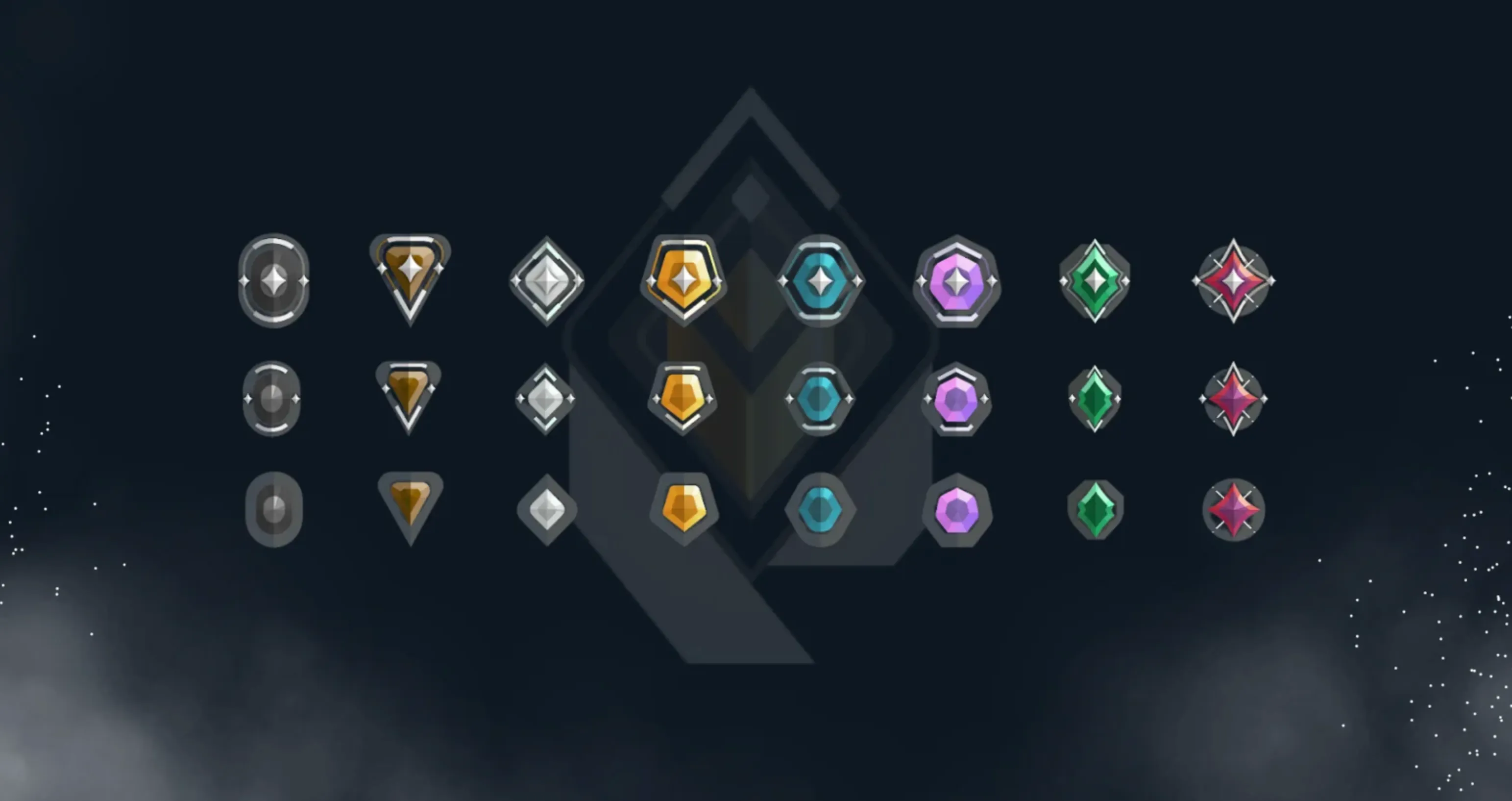
In Valorant, the competitive ladder is made up of 25 total ranks, organized across nine main tiers. The climb starts at Iron, which is split into Iron 1, Iron 2, and Iron 3, followed by Bronze, Silver, and Gold, each also divided into three levels. After Gold, the skill gap becomes much steeper with Platinum, Diamond, Ascendant, and Immortal, all of which still use the 1–3 tier structure. At the very top sits Radiant, the highest rank in the game, which has no subdivisions and is limited to a tiny fraction of the player base, roughly the top 0.05% in each region. Progression through these ranks is handled using Rank Rating, commonly called RR. Players generally start a rank tier at around 50 RR and need to reach 100 RR to move up to the next division, with each win or loss adjusting that number. While most ranks follow this standard system, Immortal and Radiant work differently, as progression there depends on surpassing 100 RR and competing within the regional leaderboard, which is reserved for the very best players.
Rank Restrictions for Playing Together in Valorant
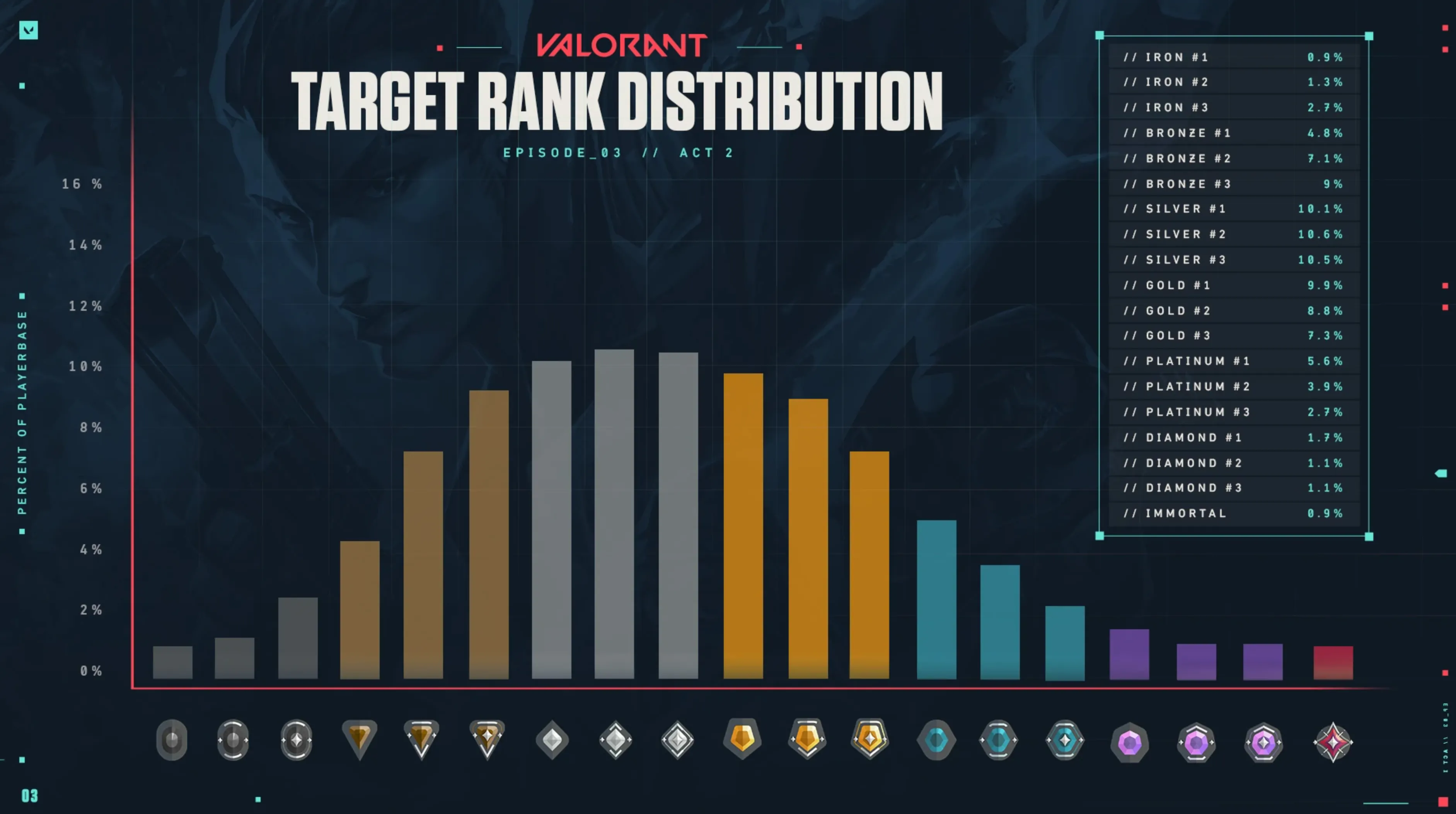
Ranked matchmaking in Valorant follows strict rules to keep competitive games fair and balanced. The ranked ladder is built around nine core ranks: Iron, Bronze, Silver, Gold, Platinum, Diamond, Ascendant, Immortal, and Radiant. With the exception of Radiant, every rank is divided into three tiers, which helps represent gradual skill progression within the same rank group. When queueing for ranked games with others, players must fall within specific rank boundaries set by Riot Games. These restrictions determine who can play together and prevent large skill gaps within a single team, ensuring matches remain competitive and enjoyable for everyone involved.
What Valorant Ranks Can You Team Up With?
In Valorant, who you can queue with in ranked depends heavily on your rank and the size of your party. Riot allows flexibility, but it’s balanced with rules to prevent extreme skill gaps from ruining competitive matches. The most flexible option is a five-stack, where a full team of five players can queue together regardless of rank differences. That said, mixed-rank five stacks come with trade-offs: queue times are usually longer, matchmaking tries harder to find equally balanced opponents, and lower-ranked players may gain less RR from wins.
Four-player stacks are no longer allowed in ranked. Riot removed this option because it consistently created unfair situations, where a solo player would be matched with a coordinated group of four, often leading to poor match quality and frustration. Smaller parties, such as duos or trios, are still allowed but follow stricter rank limits. Players in Iron or Bronze can queue with teammates up to Silver, while Gold players can group with others up to Platinum. As ranks climb higher, the restrictions tighten, meaning Diamond, Ascendant, Immortal, and Radiant players must be much closer in rank to play together. In short, the higher you climb, the more important it becomes that your teammates are near your skill level, while lower ranks have more flexibility when forming ranked groups.
Playing With a Full Five-Stack Team in Valorant
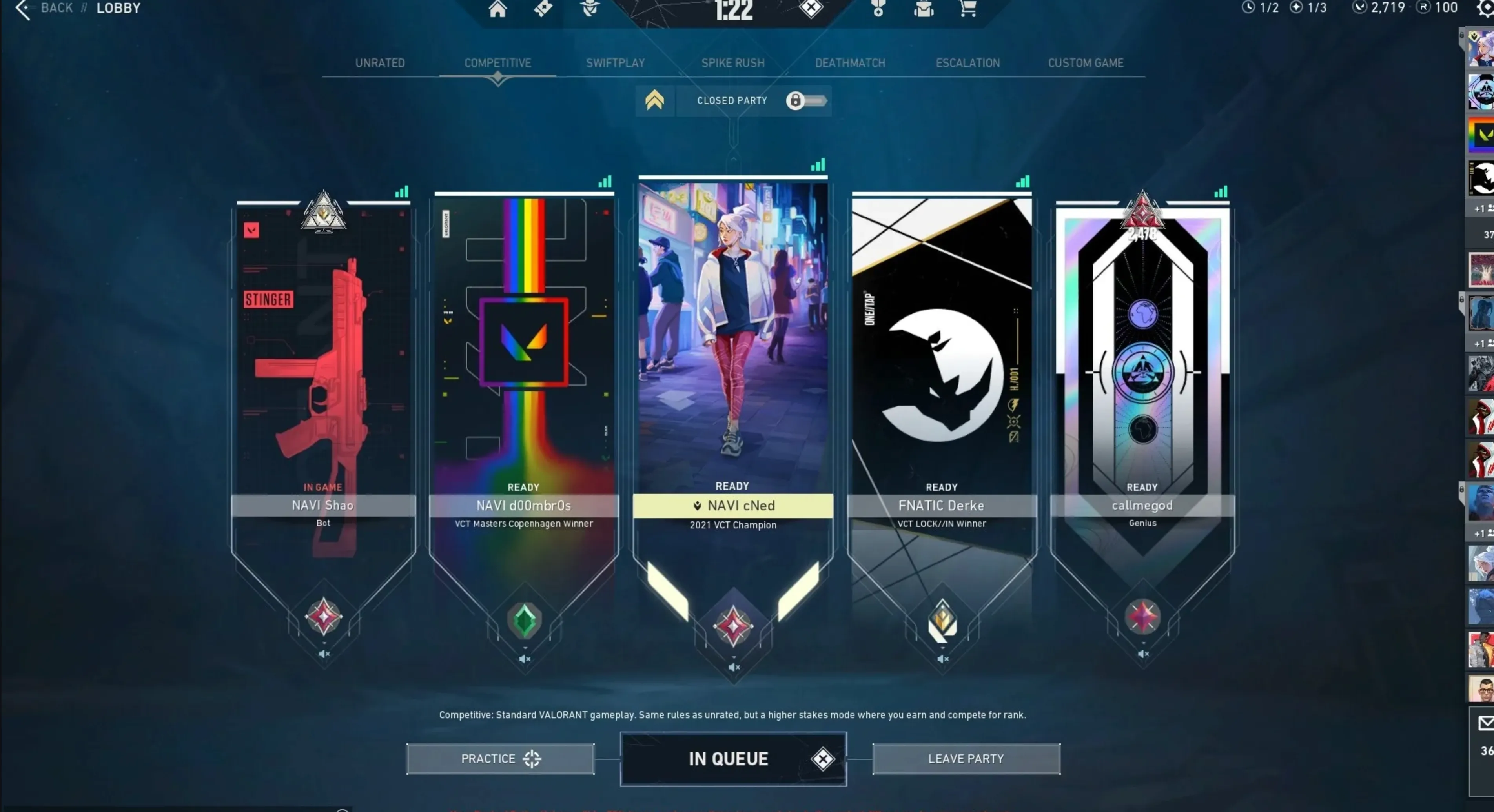
Queueing as a full five-stack in Valorant is the most flexible way to play ranked with friends across different skill levels. A complete team removes most rank restrictions, letting players of any rank queue together without being blocked by matchmaking limits. While this setup often results in slower RR gains, especially for the highest-ranked player in the group, it usually offers better coordination, communication, and overall win consistency compared to solo or small-stack queues. Matchmaking will factor in the party’s rank spread and attempt to find similarly balanced opponents, which can increase queue times but leads to fairer games. This format can also be helpful for newer players or those doing placement matches, since account level matters far less when the system evaluates a full team rather than individual players. Whether you prefer solo grinding or coordinated team play, understanding how five-stack rules work helps you choose the setup that best fits your goals and expectations in ranked.
Four-Stack Parties Are No Longer Allowed in Valorant
In Valorant, ranked matchmaking no longer allows four-player parties, and the reason comes down to fairness and match quality. A four-stack would always be paired with a single solo player, which often created awkward and unbalanced situations. The solo player usually felt disconnected, since the group of four already had their own communication, playstyle, and coordination, making teamwork difficult. This problem became even more noticeable at higher ranks, where coordination and synergy matter far more than raw aim. On top of that, rank differences within four-stacks could lead to uneven skill expectations, especially if the solo player was significantly lower or higher ranked than the rest of the team. To avoid these issues and improve the overall ranked experience, Riot removed four-stack queues entirely, pushing players toward either full five-stacks or smaller, more balanced party sizes.
Can Unranked Players Play With Ranked Players in Valorant?
In Valorant, unranked players are allowed to queue with ranked teammates, but only within certain limits. If you haven’t finished your placement matches yet, you can still play competitive games with ranked friends up to Gold. Once you go beyond that point, players in Platinum and above—including Diamond, Ascendant, Immortal, and Radiant—must queue with others who are already ranked. This rule exists to keep higher-level competitive matches balanced and prevent extreme skill gaps.
That said, playing with unranked or lower-ranked friends during placement matches is common and generally fine, especially in Iron or Bronze-level games. Higher-ranked players won’t gain much progress from these matches since wins against lower-tier opponents award minimal RR, reflecting the lower competitive value of those games. In practice, this system allows experienced players to help friends complete placements without heavily impacting high-rank progression, while still protecting the integrity of upper-tier ranked play.
Why Some Ranks Can’t Play Together in Valorant?
The reason Valorant limits which ranks can queue together comes down to competitive balance. Riot’s goal is to make sure matches feel fair and playable for everyone involved, which becomes difficult when there’s a huge gap in skill level. A lower-ranked player placed into a high-rank lobby can feel overwhelmed, while higher-ranked players may feel held back, creating a poor experience on both sides. These restrictions help ensure that players are matched with others who have similar game knowledge, mechanics, and decision-making.
For example, if you’re Silver, most of your ranked games will naturally include players around that same level, which leads to more consistent and competitive matches. The main exception is during placement games, where players can queue more freely before their rank is fully determined. For newer players starting in Iron or Bronze, the system also accounts for the fact that each rank has three tiers, allowing steady progression over time rather than forcing huge jumps in difficulty. While the limits may feel restrictive at first, they exist to protect match quality and encourage long-term improvement as you climb the ranked ladder.
How to Rank Up Faster Even With Rank Differences
If your rank doesn’t line up with your friends’, the best solution is simply climbing faster on your own. In Valorant, ranking up efficiently comes down to picking roles that match how you naturally play and where you have the most impact. If you enjoy taking fights, creating space, and putting pressure on the enemy team, duelists are a strong choice since they’re designed to secure kills and swing rounds early. Players who prefer setting up teammates, gathering information, and disrupting enemy positions will often see better results on initiators, as their utility can win rounds even without top fragging. Controllers are ideal if you like controlling the pace of the game, using smokes and map pressure to block sightlines and force enemies into bad positions. If defense and map control are more your style, sentinels shine by locking down sites, creating choke points, and preventing flanks. Focusing on a role that fits your strengths not only improves consistency but also makes it easier to carry games, earn more RR, and close the rank gap between you and your friends faster.
FAQs
Can Iron and Silver players play ranked together in Valorant?
Yes. In Valorant, Iron and Bronze players can queue with Silver players in duo or trio parties without restrictions, making it easy for lower-ranked friends to play together.
Can Gold players play with Platinum players?
Yes. Gold players are allowed to queue with Platinum players in ranked, but the matchmaking system will account for the rank gap when forming the match.
Why can’t low ranks play with Immortal or Radiant players?
The skill gap at higher ranks is much larger, and allowing wide rank differences would lead to unfair and unbalanced matches. Riot limits these queues to protect match quality.
Can five-stack teams ignore rank restrictions?
Mostly yes. Five-stacks can include players of any rank, but they come with trade-offs like longer queue times and reduced RR gains, especially for higher-ranked players.
Do unranked players have queue limits in ranked mode?
Unranked players can play with ranked teammates up to Gold during placement matches. To queue with Platinum or higher players, you must already be ranked.
Conclusion
Understanding which ranks can play together in Valorant helps you avoid queue issues and make smarter choices when playing competitive with friends. Riot’s rank restrictions aren’t there to block fun, but to keep matches fair, balanced, and enjoyable for everyone involved. Whether you’re duoing in lower ranks, five-stacking with mixed skill levels, or helping friends through placement games, knowing how the system works lets you plan ahead and progress more efficiently. As long as you respect the rank limits and choose the right queue setup, climbing in Valorant in 2026 can be both competitive and social without unnecessary frustration.
Posted On: February 3rd, 2026
Recent Articles


Our 1v9 support team is available 24/7 to help you with any questions or issues you may have.
support@1v9.gg

-a6d5b3e156bb.webp)





Loading...
1v9.gg is not endorsed or affiliated by any game developers or publishers.
2026 1v9, All Rights Reserved, Created By Ritesh (riteshsahoo.com)