
Play CS2 if you want the purer gun-and-utility sandbox; play VALORANT if you want tactical gunplay shaped by distinct agents and abilities. Both are free, competitive 5v5 shooters, but they reward different kinds of mastery.
This comparison avoids declaring a universal winner. The better game is the one whose movement, information, team roles, platform, and learning curve make you want to queue again.
Updated: August 14, 2026
Platforms, core modes, and official game information were rechecked for 2026.
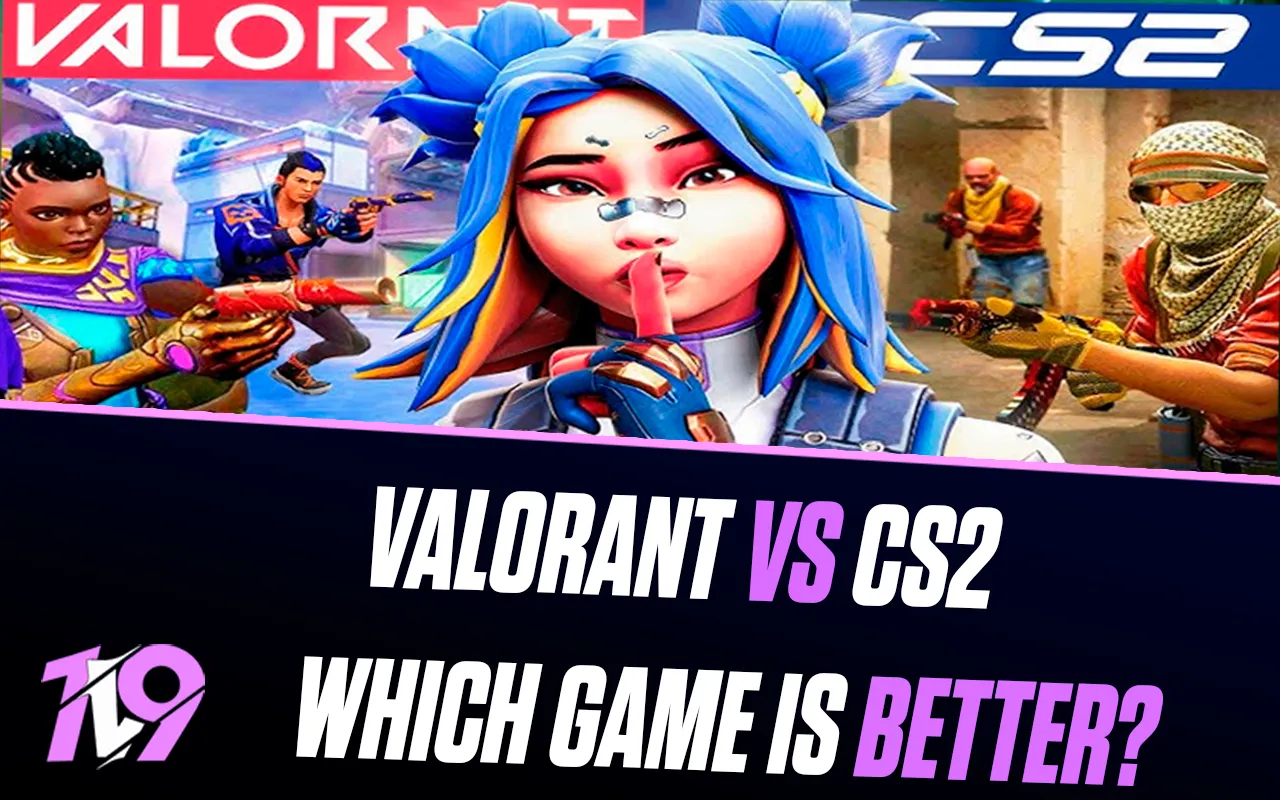
VALORANT vs. CS2 at a glance
| Category | VALORANT | Counter-Strike 2 |
|---|---|---|
| Core identity | Agent-based tactical shooter | Economy-driven tactical shooter |
| Utility | Character abilities with role limits | Shared grenades bought through the economy |
| Gunplay | Precise rifles plus ability-assisted fights | Deep recoil, movement, utility, and weapon economy |
| Round format | Attack/defend plant-and-defuse with agent ult economy | Attack/defend bomb defusal with weapon/utility economy |
| Platforms | PC, PlayStation 5, Xbox Series X|S | PC through Steam |
| Anti-cheat | Riot Vanguard | Valve Anti-Cheat systems |
| Community content | Limited compared with CS2 | Workshop, community servers, custom maps |
| Best for | Players who enjoy roles and ability combos | Players who want a more universal utility toolkit |
Gunplay and movement
Both games punish inaccurate movement, but the feel is different. CS2 places enormous depth in counter-strafing, recoil patterns, grenade lineups, peeking, and the risk of buying each weapon. VALORANT uses similarly lethal rifles while agents add movement tools, flashes, walls, scans, teleports, and ultimates that change how a duel begins.
CS2 usually gives every player access to the same utility categories if they can afford them. VALORANT limits utility by agent, so the draft and coordination determine which tools the team can use.
Economy and team composition
| System | VALORANT | CS2 |
|---|---|---|
| Economy | Weapons, shields, abilities; ultimate points persist separately | Weapons, armor, grenades, kits; loss bonuses shape recovery |
| Team composition | Agent roles and unique kits matter before the match | No hero lock; player roles emerge from spawn, economy, and skill |
| Information | Recon and denial abilities create structured information fights | Sound, angles, grenades, teammates, and map control supply information |
| Comebacks | Eco weapons, ultimates, and ability value can upset buys | Deagles, saved rifles, utility, and disciplined ecos create upset rounds |
Maps, utility, and creativity
CS2’s long-lived maps support decades of lineups, boosts, timings, community practice tools, and workshop content. VALORANT maps are built around agent kits and often include doors, ropes, teleporters, rotating walls, or other signature mechanics. Its creativity comes from combining kits; CS2’s comes from shared systems and physical grenade behavior.
Performance and platforms
Both games target high frame rates on ordinary PCs, though the exact bottleneck depends on map, smoke/effects, CPU, and settings. VALORANT also supports current PlayStation and Xbox consoles with platform-specific matchmaking rules. CS2 is a Steam PC game, which gives it a larger workshop and community-server ecosystem.
Tune the PC side with our VALORANT NVIDIA settings or CS2 settings guide.
Which is easier to learn?
VALORANT gives new players clearer agent identities but asks them to learn many abilities and matchups. CS2 has no agents to memorize, yet its movement, recoil, grenade physics, map history, and economy punish sloppy fundamentals. Neither is easy; the learning workload is distributed differently.
Choose VALORANT if…
Roles and abilities sound fun
You like defined agents, ability combos, readable role identity, and console availability.
Choose CS2 if…
Universal tools sound better
You want every player to share the same equipment system, deeper community content, and classic Counter-Strike movement/utility.
Play both if…
Skills transfer
Crosshair placement, trading, economy discipline, communication, and emotional control improve in either game.
Anti-cheat and account tradeoffs
Riot Vanguard and Valve’s anti-cheat systems use different designs. Vanguard’s deep system integration is a privacy/security tradeoff some PC players dislike; Valve’s approach has different detection and trust mechanisms. Neither system makes cheating impossible. Read the publishers’ current documentation and decide what you are comfortable installing.
VALORANT vs. CS2 FAQ
Is VALORANT more popular than CS2?
They publish and expose player data differently, so a single global apples-to-apples total is not available. CS2 has a public Steam concurrent count; Riot does not publish an equivalent live global VALORANT counter.
Which has better gunplay?
CS2 offers the purer shared weapon-and-utility sandbox. VALORANT deliberately lets agent abilities shape when and how gunfights happen.
Which is better for beginners?
Try both. VALORANT may feel clearer if you enjoy hero roles; CS2 may feel clearer if you prefer one universal rule set without character abilities.
Official sources
Game modes, platform support, anti-cheat behavior, maps, and balance can change. This is an editorial comparison, not a claim that one community or game is objectively superior.


-a6d5b3e156bb.webp)