- Home
Games
 League of Legends
 Valorant
-a6d5b3e156bb.webp) Fortnite
Fortnite Call of Duty
 Clash of Clans
 Counter-Strike 2
 Roblox
 Rainbow Six Siege
 Clash Royale
 Minecraft
 Rocket League
 Dota 2
 Genshin Impact
 Squad Busters
 Rust
Rust Apex Legends
 Pokemon Go
 XDefiant
 LoL: Wild Rift
 Hay Day
 Diablo 4
 FC 25
FC 25 Marvel Rivals
 World of Warcraft
 Destiny 2
 Deadlock
-9ede9dc6b01b.webp) PUBG Mobile
PUBG Mobile The Finals
 Growtopia
 Forza Horizon 5
 Honkai: Star Rail
 Warframe
 8 Ball Pool
 Zenless Zone Zero
 Path of Exile
 Runescape 3
 Raid: Shadow Legends
 Lost Ark
 WoW: Classic Era
 Summoners War
 WoW: Season of Discovery
 WoW Cataclysm
 WoW: Hardcore
 Throne and Liberty
 New World
 Mobile Legends
 Escape From Tarkov
 Path of Exile 2
 Blade Ball
 Fisch
Fisch Pet Simulator 99
 Pets Go
-d8bcef7708c7.webp) One Piece Bounty
One Piece Bounty Anime Adventures
 Blox Fruits
 Adopt Me
 Murder Mystery 2
 Fragpunk
 Wuthering Waves
 Teamfight Tactics
 Free Fire
 Albion Online
 Black Desert Online
 Honor of Kings
 Brawl Stars
 Arena of Valor
 Call of Duty: Mobile
 Rematch
 Steal a Brainrot
 Grow a Garden
 FC 26
FC 26 Old School Runescape
 Plants vs Brainrots
 Overwatch
 Battlefield
 Arc Raiders
 Dragon Ball Legends
 Fallout 76
 Jailbreak
 Type Soul
 GPO
GPO DonutSMP
 Escape Tsunami For Brainrots
 Watcher of Realms
 Roblox Rivals
 2XKO
2XKO Sailor Piece
 Forza Horizon 6
 GTA 5
GTA 5- Lootboxes
- Become Affiliate
- Blog
- Contact Us
- Sign In


Rocket League Maps Ranked: Every Arena Type Explained
DFH Stadium, Mannfield, Champions Field, and Utopia Coliseum are our top Rocket League arena themes because they combine clear field markings, readable goals and boost pads, restrained backgrounds, and strong visual identity. They do not have a competitive geometry advantage: standard arenas share the same field shape and dimensions.
Rocket League map ranking: quick answer
DFH Stadium
Champions Field
Mannfield
Utopia Coliseum
How many Rocket League maps are there?
There is no useful single total unless the counting method is disclosed. This guide ranks 22 current named standard-geometry arena themes. Day, night, stormy, holiday, and licensed visual reskins are grouped with their base arena because they do not create a new competitive field layout.
Quads, Hoops, Dropshot, Rocket Labs, Knockout, and legacy non-standard fields are listed separately. For example, United Futura is a Season 23 presentation of Futura Garden, while Sunset Dunes (Quads) and Midnight Metro (Quads) are genuinely larger layouts built for eight players.
Rocket League standard arenas ranked
The ranking is editorial. We judge field readability, goal and boost-pad visibility, background distraction, atmosphere, identity, and competitive fairness. Every entry below uses standard Soccar geometry; lower-tier themes are not smaller, wider, or mechanically worse.
| Tier | Arena themes | Why they land here | Geometry |
|---|---|---|---|
| S | DFH Stadium, Mannfield, Champions Field, Utopia Coliseum | Clean markings, strong ball contrast, visible goals, and memorable environments without excess visual noise | Standard |
| A | Beckwith Park, Urban Central, Forbidden Temple, Deadeye Canyon, Estadio Vida, Rivals Arena | Highly readable or visually distinctive with only minor lighting and backdrop tradeoffs | Standard |
| B | Farmstead, AquaDome, Neo Tokyo, Wasteland, Starbase ARC, Salty Shores | Strong identity, but busier edges, stronger color casts, or less neutral lighting can demand more visual adjustment | Standard |
| C | Neon Fields, Futura Garden and United Futura, Drift Woods, Boostfield Mall, Parc de Paris, Sovereign Heights | More intense color, animation, background detail, or unfamiliar presentation can compete with quick ball and boost-pad reads | Standard |
Why the arena tiers look this way
S Tier: competitive clarity with personality
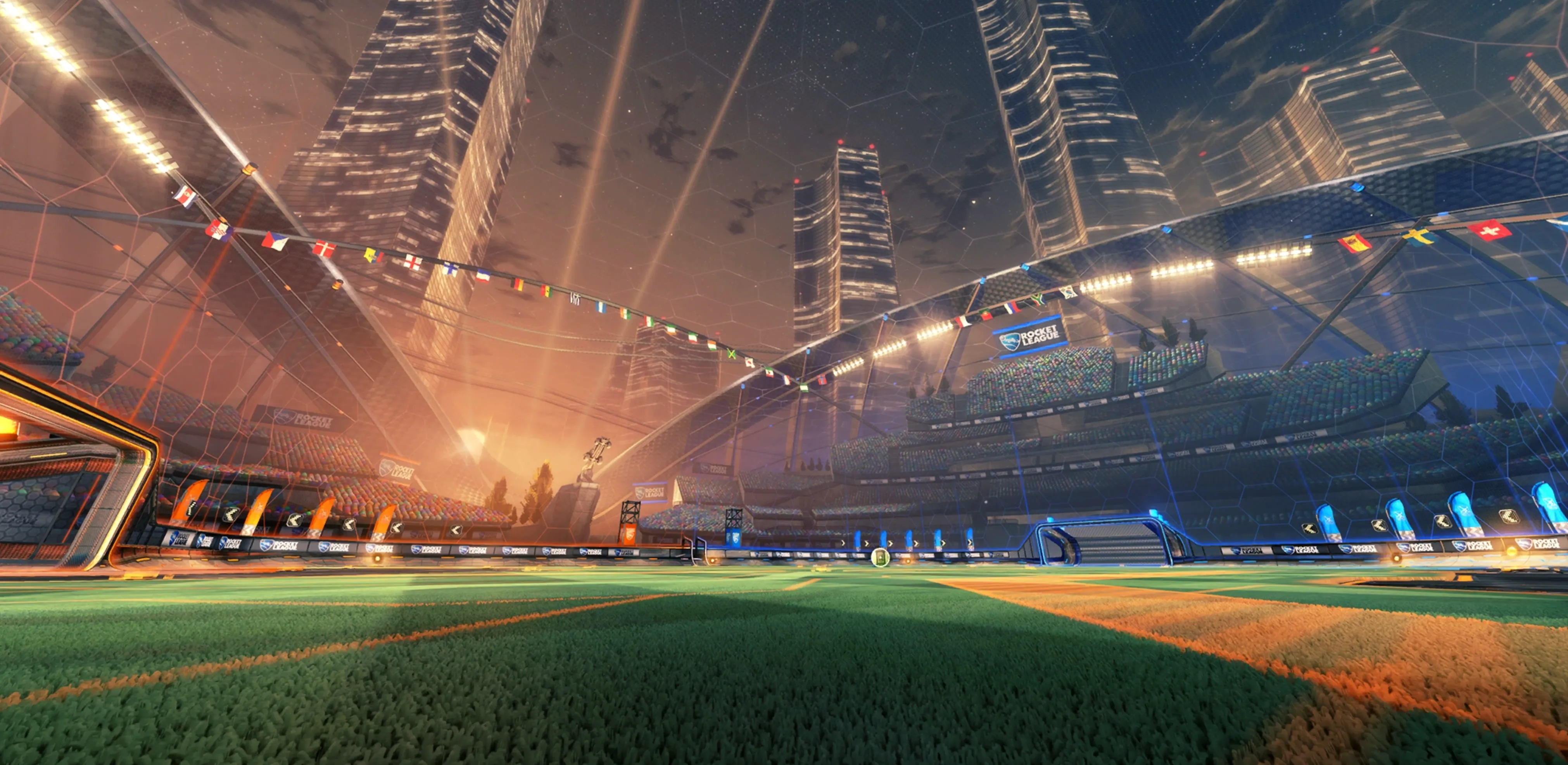
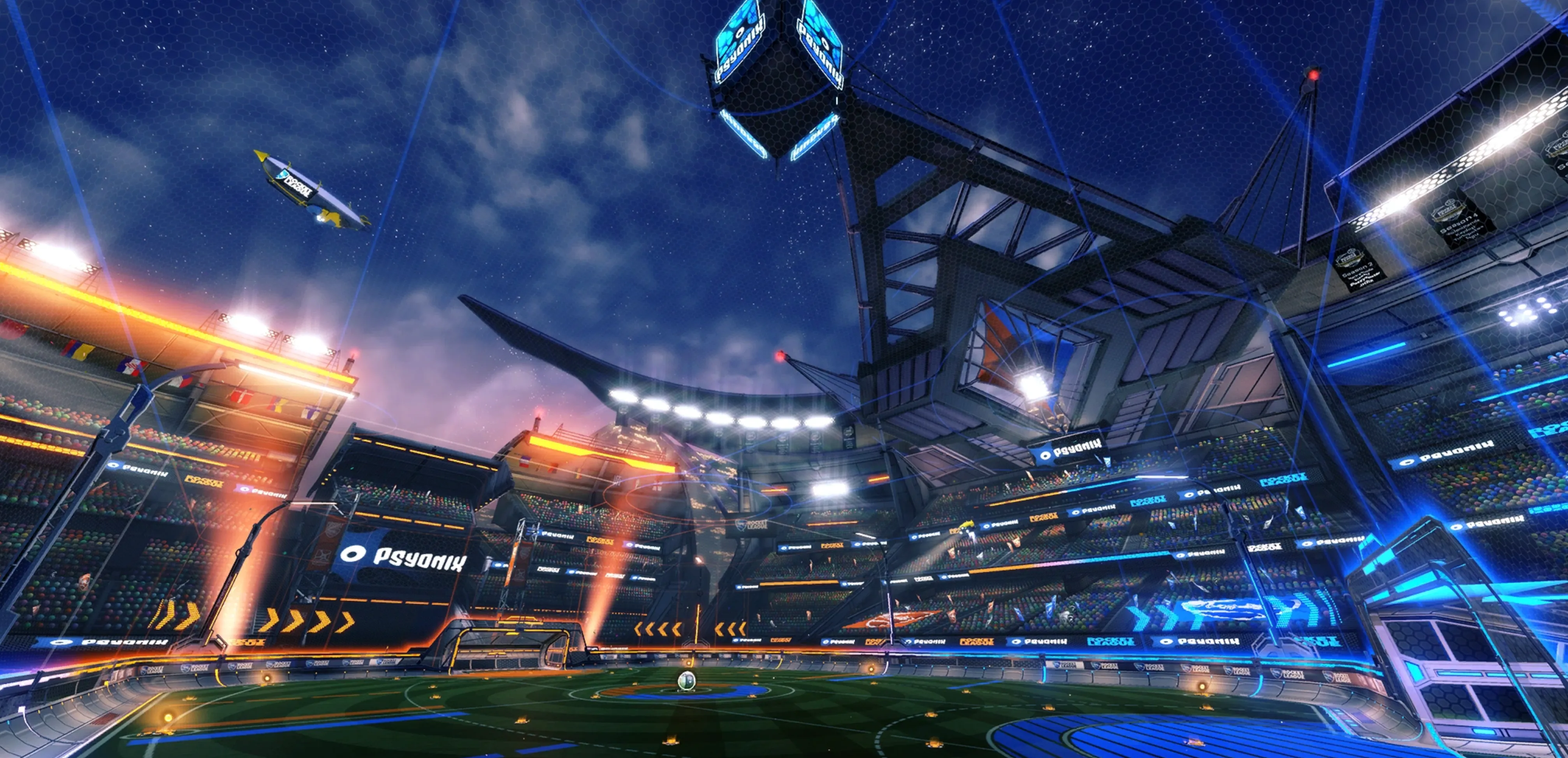
DFH Stadium is the reference point: clear lines, an obvious goal silhouette, and a restrained stadium backdrop. Mannfield is similarly easy to read. Champions Field adds a big-event atmosphere without obscuring the field, while Utopia Coliseum stays stylized yet legible. These are good choices for training because the environment rarely distracts from car, ball, and boost information.
A Tier: excellent with small presentation tradeoffs
Beckwith Park and Urban Central are readable classics. Forbidden Temple, Deadeye Canyon, and Estadio Vida bring stronger themes but keep the playing surface clear. Rivals Arena also balances identity and competitive visibility. They miss S Tier because some variants introduce stronger lighting or busier peripheral detail.
B Tier: distinctive but less visually neutral
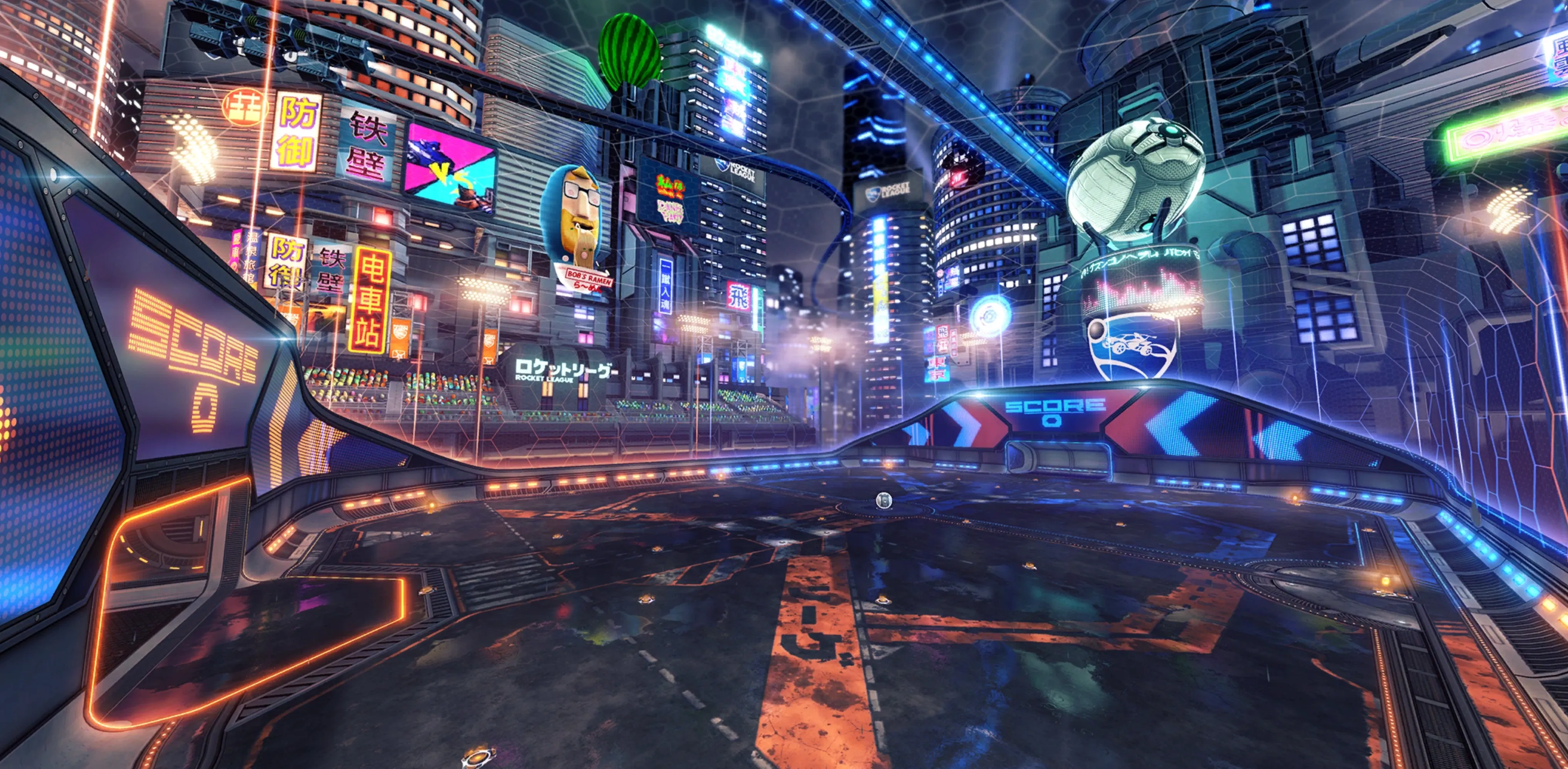
AquaDome, Neo Tokyo, Starbase ARC, and Salty Shores use stronger environmental color. Farmstead and Wasteland have excellent character, but their palette and horizon are less neutral than the top tier. The field still plays identically to DFH Stadium; this is a visibility preference, not a physics verdict.

C Tier: atmosphere can compete with information
Neon Fields, Futura Garden, Drift Woods, Boostfield Mall, Parc de Paris, and Sovereign Heights lean hardest into spectacle. Many players will love them. For a competitive-readability list, however, saturated lighting, animated backgrounds, or unfamiliar peripheral detail can make the first few matches feel busier. United Futura stays grouped with Futura Garden because it is a Season 23 visual setting, not a new field shape.
Rocket League non-standard and mode-specific arenas
| Category | Arenas | Geometry and use | Availability note |
|---|---|---|---|
| Quads | Sunset Dunes (Quads), Midnight Metro (Quads) | Longer and wider than standard arenas, with more boost pads and wall boost pills | Introduced for 4v4 in Season 20; playlist access may rotate |
| Hoops | Dunk House, The Block | Basketball-style floor goals and rebound-focused play | Hoops and supported private/free-play options |
| Dropshot | Core 707 | Hexagonal damageable floor instead of goals | Dropshot rotation and private/free-play options |
| Knockout | Calavera, Carbon, Quadron | Elimination spaces built around hazards and recovery | Limited-mode availability |
| Rocket Labs | Pillars, Cosmic, Double Goal, Underpass, Utopia Retro, Octagon, Basin, Corridor, Galleon, Galleon Retro, Loophole, Barricade, Colossus, Hourglass | Experimental layouts with multiple goals, obstacles, unusual walls, or altered proportions | Private matches, LTMs, or rotating access depending on the arena |
| Legacy non-standard | Badlands, Tokyo Underpass, Throwback Stadium, original Wasteland and Starbase ARC layouts | Sloped floors, alternate walls, or other geometry that differs from standard Soccar | Mostly private, free-play, Rumble, or limited selections |
| Snow Day and Rumble variants | Mode-selected standard and specialty arenas | Puck physics or Rumble power-ups define the mode more than the visual theme | Patch v2.72 lets their Free Play maps be loaded as Soccar |
How Arena Preferences actually work
Rocket League lets you like or dislike eligible arenas through Arena Preferences, which influences—rather than guarantees—what matchmaking selects. It does not let one player veto a standard field for the entire lobby, and it should not be treated as a way to change physics.
- Open Play.
- Select the relevant online playlist.
- Open Arenas or Arena Preferences.
- Like the themes you prefer and dislike the ones that reduce clarity for you.
If a visual theme feels hard to read, first use our Rocket League settings guide. Lowering unnecessary effects can help more consistently than hoping for one arena. Once visibility is comfortable, the rank-up guide covers rotations and decision-making.
Arena geometry does not change a car hitbox, so choose from the best Rocket League cars for handling and visual feedback rather than for a map-specific advantage. If your party spans platforms, confirm that everyone has Rocket League crossplay enabled before testing a private arena together.
Rocket League arena FAQ
Are all standard Rocket League maps the same size?
Standard competitive arenas use the same field geometry. Visual themes can change lighting, scenery, and atmosphere without changing the playable dimensions.
Do different standard arenas affect the ball?
No. A theme does not alter standard ball physics. Non-standard modes and legacy layouts can change goals, floors, walls, or proportions, which is why they are listed separately.
What are the bigger Quads maps?
Sunset Dunes (Quads) and Midnight Metro (Quads) were built longer and wider than standard arenas, with additional boost resources for 4v4.
What is the newest standard arena theme?
United Futura is the current Season 23 presentation tied to Futura Garden. It is a new visual setting, not a new competitive layout.
Can I remove an arena from matchmaking?
Arena Preferences can reduce or increase selection weighting for eligible themes, but it does not provide an absolute personal ban.
Sources and update log
Primary references: Psyonix’s Patch v2.72 notes, Season 23 announcement, and Season 20 Quads arena notes. For season timing, see the Rocket League season-date history.
- replaced the flat reskin list with a geometry-first taxonomy; verified Season 23 and v2.72; added Quads, Hoops, Dropshot, Rocket Labs, Knockout, and legacy groups.
Posted On: January 18th, 2025
Recent Articles


Our 1v9 support team is available 24/7 to help you with any questions or issues you may have.
support@1v9.gg
Loading...
1v9.gg is not endorsed or affiliated by any game developers or publishers.
2026 1v9, All Rights Reserved, Created By Ritesh (riteshsahoo.com)