 League of Legends
 Valorant
-a6d5b3e156bb.webp) Fortnite
Fortnite Call of Duty
 Clash of Clans
 Counter-Strike 2
 Roblox
 Rainbow Six Siege
 Clash Royale
 Minecraft
 Rocket League
 Dota 2
 Genshin Impact
 Squad Busters
 Rust
Rust Apex Legends
 Pokemon Go
 XDefiant
 LoL: Wild Rift
 Hay Day
 Diablo 4
 FC 25
FC 25 Marvel Rivals
 World of Warcraft
 Destiny 2
 Deadlock
-9ede9dc6b01b.webp) PUBG Mobile
PUBG Mobile The Finals
 Growtopia
 Forza Horizon 5
 Honkai: Star Rail
 Warframe
 8 Ball Pool
 Zenless Zone Zero
 Path of Exile
 Runescape 3
 Raid: Shadow Legends
 Lost Ark
 WoW: Classic Era
 Summoners War
 WoW: Season of Discovery
 WoW Cataclysm
 WoW: Hardcore
 Throne and Liberty
 New World
 Mobile Legends
 Escape From Tarkov
 Path of Exile 2
 Blade Ball
 Fisch
Fisch Pet Simulator 99
 Pets Go
-d8bcef7708c7.webp) One Piece Bounty
One Piece Bounty Anime Adventures
 Blox Fruits
 Adopt Me
 Murder Mystery 2
 Fragpunk
 Wuthering Waves
 Teamfight Tactics
 Free Fire
 Albion Online
 Black Desert Online
 Honor of Kings
 Brawl Stars
 Arena of Valor
 Call of Duty: Mobile
 Rematch
 Steal a Brainrot
 Grow a Garden
 FC 26
FC 26 Old School Runescape
 Plants vs Brainrots
 Overwatch
 Battlefield
 Arc Raiders
 Dragon Ball Legends
 Fallout 76
 Jailbreak
 Type Soul
 GPO
GPO DonutSMP
 Escape Tsunami For Brainrots
 Watcher of Realms
 Roblox Rivals
 2XKO
2XKO Sailor Piece
 Forza Horizon 6
 GTA 5
GTA 5

Reviewed August 15, 2026: live League Classic, Patch 26.16. Mastery tooltips can change in future balance updates.
In League of Legends Classic, a build such as 21/9/0 is not an item order or a score. It means 21 Mastery points in Offense, nine in Defense, and none in Utility. Every completed page has 30 points, and every four points spent in one tree opens the next tier in that same tree.
That is the simple part. The useful part is knowing why an ADC wants penetration, why a jungler values Tough Skin and Bladed Armor, or why a support may give up a combat stat for Greed, Pickpocket, or an extra starting ward. This guide covers the current trees, their effects, practical role splits, and the adjustments that matter in real matchups.
If you need the wider context first, read our League of Legends Classic overview. Classic uses Season 3 as an anchor, but Riot describes it as a collection of early-League “greatest hits,” not a perfect copy of one historical patch.

League Classic Masteries at a glance
| Rule | Current answer |
|---|---|
| Trees | Offense / Defense / Utility |
| Maximum points | 30 per page |
| Custom access | Unlocks at Classic Level 3 |
| Tier rule | The next row opens for every four points spent in that tree |
| Final Masteries | Executioner / Honor Guard / Nimble |
What are Masteries in League Classic?
Masteries are a pre-game talent system. You spend points on small stat bonuses and specialized effects, save the result as a page, and select that page for your champion before the match. Offense contains damage and penetration, Defense contains durability and jungle protection, and Utility contains mana, cooldown, movement, vision, and economy tools.
The split is always written in the same order: Offense / Defense / Utility. A 0/9/21 support page therefore has zero Offense points, nine Defense points, and 21 Utility points. A 9/21/0 bruiser page reverses those priorities.
This is not the modern Champion Mastery progression that tracks experience on an individual champion. Classic Masteries directly affect the next match. They are also separate from Classic Runes, which occupy Marks, Seals, Glyphs, and Quintessence slots.
How Mastery points, tiers, and unlocks work
The editable system unlocks at Classic Level 3, with 30 points available for a completed page. This is your separate Classic Level, not your regular account level. Masteries do not cost Influence Points, and resetting a saved page does not consume currency. Riot also supplies default pages from the beginning, so forgetting to create or select one will not send you into a game with no bonuses.
Each tree has six rows. Only the first row is available at zero investment:
- Tier 1: available immediately.
- Tier 2: requires four points in that tree.
- Tier 3: requires eight points.
- Tier 4: requires 12 points.
- Tier 5: requires 16 points.
- Tier 6: requires 20 points; the next point takes the final Mastery.
Opening a row does not grant anything automatically. You still have to spend a point on the node you want, and some connected nodes have their own prerequisites. The client prevents illegal pages, so it is safe to experiment and return points until the build reaches 30.

Best League Classic Mastery splits by role
These are dependable starting shapes, not universal best pages. The exact nodes should match the champion, Summoner Spells, lane opponent, and intended item build. If you are still choosing a champion, the current LoL Classic tier list covers all 63 picks in Patch 26.16.
Swipe or scroll horizontally to see every column on a small screen.
| Role or style | Starting split | What it prioritizes | Common alternative |
|---|---|---|---|
| Marksman / ADC | 21/9/0 | Attack speed, armor penetration, finishing damage, and a safer lane | 21/0/9 when Utility gives more value than durability |
| AD assassin or duelist | 21/9/0 | Flat damage, penetration, and survival during trades | 21/0/9 for mana, buff duration, or Summoner Spell cooldowns |
| AP mid | 21/0/9 | Magic penetration, AP scaling, mana, and spell access | 21/9/0 into lanes with real kill pressure |
| Tank or bruiser top | 9/21/0 | Honor Guard, health, resistances, and enough offense to trade | 0/21/9 for mana, Teleport, or movement utility |
| Carry jungler | 21/9/0 | Clear speed and damage, with monster protection in Defense | 21/0/9 for buff-reliant or mana-heavy farmers |
| Tank jungler | 9/21/0 | A healthy first clear and durable ganks | 0/21/9 when Runic Affinity or mana matters more |
| Utility support | 0/9/21 | Gold, vision, cooldowns, movement, and lane durability | 0/21/9 for engage tanks who must survive first contact |
Three practical page blueprints
Use these as node checklists rather than rigid click orders. Your Summoner Spells and lane damage type can change the last few points.
- Marksman — 21/9/0: build the Offense page around Fury, Weapon Expertise, Brute Force, Lethality, Sunder or Frenzy, and Executioner. In Defense, Durability and Veteran's Scars are the stable choices; use more Hardiness against physical pressure or Resistance against magic damage.
- Mana mage — 21/0/9: take the magic side of Offense through Sorcery, Blast, Arcane Knowledge, Mental Force, Archmage, and Executioner. Utility can then cover Meditation and Expanded Mind before one matchup-specific point in Biscuiteer or Runic Affinity.
- Utility support — 0/9/21: use Defense for early health and the appropriate lane resistance, then build Utility through the tools your lane can trigger: Scout for early ward vision, Greed for passive income, Biscuiteer for sustain, Pickpocket for safe poke, Intelligence for cooldown reduction, and Nimble as the final Mastery.

Offense Mastery tree: every current node
Offense rewards champions that convert stats into pressure. Physical and magic damage share the same tree, but their routes separate around Deadliness versus Blast, Weapon Expertise versus Arcane Knowledge, and Brute Force versus Mental Force.
| Tier | Masteries and effects |
|---|---|
| 1 — 0 points | Summoner's Wrath: improves Exhaust, Ignite, Ghost, Surge, Rally, and Promote. Fury: +1% attack speed per rank. Sorcery: +1% cooldown reduction per rank. Butcher: basic attacks deal 2/4 bonus damage to minions and monsters. |
| 2 — 4 points | Deadliness: +0.166/0.333/0.498/0.664 attack damage per level. Blast: +0.25/0.5/0.75/1 ability power per level. Destruction: +5% damage to turrets. |
| 3 — 8 points | Havoc: +0.67/1.33/2% damage dealt. Weapon Expertise: +8% armor penetration. Arcane Knowledge: +8% magic penetration. |
| 4 — 12 points | Lethality: +2.5/5% critical-strike damage for ranged champions and +5/10% for melee. Brute Force: +1.5/3 attack damage. Mental Force: +2/4/6 ability power. Spellsword: basic attacks deal bonus magic damage equal to 5% of AP. |
| 5 — 16 points | Frenzy: +10% attack speed for two seconds after a critical hit. Sunder: +2/4/6 lethality. Archmage: +1.25/2.5/3.75/5% ability power. |
| 6 — 20 points | Executioner: deal 5% more damage to targets below 50% health. |
Patch 26.16 note: Riot fixed a bug that stopped Spellsword from scaling with ability power. The patch did not rebalance the Mastery trees or change their point rules.
Who should invest 21 points in Offense?
ADCs, assassins, burst mages, damage-first duelists, and carry junglers are the obvious users. The percentage penetration nodes are especially efficient against champions already buying resistances, while Executioner rewards kits that can keep dealing damage after the target falls below half health. Do not take physical and magic branches merely to fill rows; spend toward the damage type your champion actually uses.
Defense Mastery tree: every current node
Defense is more than a tank tree. Its early rows contain some of the most noticeable lane and jungle tools in Classic: flat health, armor or magic resistance, reduced champion damage, and protection from monster attacks.
| Tier | Masteries and effects |
|---|---|
| 1 — 0 points | Summoner's Resolve: improves Cleanse, Heal, Smite, Barrier, and Fortify. Perseverance: up to +2/4/6 health regeneration per five seconds based on missing health. Durability: +1.5/3/4.5/6 health per level. Tough Skin: reduces monster damage by 1/2. |
| 2 — 4 points | Hardiness: +2/4/6 armor. Resistance: +2/4/6 magic resistance. Bladed Armor: deals six damage to monsters that attack you. |
| 3 — 8 points | Unyielding: reduces champion damage by 1/2. Relentless: reduces slow effectiveness by 7.5/15%. Veteran's Scars: +30 health. Safeguard: reduces turret damage by 5%. |
| 4 — 12 points | Block: reduces champion basic-attack damage by three. Tenacious: reduces crowd-control duration by 5/10/15%. Juggernaut: +1.5/2.75/4% maximum health. |
| 5 — 16 points | Defender: +1 armor and magic resistance per nearby enemy champion. Legendary Armor: +2/4/6% bonus armor and magic resistance. Good Hands: 10% less time spent dead. Reinforced Armor: 10% less damage from critical strikes. |
| 6 — 20 points | Honor Guard: reduces damage taken from all sources by 3%. |
The important Defense decisions
Against frequent basic attacks, Unyielding and Block can matter more during lane than a small scaling bonus that arrives later. Against spell-heavy pressure, move early points from Hardiness into Resistance. Junglers should look first at Summoner's Resolve, Tough Skin, and Bladed Armor because those nodes directly affect the first clear.
Honor Guard is the Defense capstone—not Juggernaut. Juggernaut is a tier-four health multiplier, while Honor Guard sits on the final row and reduces incoming damage from every source.
Utility Mastery tree: every current node
Utility trades direct combat stats for access: more mana, faster Summoner Spells and item actives, extra starting resources, better vision, gold generation, cooldown reduction, and movement speed. Supports use the full tree most often, but several mages and buff-reliant junglers have strong reasons to take nine points here.
| Tier | Masteries and effects |
|---|---|
| 1 — 0 points | Summoner's Insight: improves Teleport, Flash, Clarity, Revive, and Clairvoyance. Wanderer: +0.66/1.33/2% movement speed while out of combat. Meditation: +1/2/3 mana regeneration per five seconds. Improved Recall: Recall casts one second faster. |
| 2 — 4 points | Scout: wards have 25% more vision range for their first three seconds. Mastermind: -4/7/10% Summoner Spell cooldown. Expanded Mind: +4/7/10 mana per level. Artificer: -7.5/15% item-active cooldown. |
| 3 — 8 points | Greed: +0.5/1/1.5/2 gold every 10 seconds. Runic Affinity: +20% neutral-buff duration. Vampirism: +1/2/3% lifesteal and spell vamp. Biscuiteer: begin with a biscuit that restores 80 health and 50 mana over 10 seconds. |
| 4 — 12 points | Wealth: +40/75 starting gold. Awareness: +1.25/2.5/3.75/5% experience. Strength of Spirit: up to +1/2/3 health regeneration per five seconds for each 400 mana. Explorer: begin with an Explorer's Ward. |
| 5 — 16 points | Pickpocket: basic-attacking an enemy champion grants five gold for melee or three for ranged champions, with a five-second cooldown. Intelligence: +2/4/6% cooldown reduction. |
| 6 — 20 points | Nimble: +3% movement speed. |
When Utility is worth 21 points
A full Utility page makes sense when reaching fights, cycling spells, controlling vision, and stretching a support budget are more important than a damage or durability capstone. Nimble is the final Mastery; Intelligence is a strong tier-five node, but it is not the capstone. Pickpocket is also matchup-dependent: it is valuable only when your champion can safely touch the opposing laner often enough to collect the gold.
How to choose Masteries without copying blindly
Start with what your champion must do in the first ten minutes, then check what the enemy lane or jungle route can punish. The role provides a baseline, but the matchup decides whether damage, sustain, mana, or early durability deserves the final few points.
- Match the damage branch. AD carries do not need Blast and Archmage simply because those nodes are available; mages should not spend toward Weapon Expertise unless their real build benefits from physical attacks.
- Buy the lane you are actually playing. Hardiness helps against physical trades, Resistance helps against spell damage, and Block is valuable against repeated champion basic attacks. Scaling health is not automatically better if early pressure prevents you from farming.
- Take the jungle package deliberately. Summoner's Resolve, Tough Skin, and Bladed Armor improve the first clear. Runic Affinity is attractive for champions whose plan revolves around keeping red or blue buff longer.
- Read the Summoner Spell list. Summoner's Wrath, Resolve, and Insight affect different spells. A point is wasted if it does not improve either spell you brought.
- Count real activations. Artificer is strong when a build uses important item actives repeatedly. Pickpocket is strong when the lane permits safe champion attacks. Their theoretical value means little if the game never triggers them.
- Treat 21/9 as a draft, not a rule. A champion can intentionally stop at nine Utility points for mana and Runic Affinity, or take 21 Utility points for Nimble and cooldowns. The split should describe a plan you can explain in one sentence.
League Classic Masteries vs. Runes
Classic uses two separate pre-game systems. Runes create the stat foundation through Marks, Seals, Glyphs, and Quintessences. Masteries spend 30 points on a mixture of stats and conditional effects. That distinction matters: Masteries are not “effects only,” because many nodes grant flat attack damage, AP, health, armor, resistance, or cooldown reduction.
| System | How it works | Main use |
|---|---|---|
| Classic Masteries | 30 points across Offense, Defense, and Utility | Specialize damage, durability, economy, movement, and cooldowns |
| Classic Runes | Marks, Seals, Glyphs, and Quintessences placed into slots | Supply a reliable starting-stat profile |
| Modern League rune system | Primary and secondary paths with a keystone and shards | Customize modern Summoner's Rift; not used as the Classic Mastery tree |
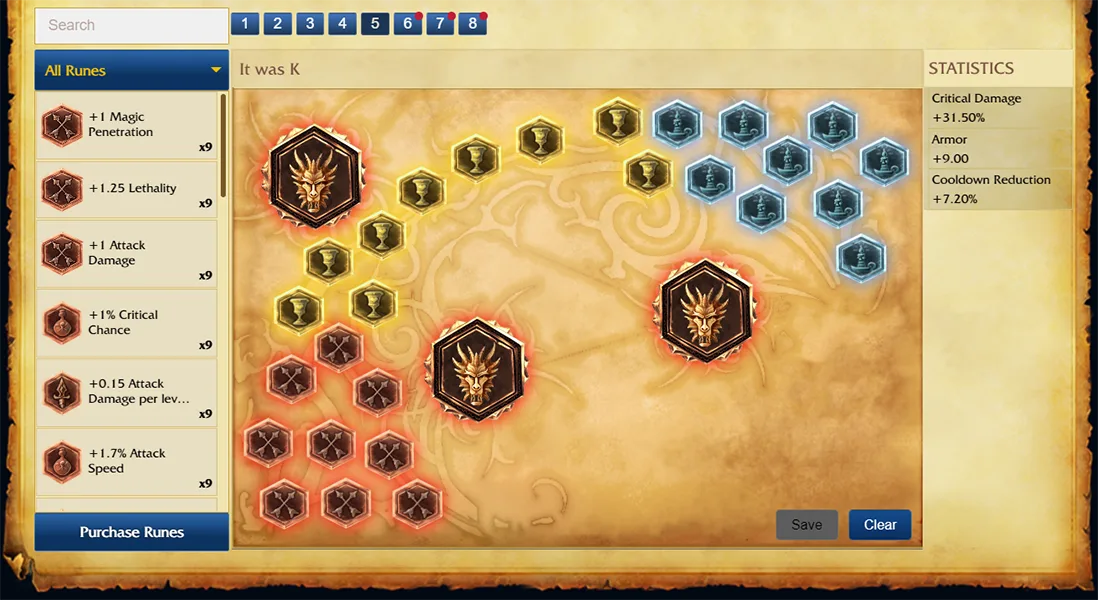
Five common Mastery mistakes
- Copying the split but not the nodes. Two 21/9/0 pages can spend their points very differently. The numbers alone are not a complete build.
- Taking a Summoner Spell upgrade that does nothing. Check which spells each of the three Summoner nodes actually affects.
- Building for late game before surviving lane. A scaling node cannot repay farm and experience lost to a matchup you failed to respect.
- Skipping jungle-specific points on the first clear. Classic monsters hit harder than their modern counterparts, and early health changes gank and invade options.
- Assuming Classic is one untouched Season 3 patch. Riot anchored the mode in that era but combined systems from multiple early seasons and can rebalance them. Current client tooltips outrank old screenshots and archived guides.
League Classic Masteries FAQ
When do Masteries unlock?
Custom Masteries unlock at Classic Level 3, and a completed page has 30 points. Default pages are available before you unlock custom editing. Classic Level is separate from your regular account level.
Do Masteries cost Influence Points?
No. Allocating or resetting Mastery points is free. Influence Points are part of Classic's wider progression and can be used for options such as additional Rune Pages.
How many Mastery points do you get?
A fully unlocked page has 30 points. You may place them across one, two, or all three trees as long as the tier and prerequisite rules are met.
Do I have to use a 21/9 build?
No. A 21/9 split is popular because it reaches one final Mastery and useful secondary nodes. Builds such as 9/0/21, 9/21/0, or champion-specific mixed pages can be correct when their benefits fit the game plan.
What happens if I forget to select a page?
Riot provides default Rune and Mastery pages. You will still load with a functional setup, although it may not match your champion or lane as well as a saved custom page.
Are these the same as modern Champion Mastery?
No. Champion Mastery records experience with a champion. Classic Masteries are 30 pre-game points that change your stats and effects during the next match.
Are League Classic Masteries exactly the Season 3 trees?
Do not assume every archived Season 3 tooltip is current. Riot says Season 3 is the anchor, but Classic mixes elements from several early seasons and receives live balance changes. Check the current client after a patch.
Sources and update policy
The unlock level, progression rules, and default-page behavior were checked against Riot's Classic Runes and Masteries guide and Classic progression table. The mode's historical scope comes from Riot's League Classic overview, while the current Spellsword status was verified in the Patch 26.16 notes. Tree names and numerical tooltips were also cross-checked against the fan-maintained League Classic Archive Mastery reference.
If a later patch changes a tooltip, the in-client description is the source of truth. This page should be reviewed whenever Riot adjusts the Classic systems—not only when champions change.
The bottom line
A strong Mastery page has a job. It might make an ADC's trades safer, keep a jungler healthy through the first clear, give a mage enough mana to hold the wave, or help a support reach the next ward and item timing sooner. Start with a proven split, then change the individual points when you can name the problem they are solving.
The page does not need to be clever. It needs to match the champion, role, matchup, and Rune Page you are actually taking into the game.


