

What is a Hardware Ban in Valorant?
Valorant relies on Vanguard, Riot Games’ anti-cheat system, to detect cheating and keep matches fair. When the system identifies serious rule violations, Riot may go beyond banning just the player’s account. In some situations, the punishment targets the computer itself, which is known as a hardware ban or HWID ban.
A hardware ban works differently from a normal suspension. Instead of simply blocking a specific Riot account, the ban is linked to the hardware components of the device used to play the game. This means that even if a new account is created, the same computer may still be prevented from accessing Valorant.
Because of how Vanguard operates at a system level, Riot can identify certain hardware identifiers tied to a device. If a HWID ban is issued, those identifiers are restricted from connecting to the game servers.
In this guide, we’ll explain what a Valorant hardware ban is, how Vanguard enforces it, the common reasons players receive one, and what options are available if your system ends up banned.
What is a Hardware Ban in Valorant
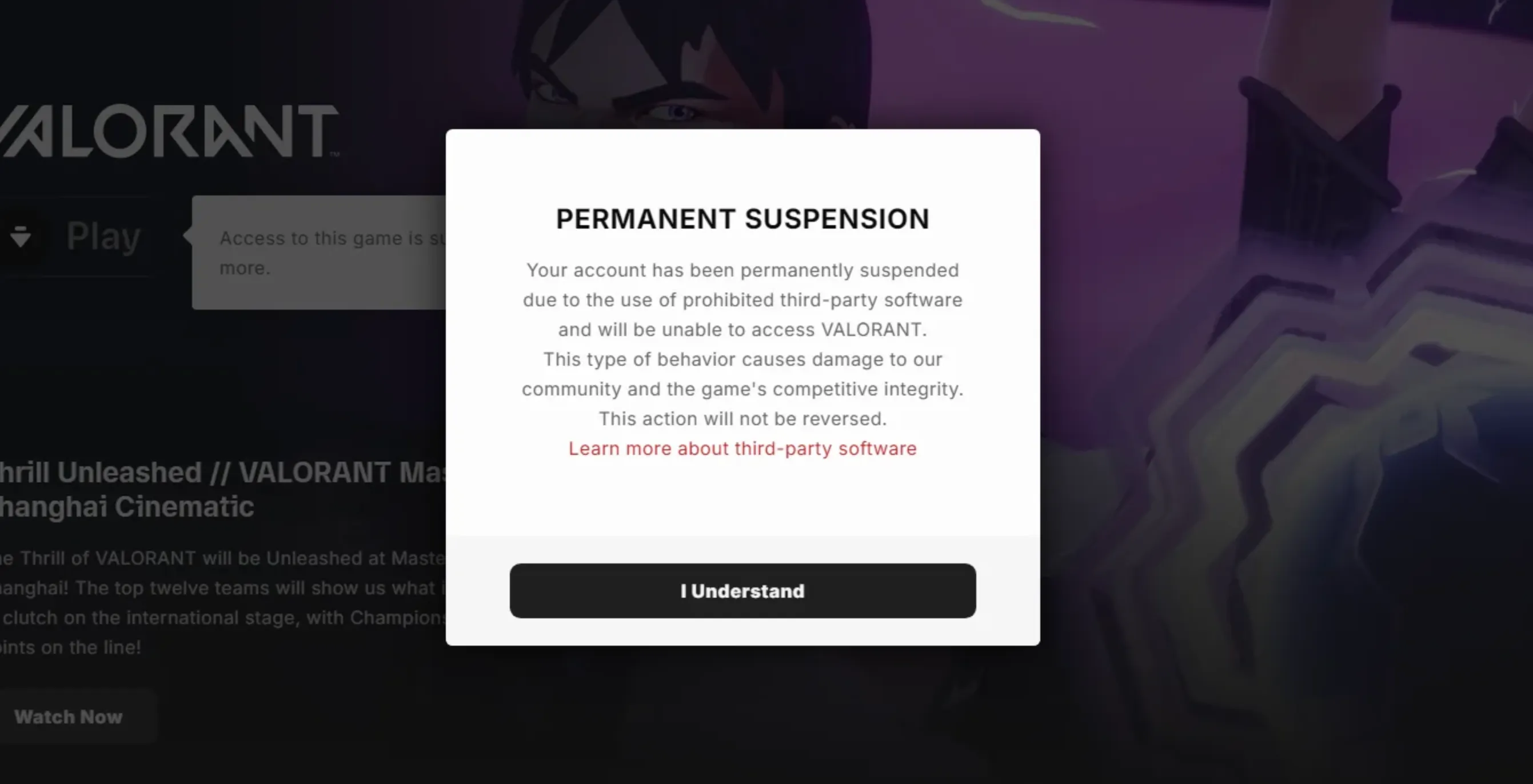
A hardware ban, often called an HWID ban, is one of the strictest penalties Riot Games can apply in Valorant. Instead of only blocking a single Riot account, this type of ban restricts the actual computer that was used when the violation occurred.
When Valorant is installed, Riot’s Vanguard anti-cheat system collects certain hardware identifiers from the device. These identifiers come from components such as the CPU, motherboard, graphics card, and storage devices. Vanguard uses this information to create a unique fingerprint for that machine, often referred to as a Hardware ID (HWID).
If Riot detects serious cheating or repeated rule violations, that hardware ID can be flagged. Once this happens, the system prevents any account from playing Valorant on that computer. Creating a new Riot account or logging into an existing one will not bypass the restriction, since the ban is tied to the device itself rather than the account.
Because the block is linked to the machine, simple fixes like reinstalling the game, changing accounts, or resetting software settings won’t remove the restriction. Even if someone else tries to log in from that same computer, the system may still block access because Vanguard recognizes the banned hardware.
What Causes a Hardware Ban in Valorant

Riot Games does not issue hardware bans for minor rule violations. This type of penalty is usually reserved for serious offenses, especially when the anti-cheat system detects behavior that clearly breaks the game’s competitive integrity.
The most common reason for a hardware ban is cheating. Riot’s Vanguard anti-cheat continuously scans for software that interferes with the game or provides unfair advantages. Programs such as aimbots, wall hacks, ESP tools, or other cheat utilities often interact with the game’s graphics or memory systems. When Vanguard detects these kinds of tools running alongside Valorant, the system may flag the account and, in more severe cases, apply a hardware-level ban.
Other types of third-party software can also raise red flags. Certain skin changer programs, unofficial overlays, or suspicious game modification tools may be detected by Vanguard because they interact with the game in ways Riot does not allow. While these tools do not always lead to a hardware ban immediately, they can still trigger security alerts or cause VAN errors, which indicate Vanguard has detected something unusual.
In some situations, repeated violations or attempts to bypass previous penalties can increase the likelihood of a hardware ban being issued. Riot uses these bans as a stronger measure to prevent players from simply creating a new account and continuing to cheat on the same machine.
What to Do If You Have Been Hardware Banned in Valorant
If you believe you’ve been hardware banned in Valorant, the first thing to do is confirm that the issue is actually a HWID ban and not a temporary software conflict. Sometimes Vanguard can trigger errors when certain programs are running in the background. Close any VPNs, overlays, performance boosters, or third-party applications, then restart your computer and launch the game again. If the problem continues and you repeatedly see VAN 152 or similar Vanguard errors, there’s a strong chance the restriction is tied to your hardware.
If you think the ban was issued incorrectly and you haven’t broken Riot’s rules, the best step is to contact Riot Support directly. You can submit a support ticket explaining your situation and request a review. Riot’s team will look into the case and determine whether the penalty was applied correctly.
For bans related to confirmed rule violations, Riot typically requires players to wait a significant period before requesting a re-evaluation. In many cases, players must wait around one year before submitting a request to have the hardware ban reviewed. During that process, Riot may ask for details about any accounts that were used while the restriction was active.
There are also situations where Riot will not reconsider the ban at all. For example, cases involving serious misconduct or threats toward other players or Riot staff are usually treated as permanent.
You may see online discussions about bypassing hardware bans using spoofing tools or hardware replacements. However, many of these methods are unreliable or unsafe, and some services promising “guaranteed unbans” are simply scams. The safest and most legitimate way to deal with a hardware ban is through Riot’s official support and appeal process.
Conclusion
A hardware ban in Valorant is one of the strictest punishments Riot Games can apply. Instead of targeting just a single account, it blocks the entire computer from accessing the game, making it much harder for players to return using a new account. This system exists to protect competitive integrity and discourage cheating or serious rule violations.
Because Vanguard links the ban to your device’s hardware identifiers, simple solutions like reinstalling the game or creating another Riot account will not remove the restriction. If a player believes the ban was issued by mistake, the only reliable option is contacting Riot Support and requesting a review through the official appeal process.
Understanding how hardware bans work is important for anyone playing Valorant. Knowing what triggers them and how Riot enforces them helps players avoid risky software and keep their accounts safe while enjoying the game.
Posted On: March 10th, 2026
Recent Articles


Our 1v9 support team is available 24/7 to help you with any questions or issues you may have.
support@1v9.gg

-a6d5b3e156bb.webp)





Loading...
1v9.gg is not endorsed or affiliated by any game developers or publishers.
2026 1v9, All Rights Reserved, Created By Ritesh (riteshsahoo.com)