
The most useful VALORANT beginner tips are to learn the Spike objective, stop before firing a rifle, buy with your team, and use an ability to make a fight easier. Start with those habits in short practice sessions. You don't need advanced lineups, a professional player's settings, or a different agent every match.
Last verified: September 8, 2026. Gameplay context: Patch 13.05, Season 2026 Act 5. The learning order below is editorial guidance, not a promise of a particular rank.
Start with a round you can explain
In standard Spike matches, attackers try to plant the Spike and protect it until it detonates. Defenders prevent the plant or defuse afterward. Eliminating the attackers doesn't finish the defenders' job once the Spike is planted: someone still has to defuse it.
Complete the game's onboarding, then use The Range to find your movement, fire, reload, ability, plant, and interaction controls. Button prompts depend on your platform and bindings. For broader game-system background, use our VALORANT beginner reference; this page focuses on the habits to practise next.
- Try a weapon without pressure. Fire at a stationary target, reset your aim, then move and stop before another shot.
- Read one agent's abilities. Learn what each button equips and how to cancel it before joining a match.
- Play a short Spike mode. Swiftplay lets you practise attacking, defending, buying, and planting in a shorter format. Its economy isn't identical to Unrated or Competitive.
- Try Unrated when you can commit to the full match. Work on one habit rather than judging the session only by your kills.
Deathmatch is useful for repeated gunfights. Team Deathmatch adds abilities and a different respawn-based format. Neither teaches the entire buy-and-save cycle of a standard match. Limited-time modes also change; read the current queue description instead of assuming an old guide's mode is still available.
Make your first shot easier before making it faster
Separate movement from rifle shots
Rifle accuracy suffers while you're moving. Practise releasing your movement input, letting the character settle, and then firing. On controller, that means returning the movement stick to neutral. On keyboard, don't make learning an opposite-direction tap a prerequisite for learning to stop.
At longer distances, fire a short burst, allow the weapon to recover, and adjust. Holding the trigger while running into a corner combines movement error, recoil, and an exposed position. At close range, a committed spray can be reasonable; don't turn “always tap” into another rigid rule.

Aim where the next opponent could appear
Keep your crosshair near likely head height as you approach a fight, adjusting for stairs and elevated positions. Check one angle at a time instead of staring at the floor and trying to flick upward after contact. Our crosshair-placement drills develop this separately from reaction speed.
Pick a comfortable sensitivity that lets you track a target and turn without running out of space. PC mouse settings don't transfer directly to console sticks. Change one setting at a time and keep enough consistency to judge it; a copied configuration isn't evidence that it suits your setup.
Decide on a team buy before choosing a gun
Check your teammates' credits and the next-round estimate in the buy menu. Budget for shields and the abilities your plan needs, not just your preferred rifle. A strong weapon with no useful utility can leave your team unable to enter the site.
| Decision | What you're trying to achieve | Beginner mistake to avoid |
|---|---|---|
| Save | Keep spending low enough to afford a coordinated stronger round next. | Buying an expensive sidearm automatically and repeatedly missing the next full buy. |
| Full buy | Bring a suitable weapon, protection, and useful ability charges together. | Buying alone while the rest of the team saves. |
| Force buy | Commit a limited budget because the team deliberately needs to contest now. | Calling every impulsive purchase a force buy without a shared plan. |
Riot's current arsenal includes the Bandit as well as the older sidearms, rifles, snipers, shotguns, SMGs, and machine guns. You don't need to learn them all at once. Start by comparing the Classic, a rifle you enjoy, and an affordable close-range option in practice. Read the in-game price and weapon information when purchasing.
A saved weapon can make the next round stronger. But saving isn't automatically correct if you can still trade with a teammate or contest a winnable defuse. For the broader decision, see how VALORANT economy decisions work.
Learn one useful job on an agent you enjoy
Keep a small pool while learning maps. One familiar agent and a backup is a practical starting point, not an official restriction. You can contribute without choosing the agent at the top of a tier list.
- Controller: block a dangerous sightline so the team can cross or fight another angle. Brimstone offers a clear smoke-placement interface, but poorly placed smoke can shelter an opponent.
- Initiator: help teammates find or displace defenders. With Sova, learn what your Recon Bolt can actually see; a scan doesn't clear every hidden corner.
- Sentinel: delay a push or protect occupied space. Sage can slow an entrance or place a barrier, but healing doesn't replace holding your angle.
- Duelist: help take contested space. Phoenix's flash can create an entry opportunity, provided teammates know when it's coming.
Before using utility, name its purpose: “smoke that sightline,” “check this corner,” or “stop that push.” Equip it from cover and have your weapon ready before exposing yourself. A complicated lineup used after your team has already died is less useful than a simple ability used on time.
Give yourself a job after the barriers drop
On attack, follow the plan without bunching up
Know who carries the Spike and which route you're taking. Be close enough to help if the player ahead meets an enemy, but don't stand directly behind them where one spray or ability can hit both of you. If they clear a corner, look at a different dangerous angle instead of copying their crosshair.
After planting, choose cover that lets you help defend the Spike. Chasing an unnecessary kill can leave your teammate fighting alone or leave the Spike unguarded. Reposition when opponents learn where you are.
On defense, don't abandon coverage on a guess
Hold an area you can retreat from. If several attackers arrive, use cover and utility to buy time for help. One sound at the other site isn't proof of a full commitment. Check the Spike, sightings, and uncovered routes before rotating; our map-awareness guide explains how to judge incomplete information.
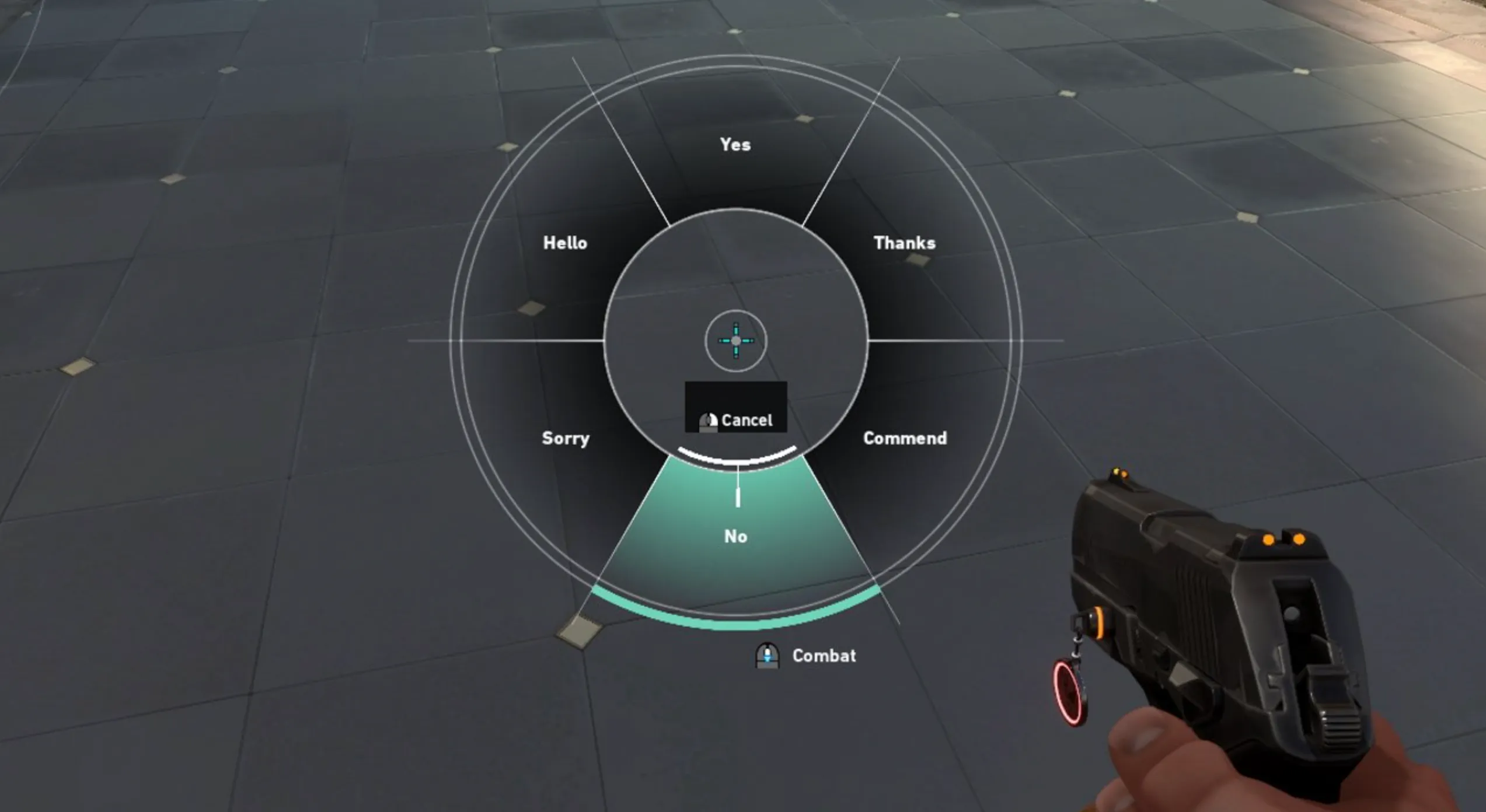
Say what you know: location, number, and important action. “Two B, Spike seen” is useful. “Everyone B” isn't useful when you've only seen two players. Use pings when appropriate, avoid speaking over urgent sound cues, and mute or report abusive communication through the game's controls.
Measure one habit before worrying about your rank
Choose a small review target for your next session: how often you fired before stopping, died with an ability equipped in the open, bought against the team's plan, or chased after a plant. Review a few relevant rounds and pick one correction. These are learning measures, not hidden matchmaking inputs.
New accounts need account level 20 before entering Competitive, subject to the game's other restrictions. Riot introduced that requirement in Patch 4.0, with an exception for accounts that had already played Competitive before that change. Account level isn't your Battle Pass level. Our account-level progression guide explains the distinction.
Before queuing Ranked, aim to understand buying, planting and defusing, basic communication, and your selected agent. There's no mandatory number of practice games that makes everyone ready. Don't use AFK farming, bots, or shared accounts to skip the learning period.
Questions from your first matches
Should I practise aim or abilities first?
Start with controlled movement and shooting, then add one ability that creates a safer fight. Practise both in real rounds; neither replaces the other.
Do I need to aim down sights every time?
No. Hip fire is useful in many rifle fights. Alternate fire and aiming behavior depend on the weapon, and console Focus is a separate control concept. Compare them in practice instead of importing habits from another shooter.
Am I playing badly if I have fewer kills?
Not necessarily. Check whether you traded, helped the objective, protected useful space, and used utility at the right time. Also review avoidable deaths; calling yourself a support doesn't excuse giving opponents free fights.
Sources and update notes
September 8, 2026: replaced the older list with a practical learning sequence, corrected movement and economy advice, removed unrelated links, and retained two relevant illustrations. Rules and current context were checked against Riot's beginner explanation, Agent directory, and Patch 13.05 notes. Practice recommendations are editorial, not claims of personal gameplay testing.


-a6d5b3e156bb.webp)