


Best Mobile Legends Settings for 2026
The best Mobile Legends settings prioritize reliable frame pacing, deliberate target selection, a control layout your thumbs can reach, and enough visual information to read a teamfight. Start with High Frame Rate, Medium graphics, Hero Lock Mode, advanced aiming, visible health and damage information, and a customized interface. Then raise or lower graphics according to heat and sustained performance—not the phone's marketing label.
Best Mobile Legends settings at a glance
| Setting | Recommended baseline | Adjust when… |
|---|---|---|
| Frame Rate | Highest stable option | Lower it if heat creates repeated drops |
| Graphics | Medium; Smooth on weak phones | Raise only after a long teamfight test |
| Shadows / HD effects | Off for competitive play | Enable for visuals if performance stays stable |
| Targeting Method | Advanced Aim Mode | Use the simplest scheme while learning |
| Target Priority | Lowest HP % or Closest Target | Choose by range, role, and hero kit |
| Hero Lock Mode | On | Keep portraits reachable, not over the battlefield |
| Aim Panning / Camera Shift | On for long-range skills | Disable if the camera movement disorients you |
| Network Boost | Conditional | Use only for unstable Wi-Fi and allowed data use |
Mobile Legends exposes some graphics and frame-rate options only on supported devices. A greyed-out Ultra option is not a mistake, and a 120 Hz display does not guarantee the game will offer or hold 120 FPS. The useful target is the highest option your device can sustain after several matches.
Best control and targeting settings
Advanced Aim Mode gives separate attack choices for heroes, minions, and turrets. That extra intent matters when you need to last-hit under pressure, hit a structure instead of a defender, or avoid wasting a basic attack on the wrong unit. New players can learn it in Practice or Classic before taking it into Ranked.
Hero Lock Mode should usually be on. Enemy portraits let you commit targeted attacks or skills to a specific visible hero instead of trusting automatic selection in a crowded fight. Reposition the portrait list during interface customization so your right thumb can reach it without covering skill buttons.
Which targeting priority should you use?
- Lowest HP Percent: a strong general choice for finishing damaged heroes regardless of their total health. It suits marksmen and assassins who punish exposed low-health targets, but can still pick the wrong enemy if another hero is closer to immediate danger.
- Lowest HP: favors the smallest remaining raw health pool. It can help burst heroes find fragile targets, but a nearly dead tank may still be selected over a full-health squishy depending on the numbers.
- Closest Target: predictable for melee fighters and tanks who must respond to the nearest threat. It is also the safest baseline if percentage-based switching feels erratic.
Automatic priority is a fallback, not a substitute for portrait lock and manual skill aiming. For directional or area skills, drag to aim instead of tapping whenever the angle matters. Enable the cancellation method you can execute without crossing another button; a clear cancel zone is easier to learn than an overly small gesture.
Assisted basic attacks can reduce empty taps, but assistance may pull movement toward an unintended unit. Test it on a hero who kites frequently. If movement feels magnetized near minions, disable the assistance and use the dedicated attack buttons more deliberately.
Camera, skill targeting, and interface layout
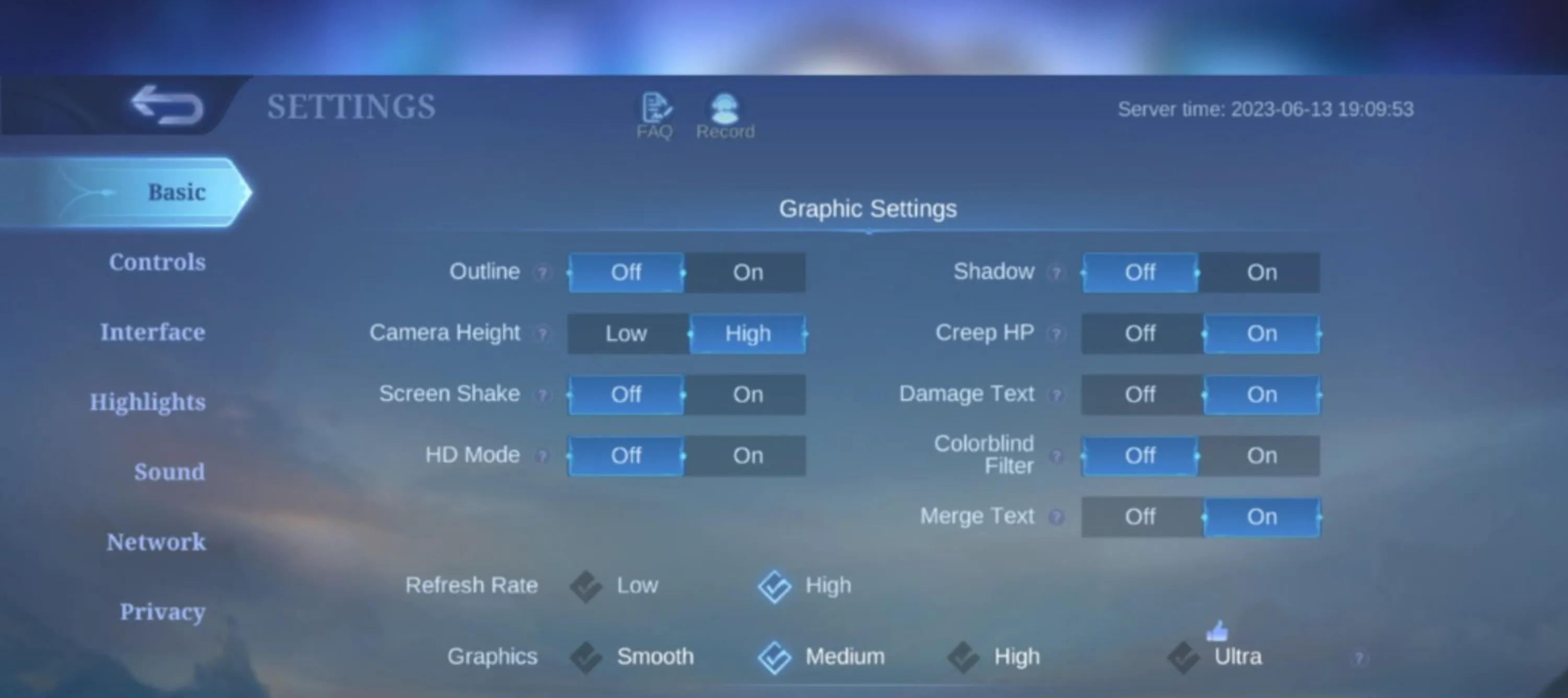
Enable camera panning or aim-based camera shift for long-range heroes when it reveals more space in the direction of a held skill. Disable it if the shifting frame makes you lose your hero during close fights. Use a comfortable camera sensitivity: fast enough to inspect Lord, Turtle, or another lane, but slow enough to stop on the intended area.
Customize the HUD around hand size and screen shape. Place the movement joystick where your thumb naturally lands, keep the three skills separated, enlarge the most frequently missed button, and move Recall, Regen, and Battle Spell far enough apart to prevent costly taps. Foldable phones and tablets need their own layout; importing a compact-phone layout wastes the larger screen.
Keep minion health bars, damage text, skill cost, cooldown numbers, and the minimap visible. Information is more valuable than a clean-looking HUD. Enlarge the minimap until you can recognize ally and enemy positions with peripheral vision, then lower interface opacity only if it obscures combat.
If you are still learning roles, pair the layout with the Mobile Legends beginner tips guide. It explains when map checks, rotations, and objectives matter, which makes camera settings easier to evaluate.
Graphics and frame-rate settings
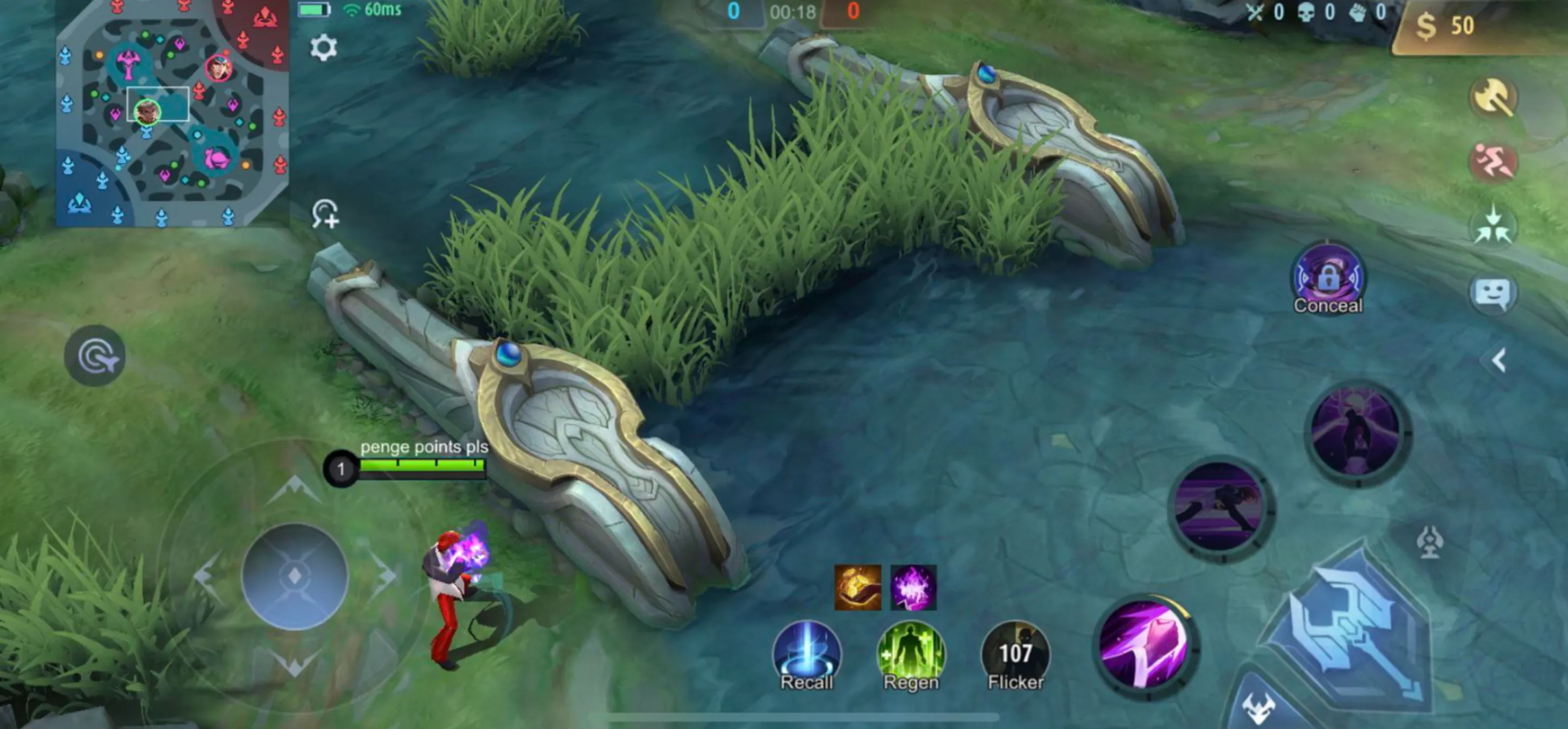
Set Frame Rate before raising visual quality. Higher stable FPS improves motion clarity and reduces the time between an input and a newly drawn frame. However, an unstable high mode that falls sharply after the phone heats up can feel worse than a consistent lower cap.
Use Medium graphics as the balanced starting point. Move to Smooth or Low when the device warms quickly, battery drain is a concern, or late-game fights stutter. Shadows, High Definition, bloom, outlines, and heavy effects are visual preferences; switch off the expensive options first while keeping health bars and combat indicators.
Keep anti-aliasing only if jagged edges make targets harder to read and your phone has headroom. Character outlines or color filters can help separation and accessibility at minimal strategic cost. Brightness should preserve shadow detail without washing out skill indicators; avoid adaptive brightness changes during ranked play.
Download required resources before queueing. Background asset downloads can compete for storage, bandwidth, and processing. Leave free storage for updates and caching, then restart the game after a major patch if frame pacing changes.
Low-, mid-, and high-end phone presets
| Phone behavior | Graphics | Frame-rate goal | Extra step |
|---|---|---|---|
| Low-end / frequent stutter | Smooth or Low; effects and shadows off | Stable standard/high option | Close overlays and cool the phone |
| Mid-range / stable 60 class | Medium; selective effects | High if sustained | Test three consecutive matches |
| High-end / supported high refresh | Medium–High | Highest supported stable mode | Prioritize cooling over Ultra visuals |
Heat is the real long-session benchmark. Remove a thick case if safe, avoid direct sun, and do not charge under a pillow or other heat-trapping surface. Fast charging while playing adds heat and can trigger earlier throttling. A cooler at a sensible setting can help sustained performance, but moisture and extreme cold are not safe solutions.
On Android, vendor game modes can block notifications and prioritize performance, but aggressive battery optimization may also restrict background voice chat or network behavior. On iPhone and iPad, use Focus to silence interruptions, keep Low Power Mode off during performance testing, and remember that the current App Store listing requires iOS or iPadOS 12.0 or later. Exact frame-rate tiers remain device- and version-dependent on both platforms.
If hardware is the bottleneck, compare cooling, sustained performance, screen size, and touch behavior in the Mobile Legends gaming-phone guide rather than buying for peak benchmark numbers alone.
Network, sound, and communication
Use a stable nearby Wi-Fi access point, pause downloads, and avoid switching networks mid-match. Low ping does not rule out packet loss or jitter; repeated red spikes matter more than one good lobby reading. Restart the router only during troubleshooting, never once a match has started.
Network Boost or similar dual-channel features may use cellular data alongside Wi-Fi. They can help when Wi-Fi briefly degrades, but they cannot repair a congested route or distant server. Enable the feature only if your device offers it, your plan allows the data use, and repeated tests show fewer spikes. Otherwise leave it off.
Keep sound effects high enough to hear skill casts and alerts, lower music if it masks them, and set voice chat beneath critical effects. Headphones improve separation but do not need excessive volume. Use push-to-talk or a properly gated microphone when background noise would distract the team.
Notifications, privacy, and account safety

Block banners, calls, floating windows, and accidental navigation gestures during matches through your phone's gaming mode or Focus feature. Keep alarms or emergency contacts allowed if necessary. Disable promotional game notifications you do not use, but leave security and login alerts enabled.
Review microphone, photos, contacts, and location permissions in Android or iOS settings and grant only what you use. Do not expose account IDs, login codes, or purchase receipts in screenshots. Use official account-binding and recovery options, and verify any purchase destination before paying.
Mobile Legends settings FAQ
Should Mobile Legends graphics be Smooth or Ultra?
Use Smooth when you need stable FPS or cooler sessions. Use higher quality only if the phone holds its target frame rate through several teamfights without uncomfortable heat or rapid battery loss.
Is the highest frame-rate option always best?
It is best only when sustained. If heat causes repeated drops, lower visual settings first; if that does not stabilize the game, use the next consistent frame-rate tier.
What is the best targeting priority?
Lowest HP Percent is a useful ranged-damage baseline, while Closest Target is predictable for melee and frontline heroes. Portrait lock and manual skill aim should override automatic priority whenever a specific enemy matters.
Should I enable Network Boost?
Only after testing. It may consume mobile data and helps mainly when Wi-Fi is unstable. It cannot fix every routing, server, or congestion problem.
Once the controls feel automatic, the Mobile Legends rank-climbing guide is the natural next step. If you are choosing a utility setup, compare the current Mobile Legends Battle Spells. Settings help you execute decisions; neither is a shortcut around practice.
Posted On: December 9th, 2024
Recent Articles


Our 1v9 support team is available 24/7 to help you with any questions or issues you may have.
support@1v9.gg


-a6d5b3e156bb.webp)





Loading...
1v9.gg is not endorsed or affiliated by any game developers or publishers.
2026 1v9, All Rights Reserved, Created By Ritesh (riteshsahoo.com)