

A good roam starts with lane priority, a believable target, and a return plan. Push or otherwise secure your wave, check health and key cooldowns in the destination lane, move through information you trust, then abandon the play if the window closes. Leaving lane without those conditions is not pressure—it is a gamble funded by your own minions and turret.
The cleanest rule is one window, one useful action: gank, place or clear vision, help an objective, escort your jungler, or fake movement and return. Do not stack three uncertain actions while the next wave dies in your lane.
Last verified: August 26, 2026 — League of Legends Patch 26.17
Season 2026 Role Quests reward playing around your assigned lane, especially early. Roaming is still valuable, but repeated low-percentage trips now carry added quest-progress opportunity cost for laners.
What is roaming in League of Legends?
Roaming is temporarily leaving your normal lane responsibility to create value elsewhere. A roam can produce a kill, summoner spell, turret damage, objective control, vision, jungle safety, or simple pressure that forces enemies away from a wave.
The movement itself is not the goal. Walking halfway to bot lane, arriving after the fight, then wandering into river has spent time without buying anything. A successful roam either converts into value or changes the map at a lower cost than staying in lane.
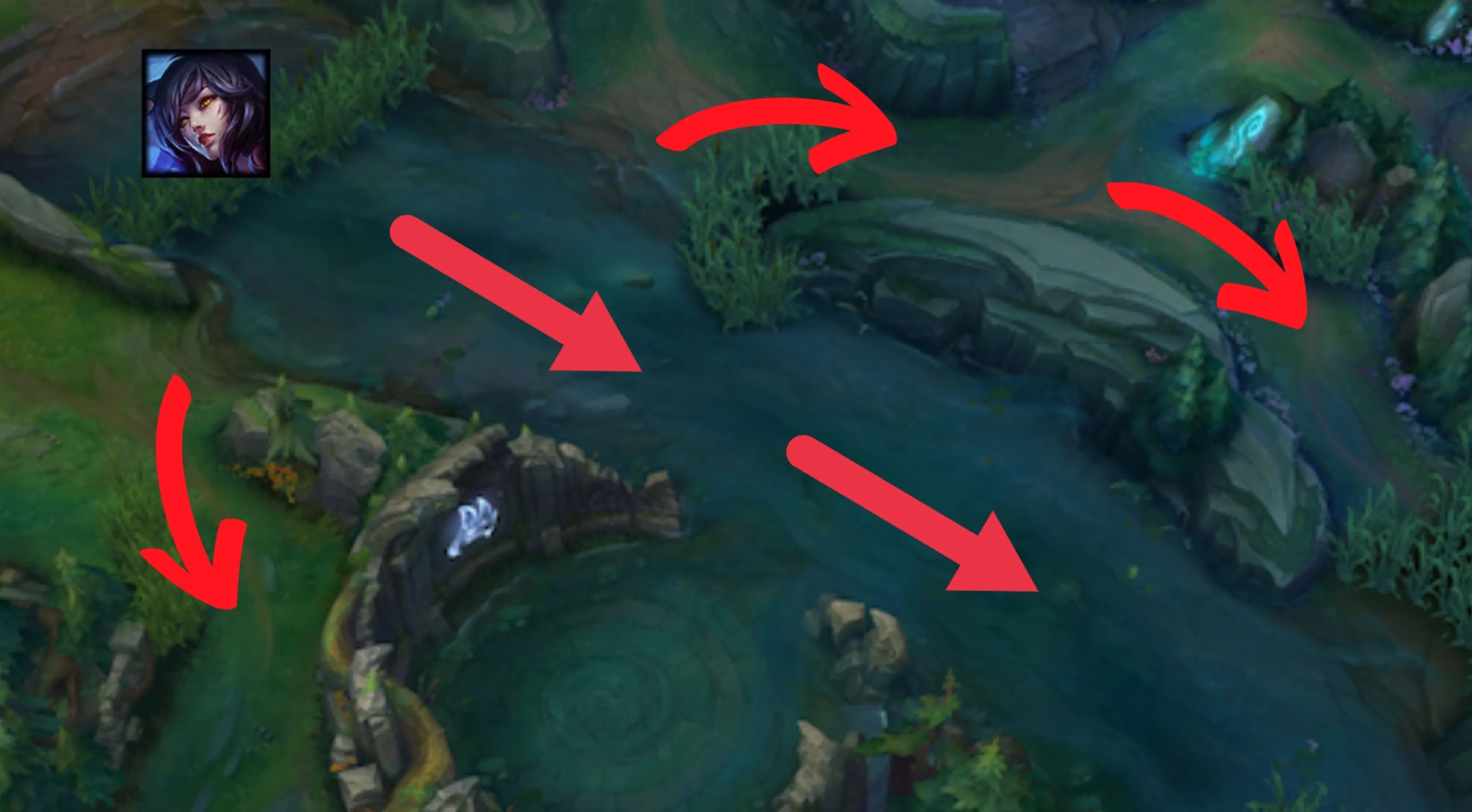
The five checks before every roam
| Check | Green light | Red light |
|---|---|---|
| Wave | Your wave crashes, the enemy laner must recall, or you can move without losing a full wave. | Enemy wave is pushing into your turret or your freeze is valuable. |
| Target | Enemy is extended, low, missing mobility, or your ally has reliable setup. | Enemy is full health under turret with escape spells available. |
| Resources | You have enough health, mana, ultimate, and key cooldowns to contribute. | You are one spell from empty and cannot survive the countergank. |
| Information | Enemy jungler and lane opponents are seen, or your route is protected. | Multiple enemies are missing and you must face-check the route. |
| Conversion | A kill can become plates, a turret, Dragon, Grubs, Herald, or vision. | Even a summoner spell will not change the lane or objective state. |
You do not need all five to be perfect. You do need enough upside to cover the wave, experience, role-quest progress, plates, and tempo being risked.
How wave state creates a roam window
Best: crash a wave, then move
Fast-push the wave into the enemy turret. The opponent must catch it or give up gold, experience, and Role Quest progress. Your next wave takes time to travel, creating the cleanest window to move.
Good: move when the enemy recalls or dies
If the opponent cannot contest the wave, clear it first and take one map action. Staying for an extra plate can be correct, but compare that guaranteed gold with the likelihood of helping an objective or side lane.
Situational: roam on a slow push
A stacked wave moving toward the enemy turret can give a longer window, especially for a dive. It can also be frozen before it crashes. Confirm that the stack will reach the turret or move with enough teammates to protect it.
Bad: leave a wave pushing into you
The enemy can crash, take plates, deny experience, and then follow after collecting the wave. Catch or thin it first unless an immediate game-changing fight outweighs the loss.
For the mechanics behind crashes, bounces, slow pushes, and freezes, use the separate League wave-management guide.
Roaming by role in Season 2026
Mid lane
Mid has the shortest path to both rivers, but the 2026 Mid Role Quest progresses faster in and around mid lane. Prioritize crash-and-move windows, especially before your jungler contests river. Mages can hover safely and return; assassins can threaten a deeper route when enemy vision is denied. Do not force a side-lane gank simply because your champion is labeled a roamer.
Support
The strongest support windows come after your bot wave crashes, when the ADC recalls, when the ADC can safely collect a wave alone, or when you leave base and path through mid before returning bot. Check the opposing engage range: abandoning an immobile ADC into a stacked enemy wave can lose more than the roam can earn.
Top lane
Top roams are more expensive because the lane is long and isolated. Move after a large crash, toward a nearby objective, or with Teleport available to repair the wave state. Randomly walking bot often costs multiple waves and your turret. Season 2026's Top Role Quest also makes early lane presence especially valuable.
Jungle and bot carry
Junglers rotate and gank as a core job rather than “roam” from a lane, but the same information and conversion tests apply. Bot carries should usually secure farm; short moves to river after a crash are far safer than long mid-lane detours that surrender their income advantage.
Newer mid players can combine these rules with the practical lane habits in the mid lane beginner guide.
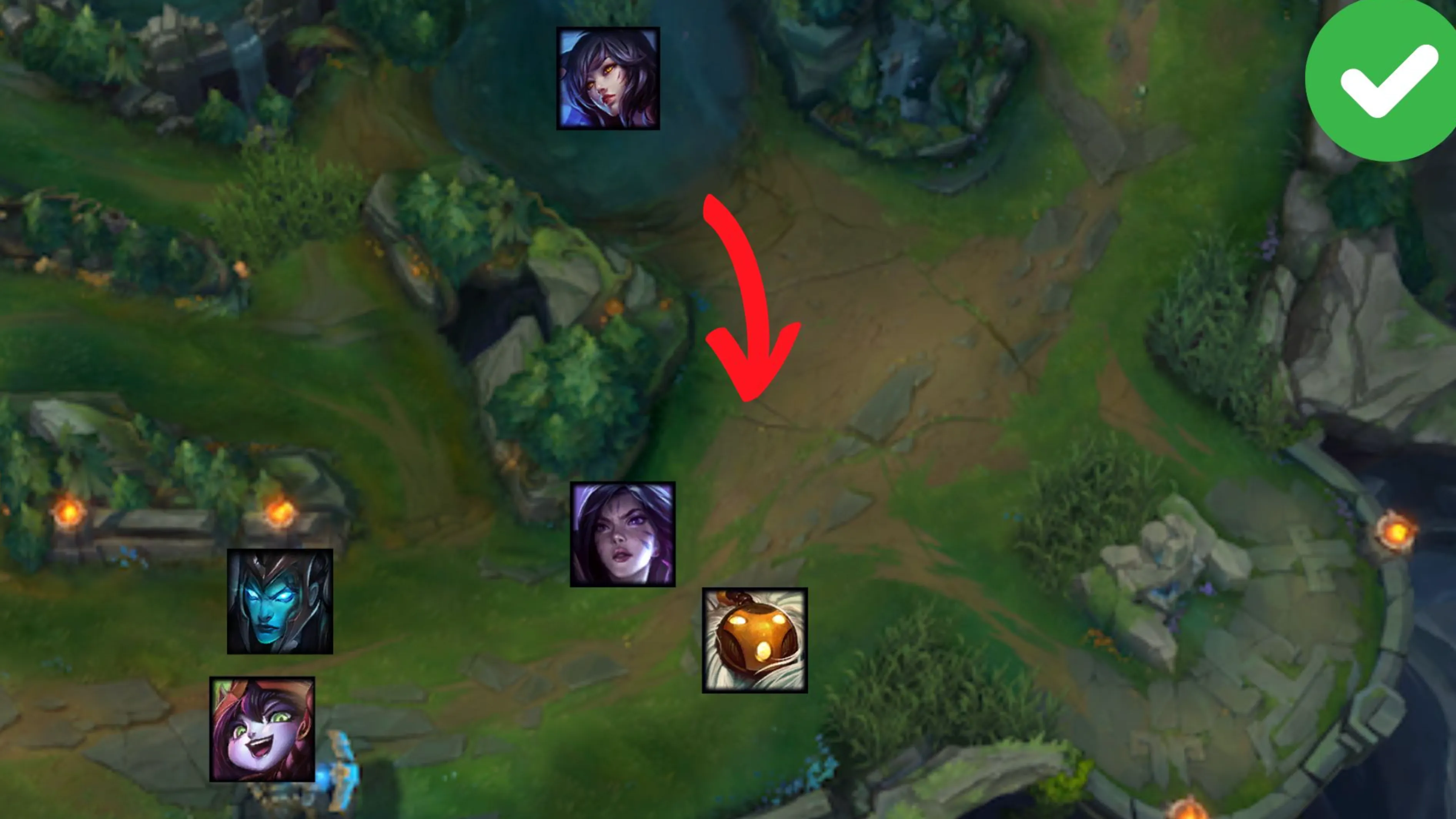
Vision, pathing, and roam execution
- Ping before leaving. Mark your path and target, then use an on-my-way ping early enough for allies to preserve health and cooldowns.
- Choose a route from evidence. Use wards, Scuttle vision, Faelights, seen enemies, and minion information. The shortest path is not safest when it crosses unseen jungle.
- Hide the direction. Push, step out of vision, and pause briefly. Even a fake roam can make a side lane back away while you return for the next wave.
- Approach behind the escape line. Running straight from river often allows an early retreat. When safe, enter from a deeper angle or coordinate with the jungler.
- Set a stop condition. If the target backs off, your ally loses setup, or the enemy jungler appears, turn around immediately.
- Convert, then reset. After the play, take the nearest justified objective or ward, recall if needed, and return before the next wave is lost.
Good pathing begins with useful information, not a high Vision Score alone. The full League warding guide covers current trinkets, Control Wards, and objective setups.
Calculate the opportunity cost before committing
A roam does not need a kill to succeed, but its outcome must be worth more than the resources surrendered. Count these costs:
- Minions and experience: how much dies before you return?
- Turret plates or structure health: can the enemy stay and hit the turret uncontested?
- Role Quest progress: are you repeatedly leaving the area that accelerates your quest?
- Lane partner safety: does your ADC or other ally become diveable?
- Recall timing: will you return with low resources while the enemy spent gold?
- Counter-roam: can your opponent follow later with a cleaner wave and better path?
A forced Flash, deep ward, or secured objective can justify the cost. A late arrival that earns nothing cannot. Review the decision using the information available when you left, not only the final result.
What to do when a roam fails
- Do not wait in a warded brush. Once the target respects the roam, the play is over.
- Return by the safest useful route. Place a ward or clear one only if it does not make you miss another wave.
- Ping the enemy movement. Your disappearance may draw the opposing mid or support into river; warn teammates.
- Repair the lane. Catch the incoming wave, prevent a freeze, or recall before the opponent converts the tempo.
- Record why it failed. Was the wave wrong, target unkillable, path warded, setup missing, or decision too slow? Fix one input next game.
Review exercise: for every roam in a replay, pause when you leave lane. Note the wave direction, visible enemies, your resources, the target's escape tools, and the next objective. Judge the process before watching the outcome.
League roaming FAQ
Should I always shove before roaming?
Usually, but not always. An immediate river fight or guaranteed collapse may justify leaving. The key is knowing exactly what the unpushed wave will cost and why the urgent play is worth more.
What if I cannot push the wave?
Hover toward the relevant side without fully committing, ping danger, or move with your jungler only after assessing the loss. A losing lane does not become winning by donating two waves to a low-percentage roam.
When should a support roam?
After a bot crash, during a synchronized recall, when the ADC can safely collect alone, or while pathing from base. Return before a stacked enemy wave creates a dive unless the map play is clearly more valuable.
Does a roam need a kill to be good?
No. A summoner spell, denied wave, objective, deep vision, protected invade, or forced retreat can be enough. Compare it with the lane value you gave up.
Sources and update policy
- Riot Games: Patch 26.1 Role Quests and 2026 Summoner's Rift systems
- Riot Games: Patch 26.17 notes
- Official League of Legends gameplay overview
This page is reviewed when Riot changes Role Quests, lane economy, vision, objective rules, or major map systems. Champion-specific roam strength changes more often than these fundamentals.


-a6d5b3e156bb.webp)