


How to Reach Level 20 in VALORANT
To reach Level 20 in VALORANT, earn Account Points (AP) by finishing matchmade games and collecting win bonuses. Each level takes 5,000 AP. Battle Pass XP and mission XP are separate: a large XP reward won't move your account-level bar. Level 20 is the Competitive requirement described in Riot's current Ranked FAQ for new accounts.
Last verified: · VALORANT Patch 13.05
The Level 20 answer in 30 seconds
| Question | Current answer |
|---|---|
| What unlocks Competitive? | Account Level 20; accounts that played Ranked before Episode 4 retain the historical exception |
| What raises account level? | Account Points earned from completed matches |
| AP needed per level | 5,000 AP |
| Most valuable routine | Complete matches regularly and secure the first win of the day when practical |
| Do daily and weekly XP missions help? | They help Battle Pass and event progression, but their XP does not directly become AP |
How VALORANT account leveling works
Account level records your match activity, not your skill rating. Riot's Account Leveling FAQ confirms that matchmade games award AP for time played, with extra AP for wins and the first win of the day. Every 5,000 AP adds a level.
AP has one job: account leveling. It does not fill the Battle Pass, unlock Agent Gear, or replace the XP used by other progression systems. You can see your current account level on your Player Card and your AP progress in the post-match screen.
The current Competitive Mode FAQ retains the Level 20 rule introduced in Patch 4.0. An account that played Ranked before Episode 4 can keep its access below Level 20. The former requirement to win ten Unrated games is obsolete.
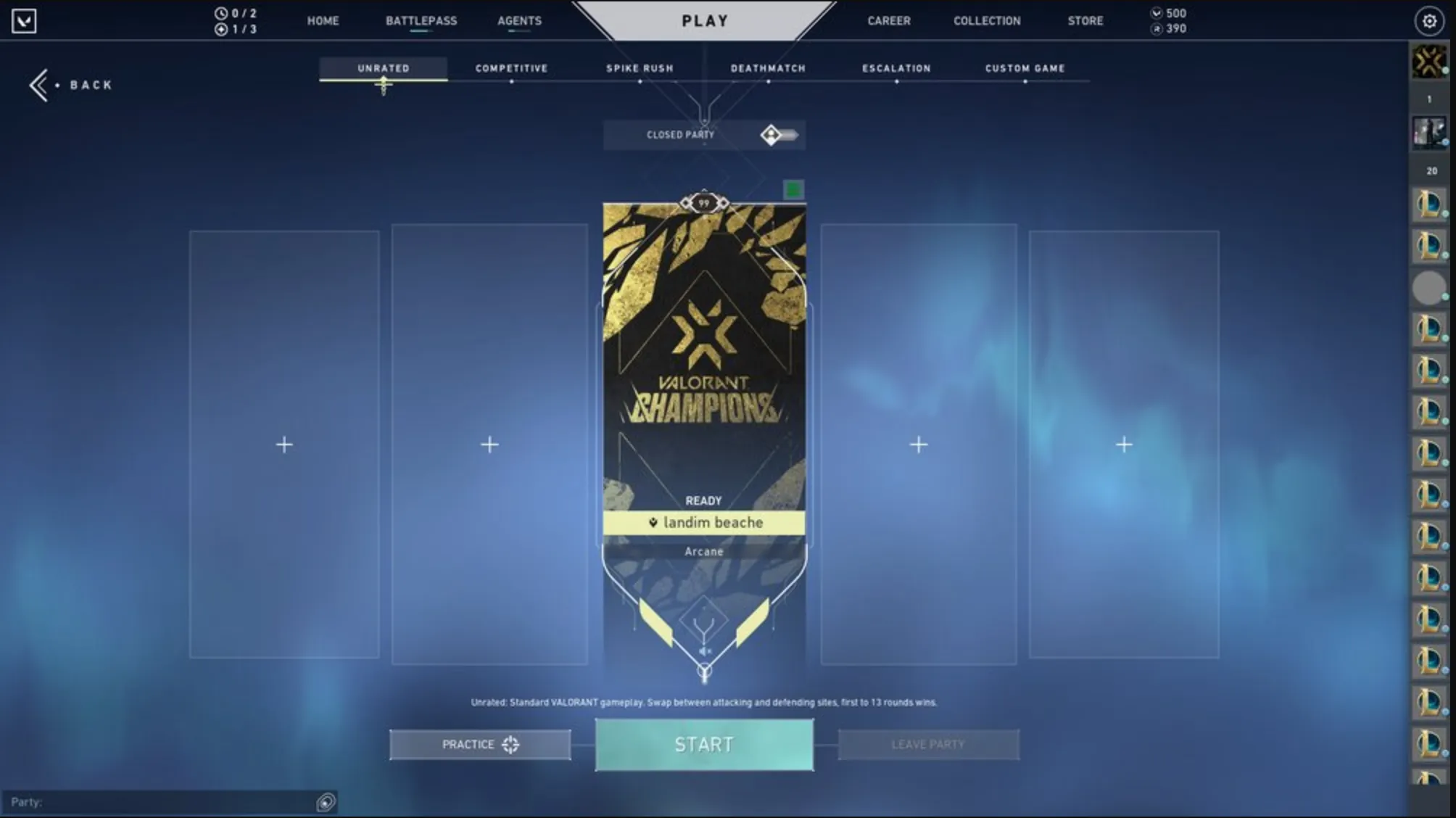
A practical route to Level 20
- Finish the matches you start. AP is awarded through completed match activity. Leaving, going AFK, or deliberately ending participation risks penalties and wastes the learning time the requirement is designed to provide.
- Check whether your first-win reward is available. Collecting it alongside normal match AP is worthwhile. Use the amount and reset shown on your own account; don't assume a single bonus figure applies at every account level. If you're tilted or tired, stop rather than forcing another queue.
- Choose a mode you can complete consistently. A shorter mode may fit a small time window, while Unrated provides experience closest to Competitive. No mode turns Battle Pass XP into account levels.
- Play for legitimate wins, not stat padding. Riot says match duration and result affect AP. Personal kill count is not published as a direct AP multiplier, so chasing low-value fights is not a reliable leveling method.
- Give each session a practice goal. For example, spend one session buying with your team and another checking the minimap before rotating. You'll earn match AP while building habits that matter after the queue unlocks.
Which VALORANT mode is best for earning AP?
Our recommendation: use Swiftplay for short objective-based sessions or Unrated when you have time for fuller Ranked preparation. This is a learning-and-scheduling recommendation, not a tested fastest-AP ranking. Short matches can mean more time requeuing; long matches can overrun your available time. Compare your own completed-session AP, including time spent waiting, before deciding one mode is faster for you.
| Mode | Useful for | Leveling trade-off |
|---|---|---|
| Unrated | Economy, full rounds, utility plans, and Competitive-style pacing | Longer commitment; closest preparation for Ranked |
| Swiftplay | Shorter sessions with objectives, abilities, and a condensed economy | More convenient, but not a full Competitive economy simulation |
| Spike Rush | Quick matches and low-pressure Agent familiarity | Power-ups and fixed weapons make it less representative of Ranked |
| Team Deathmatch / Deathmatch | Aim, movement, and weapon repetitions | Useful practice, but it does not teach plant rounds or a standard economy |
| Rotating modes | Variety when a mode is available | Rules and availability change, so do not build a fixed leveling estimate around one |
If Ranked readiness matters as much as speed, make Unrated or Swiftplay your base and use Deathmatch or Team Deathmatch for focused aim work. Our VALORANT beginner guide explains the core round flow, while the current VALORANT maps directory helps you learn the spaces you may encounter.
AP and XP are different progression currencies
This is the most common source of bad Level 20 advice. Account Points move the number on your Player Card. XP advances systems such as the Battle Pass and other time-limited progression tracks. Completing an XP mission may coincide with playing a match that earns AP, but the mission reward itself does not convert into AP.
- AP: account level only.
- XP: Battle Pass and applicable progression tracks.
- Kingdom Credits: a separate earnable currency used for eligible store or Agent Gear content; it is not account-level progress.
- RR: Ranked Rating after Competitive is unlocked; it is not AP.
That means you should not choose a mode because an old article advertises a large XP payout if your only target is Account Level 20. Look at the AP line on the end-of-match screen instead.
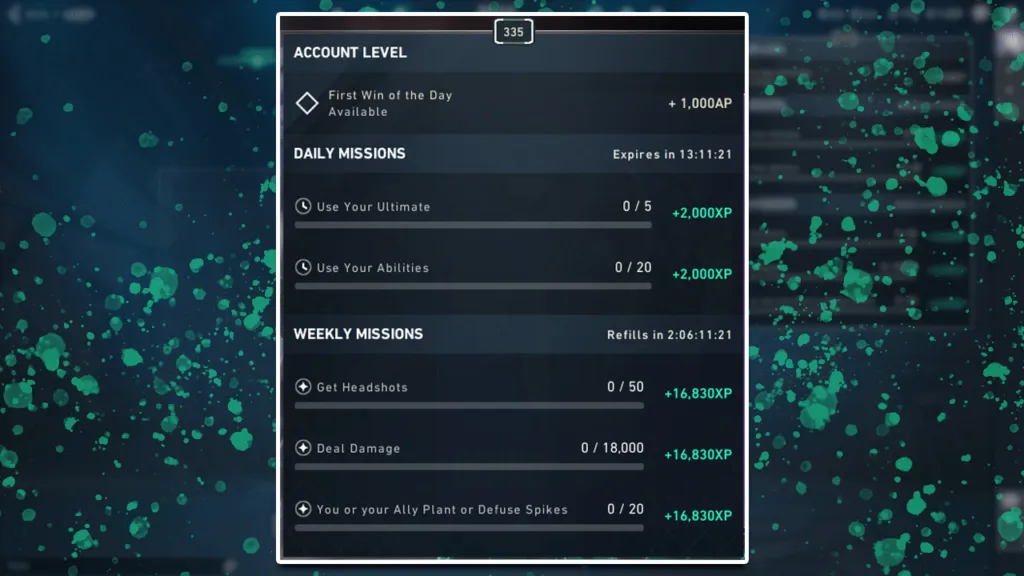
Riot's progression explainer separates daily and weekly XP from account progress. Its 2023 first-win example quotes 1,000 AP; the current community-maintained VALORANT Wiki account-level reference documents larger rewards at lower levels. Riot's current support FAQ confirms win bonuses but doesn't publish that full rate table. For a personal estimate, use your actual post-match AP rather than treating an old screenshot as today's universal rate.
Use Levels 1–20 to prepare for Competitive
Level 20 opens a queue; it doesn't prove you're ready for every situation in it. As a practical starting point, learn two Agents in a role you enjoy and a fallback you can play without guessing your utility. Our new-player Agent recommendations explain options by the habits they help you learn.
A practical Ranked-readiness checklist
- buy with the team instead of treating every round as an isolated purchase;
- identify common plant sites and give short, useful callouts;
- trade a teammate rather than taking disconnected one-versus-one fights;
- place your crosshair near likely head height before an opponent appears;
- use your Agent's essential utility without blocking or flashing teammates;
- recognize when saving a weapon is better than forcing an unlikely retake.
For a structured practice plan, use the drills in our crosshair-placement guide and the review prompts in the game-sense guide.
What to do when AP or your level does not update
- Check the completed match's progression screen. Record the AP awarded and your resulting account level, not just the larger XP total.
- Confirm you are looking at Account Points, not XP, Kingdom Credits, or RR.
- Restart VALORANT and the Riot Client normally if the Player Card number appears stale.
- Check Riot's service-status page for login, progression, or maintenance incidents in your region.
- If completed-match AP is still missing after the incident clears, contact VALORANT Support and include the match date, approximate time, region, and any end-screen screenshot you already have.
Do not download a “leveling tool,” modify the client, or give someone your credentials. Those actions cannot safely repair server-side progression.
Level 20 FAQ
How long does it take to reach Level 20 in VALORANT?
There's no dependable one-size-fits-all hour count. To estimate your remaining AP, multiply the number of full levels left by 5,000, then subtract AP already earned toward your next level. For example, Level 17 with 2,000 of 5,000 AP earned needs another 13,000 AP to reach Level 20. This is an AP calculation, not a prediction of games or hours.
Do daily and weekly missions raise your VALORANT account level?
No, mission XP does not directly raise account level. You may earn AP from the matches played while completing a mission, but AP and XP remain separate.
Does Spike Rush count toward Account Level 20?
Yes. Riot's account-leveling announcement explicitly says account progress can come from all modes, including Spike Rush. The best queue is still the one you can complete consistently.
Can you play Competitive before Level 20?
Riot's current Competitive FAQ requires Level 20 and preserves the pre-Episode 4 exception for older Ranked accounts. For a platform-specific lock or a different requirement shown by your client, follow that exact message and check Riot's console guidance; don't assume unlocking a queue also resolves party or account restrictions.
Can you hide your account level?
Riot documents this path: Collections → Player Cards → Level Borders. Clear Show my account level on my player card. That changes its visibility, not your account progress.
Does account level reset each Act?
No. Riot's Account Leveling FAQ says Act changes and Competitive rank don't reset account level. It does separately warn that a transfer to another shard resets it, so contact support if your missing progress follows an account transfer.
Sources and update note
- Riot Games: VALORANT Account Leveling Explained
- Riot Games: VALORANT Patch Notes 4.0
- Riot Games Terms of Service
- Riot Games: VALORANT Patch Notes 13.05
Updated September 5, 2026: clarified first-win reward limitations, added an AP-remaining example and account-transfer guidance, and restored clearly labeled reference images.
Posted On: April 9th, 2024
Recent Articles


Our 1v9 support team is available 24/7 to help you with any questions or issues you may have.
support@1v9.gg

-a6d5b3e156bb.webp)





Loading...
1v9.gg is not endorsed or affiliated by any game developers or publishers.
2026 1v9, All Rights Reserved, Created By Ritesh (riteshsahoo.com)