

How To Get Unbanned From League of Legends
Getting banned in League of Legends instantly shuts you out of your account, your skins, your ranked progress, and years’ worth of grinding. With millions of players logging in every single day, Riot’s automated and manual moderation systems are extremely strict — sometimes too strict. Between false reports, accidental triggers from the detection system, or even someone else accessing your account, players can end up banned without ever intentionally breaking the rules.
The good news? Most League bans can be appealed if you move fast. Riot only gives players a short window to submit a support ticket, and the way you word your appeal can heavily influence the outcome. In this guide, you’ll learn everything you need to know: the types of bans Riot issues, the most common reasons they happen, how to properly appeal, what to include in your ticket to maximize your chances, and what usually happens after you submit it. This walkthrough is designed to give you the best possible shot at getting your League account restored.
LoL Ban Types: Chat Restrictions, Suspensions, and Permanent Bans
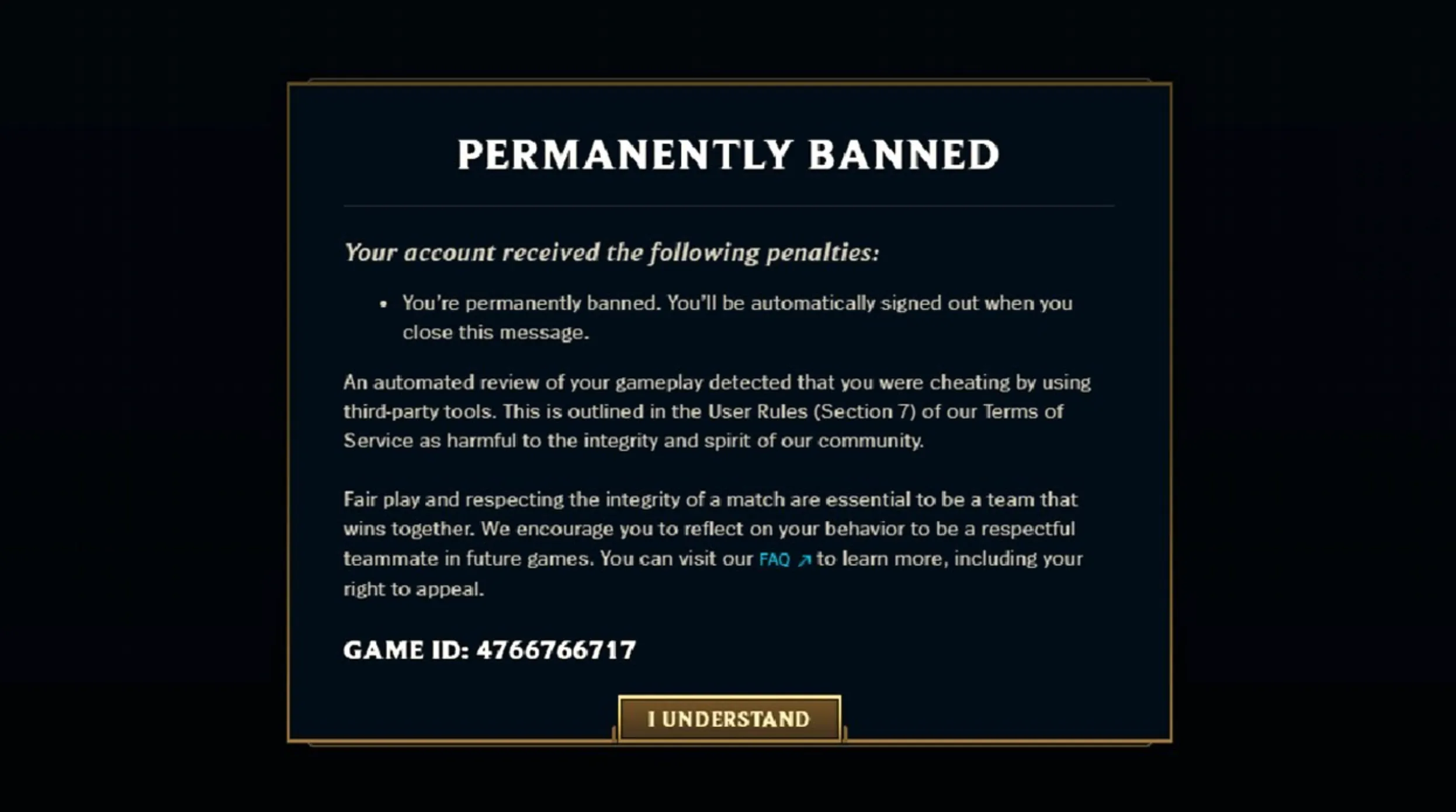
Riot Games has its own moderation system for League of Legends, and while it works differently from Roblox, the idea is the same: depending on the severity of your behavior, your account can receive anything from a small penalty to a full permanent ban. Understanding each ban type makes it much easier to know what you’re dealing with before submitting a ban appeal.
Chat Restriction (Lightest Punishment)
A chat restriction is the mildest form of discipline. You still keep full access to your account, champions, skins, and ranked games, but your messages in chat are limited for a set number of games. Riot uses this punishment when the behavior wasn’t severe enough for a suspension but still crossed the line — usually related to negativity, trash talk, or spam. These penalties remain on your account history and can contribute to harsher punishments later.
14-Day Suspension
A 14-day suspension is the first major punishment. During the suspension period, you lose all access to League of Legends, including ranked, normals, and custom games. Once the suspension ends, your account returns with everything intact — skins, champions, progress, and Honor level — although your Honor will usually drop significantly.
This suspension is a strong warning: one more major violation after a 14-day ban almost always leads to a permanent ban.
Permanent Ban
A permanent ban means your League account is locked forever. You lose access to:
• All purchased skins
• Champions
• RP you bought
• Event passes
• Loot, orbs, prestige points
• Your Summoner name and progress
Once a permanent ban is issued, the account cannot be played again unless Riot Support overturns the decision (which is rare and only happens if the ban was a mistake).
Ranked Restrictions
Riot can also apply ranked-specific penalties such as:
• Ranked lockouts (you must play a certain number of normal games to re-unlock ranked)
• Prevented ranked entry if your Honor level is too low
These are common for players who dodge too many games, AFK frequently, or are placed in low Honor tiers.
Behavioral or Automated System Flags
League also uses automated systems like:
• LeaverBuster (for AFK/Leaving)
• Queue Lock / Low Priority Queue (temporary matchmaking punishment)
These don’t affect your account permanently, but repeated triggers can escalate to suspensions.
IP or Hardware Bans (Rare)
Riot very rarely issues IP or HWID bans, but they do happen in extreme cases — usually tied to cheating scripts, third-party automation tools, or long-term repeat offenses. These block every account logging in from the same network or device.
Why You Got Banned in League of Legends
Understanding why your League of Legends account was punished is the first step toward fixing the situation and preparing a proper appeal. Riot uses a mix of automated systems and manual reviews to enforce behavior rules, so even normal players sometimes get punished because of false reports or mistakes. Still, most bans fall under a few very common categories.
Below are the most frequent reasons League players get punished and how Riot typically handles each one:
1. Toxic Chat or Harassment
This is the number one reason players get punished. Any type of flaming, slurs, death threats, spam, all-caps harassment, or targeting a teammate usually triggers punishment fast. Riot’s system escalates quickly: first a 10-game chat restriction, then 25-game, then a 14-day suspension, and the next violation after that is almost always a permanent ban.
2. Cheating, Scripting, or Third-Party Programs
Using scripts, zoom hacks, bot programs, injected software, or anything that alters gameplay results in an instant permanent ban with no warning. Riot has zero tolerance here, and appeals rarely work unless the detection was genuinely wrong.
3. Inting or Griefing Teammates
Running it down, refusing to play, trolling objectives, sabotaging lanes, or purposely feeding counts as “gameplay sabotage.” Riot issues 14-day bans on first offense in many cases, and permanent bans for repeated griefing.
4. AFK or Leaving Too Often
Being AFK sometimes won’t get you punished, but a pattern of AFKs, leavings, or dodging games will trigger the LeaverBuster system. This can give:
• Low Priority Queue
• Queue restrictions
• Ranked queues disabled
If the behavior continues, Riot can escalate to temporary suspensions.
5. Boosting, Account Sharing, or Using Someone Else’s Account
Letting someone else play your account or playing on another person’s account is against Riot’s rules. Boosting and sharing usually cause 2-week suspensions, and repeated offenses often turn into permanent bans.
6. Chargebacks or Payment Fraud
If an account buys RP and the payment gets reversed, Riot automatically locks the account until the balance is repaid. If ignored, this can lead to permanent bans.
7. Compromised or Hacked Accounts
If your account gets hacked and the person uses it for toxicity, cheating, or fraud, Riot may temporarily ban it. These bans can be reversed if you prove the account was compromised and recover it through Riot support.
How to Appeal a Ban and Get Unbanned From League of Legends
If your League of Legends account gets banned, Riot gives you only one chance to appeal each moderation action, so you have to approach it correctly. Riot’s system sends an email or client notification explaining why you were punished and what type of enforcement was applied. Depending on your case, you may receive a Chat Restriction (limiting your ability to speak for a set number of games), a Ranked Restriction (locking you out of ranked until you repair your behavior), a 14-day suspension for severe toxicity or gameplay abuse, or a Permanent Ban for extreme violations like cheating, third-party scripts, boosting services, account sharing, hate speech, or repeated behavioral offenses. To appeal, you must go to the official Riot Support page, log in with your banned League account, select “Account Management” → “Ban or Suspension Appeal”, and submit a detailed explanation that includes your username, region, the date of the ban, and why you believe the punishment was incorrect. If your account was hacked, if a penalty was triggered unfairly, or if you have proof that contradicts the automated detection, you should include that in your ticket. Riot only reviews each case one time, duplicate tickets get closed automatically, and only the account owner can submit an appeal. Riot does not lift bans for “behavior reform,” and they do not expire automatically, so the only way to get unbanned is by showing that the enforcement was issued in error. Craft a clear, respectful appeal, explain your situation honestly, and wait for Riot’s final decision.
Writing a Strong Appeal to Get Unbanned from League of Legends
Writing a strong ban appeal in League of Legends is all about being clear, honest, and respectful, because Riot’s support team handles a massive number of cases every day and a well-written message instantly stands out. Begin by explaining exactly what happened from your perspective—if you made a mistake, admit it directly, and if your account was compromised, describe how it occurred and what security steps you’ve taken since. If you think the suspension was triggered unfairly or by automated detection, calmly explain why you believe that, without making excuses or pointing fingers. Riot’s team can verify your logs, so staying truthful is always your best option. Show that you understand why the punishment might have been issued, acknowledge the rules you may have triggered, and explain what you’ll do to avoid similar issues going forward, since genuine accountability helps your appeal more than simply saying “sorry.” If you have relevant proof—screenshots, login history, or anything that confirms someone else was using your account—include it, but only if it’s directly tied to your case. Keep the tone professional, avoid emotional outbursts, all-caps, or long rants, and stay focused on the facts instead of begging or mentioning how much money you’ve spent. Don’t attack Riot, don’t blame other players, and don’t claim the rules are unclear. Your goal is to show Riot that you understand the situation, you’ve learned from it, and you’re ready to return to League without repeating the behavior that led to the temporary suspension, chat restriction, or permanent ban.
How Long Until League of Legends Unbans Your Account?
The time it takes for Riot Games to lift a League of Legends ban depends entirely on the type of punishment you received. Temporary suspensions—such as 1-day, 3-day, 7-day, or 14-day bans—automatically expire once the timer ends, and your account is restored with all champions, skins, and progress untouched. Chat restrictions and ranked restrictions work the same way and clear themselves after completing the required number of games. However, serious punishments like permanent bans, hardware bans, or ID-restricted penalties do not expire at all—these require submitting a support ticket and hoping Riot agrees to overturn the decision, which rarely happens unless the ban was clearly issued in error. If the suspension was triggered by suspicious activity or unauthorized access, Riot may unban the account quickly once you verify ownership and secure it with updated login info. But if it was due to toxicity, cheating, scripting, third-party tools, chargebacks, or boosting violations, you should expect the punishment to last for its full duration, and permanent sanctions almost never get reversed. In short: temporary bans end on their own, but anything harsher requires a manual review from Riot, and even a well-written appeal is not guaranteed to succeed.
Preventing Future Bans on League of Legends
Avoiding future bans in League of Legends comes down to understanding Riot’s rules and staying consistent with them every time you play, especially since their system tracks behavior long-term and repeat violations quickly stack into harsher punishments. Keep your chat clean and avoid flaming, passive-aggressive comments, or targeted insults, since verbal abuse is one of the fastest ways to trigger Chat Restrictions and eventually a 14-day or permanent suspension. Never use third-party programs that modify the game or provide gameplay advantages, including scripts, automation tools, zoom hacks, or anything that interferes with the client, because Riot permanently bans accounts using them with zero tolerance. Be careful with account security by enabling two-factor authentication and avoiding account sharing or boosting, since playing on someone else’s account or letting someone play on yours can also result in bans. If you queue up while tilted, mute teammates early to prevent arguments that lead to reports, and use the /mute all command if necessary to stay focused. Stick to fair play, report bugs instead of abusing them, avoid intentionally feeding or trolling, and stay away from boosting services or third-party sellers. Following these simple habits keeps your account safe long-term and helps you avoid the frustrating suspension ladder that starts with chat restrictions and can end with a permanent ban.
Conclusion
Getting banned in League of Legends can be stressful, especially when you lose access to your account, champions, skins, and everything you’ve built over the years, but most situations can still be fixed if you understand how Riot’s ban system works and follow the right steps when appealing. Whether your suspension came from a chat violation, gameplay toxicity, third-party software flags, or even an account compromise, approaching the appeal process calmly and professionally gives you the best chance of getting unbanned. Riot looks closely at clear explanations, accountability, and evidence, so taking the time to write a proper appeal really matters. At the same time, avoiding future bans comes down to keeping your account secure, staying away from third-party tools, and keeping your in-game behavior clean. With the right approach, you can recover your account and jump back onto the Rift with a fresh start.
Posted On: December 2nd, 2025
Recent Articles


Our 1v9 support team is available 24/7 to help you with any questions or issues you may have.
support@1v9.gg

-a6d5b3e156bb.webp)





Loading...
1v9.gg is not endorsed or affiliated by any game developers or publishers.
2026 1v9, All Rights Reserved, Created By Ritesh (riteshsahoo.com)