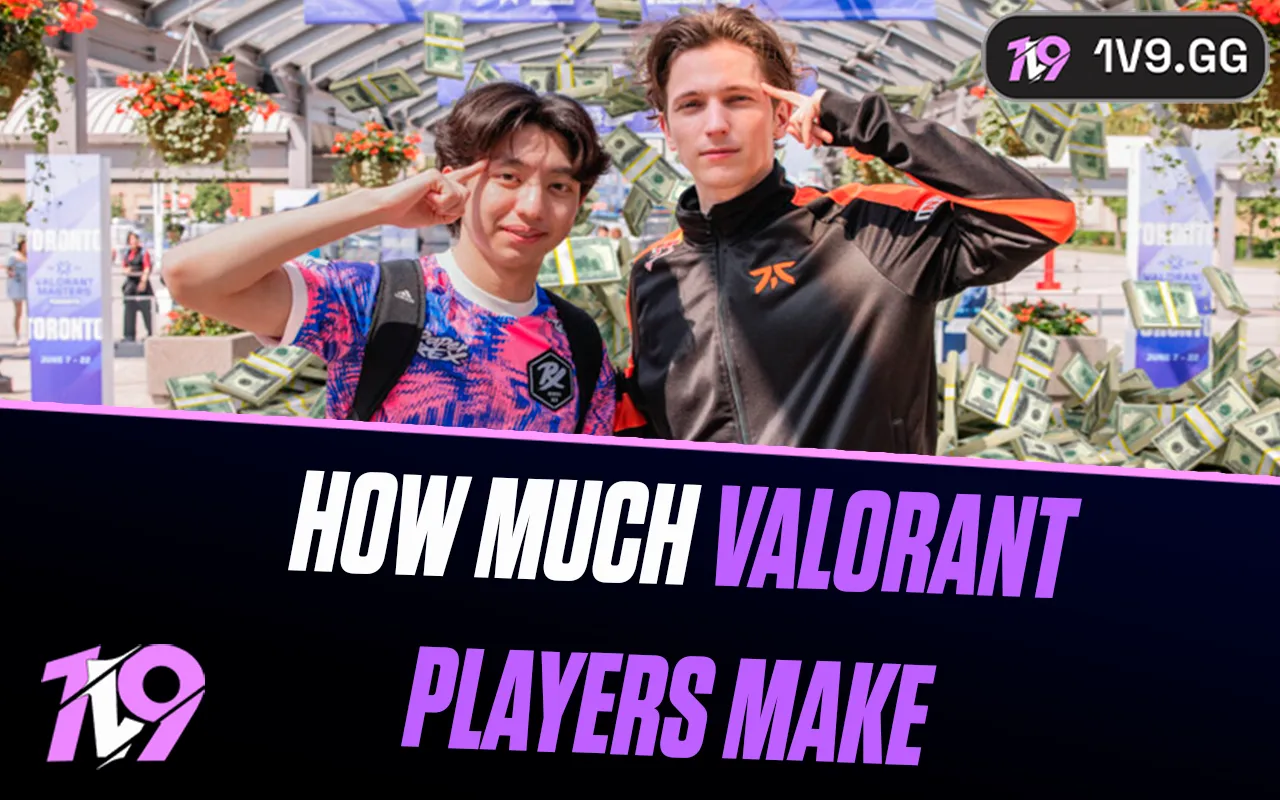


How Much Do Valorant Esports Players Make in 2026?
Professional Valorant has grown into one of the biggest esports in the world, attracting millions of viewers and creating career opportunities for players across every major region. With the continued success of the Valorant Champions Tour (VCT), professional players now have multiple ways to earn money beyond simply winning tournaments.
From guaranteed team salaries and tournament prize pools to sponsorship deals, streaming revenue, and content creation, the earning potential for top Valorant pros has never been higher. However, not every player earns the same amount. A superstar competing for a top VCT organization can make significantly more than players competing in regional or development leagues.
In this guide, we’ll break down how much Valorant esports players make in 2026, including average salaries, tournament winnings, sponsorship opportunities, streaming income, and the factors that influence a professional player’s earnings. Whether you’re curious about the highest-paid Valorant pros or considering a future in competitive gaming, here’s everything you need to know about Valorant esports salaries in 2026.
How Much Do Valorant Players Make?

Professional Valorant players can earn anywhere from a few thousand dollars per year in lower-tier competition to hundreds of thousands of dollars annually at the highest level of esports. However, like most modern esports, player income comes from much more than tournament prize money alone.
The biggest source of income for most Valorant professionals is their team salary. Players competing in the Valorant Champions Tour (VCT) often receive guaranteed contracts from their organizations, providing stable income throughout the year regardless of tournament results. Top players on major organizations can reportedly earn six-figure salaries, while players in regional and development leagues typically earn significantly less.
Tournament winnings are another important revenue stream. Events such as Masters and Champions offer substantial prize pools, allowing successful teams to earn significant bonuses on top of their salaries. However, because tournament earnings depend on performance, most professional players view prize money as supplemental income rather than their primary source of earnings.
Many of the highest-paid Valorant pros also generate revenue through content creation. Streaming on Twitch, uploading YouTube videos, and creating social media content can provide a substantial source of income, especially for players with large audiences and strong personal brands.
In addition, sponsorships and brand partnerships play a major role in player earnings. Popular professionals often secure deals with gaming hardware companies, energy drink brands, apparel manufacturers, and other sponsors looking to reach Valorant’s massive audience.
Main Sources of Valorant Esports Income
- Team salaries and player contracts
- Tournament prize money
- Twitch streaming revenue
- YouTube content creation
- Sponsorship deals
- Brand partnerships
- Merchandise sales
- Coaching and appearances
Estimated Valorant Player Earnings in 2026
Top-tier VCT players competing for elite organizations can potentially earn:
- $75,000 – $300,000+ per year in salary
- $20,000 – $500,000+ in tournament winnings
- $25,000 – $500,000+ from streaming and content creation
- $10,000 – $250,000+ from sponsorships and partnerships
Tier-two and Challenger players generally earn:
- $15,000 – $75,000 per year in salary
- Smaller tournament payouts depending on results
- Additional income through streaming, coaching, or content creation
The exact amount varies greatly depending on region, organization, popularity, and competitive success. While only a small percentage of players reach the highest earning brackets, Valorant has become one of the most financially attractive esports titles in the world thanks to its growing viewership, strong esports ecosystem, and expanding sponsorship opportunities.
For top professionals, total annual earnings can easily exceed several hundred thousand dollars when salaries, prize money, sponsorships, and content creation revenue are combined.
How Does Valorant Compare to Other Esports Games?
When comparing Valorant esports salaries and tournament earnings to other major competitive games, it’s important to look beyond prize pools alone. A professional player’s income can come from team salaries, sponsorships, streaming, content creation, merchandise sales, and tournament winnings, all of which vary significantly between esports titles.
Since the launch of the Valorant Champions Tour (VCT), Riot Games has created one of the most structured and stable esports ecosystems in the industry. While Valorant may not offer the largest tournament prize pools, many professional players benefit from reliable salaries and long-term contracts through partnered organizations.
For example, Dota 2 is famous for hosting some of the largest prize pools in esports history through The International. A single tournament can award tens of millions of dollars, creating enormous earning opportunities for elite teams. However, earnings can be less predictable because players often rely heavily on tournament success.
Meanwhile, Counter-Strike 2 offers a long-established competitive scene with frequent tournaments and strong organizational support. Top CS2 professionals can earn substantial salaries while competing throughout the year in various international events.
League of Legends follows a similar model to Valorant. Although its biggest tournaments generally offer smaller prize pools than Dota 2, the game provides players with stable salaries, sponsorship opportunities, and one of the largest global audiences in esports.
Games such as Fortnite can produce massive tournament payouts, especially during major events, but earnings are often concentrated among a small number of top performers. In contrast, Valorant’s franchised ecosystem creates more consistent opportunities for professional players throughout the season.
Why Valorant Remains Attractive for Esports Players
One reason many players choose Valorant is the balance between stability and earning potential. While some esports offer larger individual prize pools, Valorant professionals often benefit from:
- Guaranteed team salaries
- Consistent tournament schedules
- Sponsorship opportunities
- Revenue from streaming and content creation
- Growing global viewership
- Long-term support from Riot Games
As a result, Valorant has quickly become one of the most financially viable esports for aspiring professionals. While it may not always produce the largest tournament winners, it offers a stable competitive environment where talented players can build long-term careers both inside and outside of competition.
For players looking at esports as a full-time profession, Valorant sits comfortably among the top competitive games in terms of salary potential, organizational support, and overall career opportunities in 2026.
What Does the Competitive Valorant Scene Look Like?

The professional Valorant esports scene has rapidly grown into one of the largest and most structured competitive ecosystems in gaming. Organized by Riot Games, the Valorant Champions Tour (VCT) serves as the game’s primary competitive circuit, bringing together the best teams from around the world to compete for international titles, prize money, and global recognition.
Unlike many older esports, Valorant follows a relatively clear path from amateur competition to the professional stage. Players can begin in local tournaments and regional leagues before progressing through Challengers competitions and eventually reaching the VCT’s highest level.
VCT International Leagues
At the top of Valorant esports are the VCT International Leagues. These leagues feature partnered organizations competing throughout the year in their respective regions.
The major VCT regions include:
- Americas League
- EMEA League (Europe, Middle East, and Africa)
- Pacific League
- China League
These competitions feature many of the world’s strongest teams and serve as the primary qualification route for international tournaments.
Valorant Challengers
Below the VCT International Leagues sits the Valorant Challengers ecosystem. This tier serves as a development system for rising players and organizations hoping to reach the highest level of competition.
Challengers leagues exist across numerous regions and allow aspiring professionals to prove themselves against strong competition. Many current VCT stars began their careers through these developmental leagues before being signed by larger organizations.
Valorant Masters
Valorant Masters tournaments are international events that take place throughout the competitive season. The best teams from each major region qualify to compete against one another, creating some of the most exciting matchups of the year.
Masters events are often viewed as a preview of the world’s strongest teams and provide valuable championship points that help determine qualification for Valorant Champions.
Valorant Champions
The biggest event in the Valorant calendar is the Valorant Champions tournament.
Often compared to League of Legends Worlds, Valorant Champions brings together the best teams from every major region to compete for the title of world champion. Winning Champions is considered the ultimate achievement in professional Valorant and can significantly boost both player earnings and career opportunities.
Ascension Tournaments
One of the most unique aspects of Valorant esports is the Ascension system. Ascension tournaments give top Challengers teams an opportunity to earn promotion into the VCT International Leagues.
This creates a direct pathway for new organizations and emerging talent to reach the highest level of competition, helping keep the scene fresh and highly competitive.
Off-Season Events
In addition to official Riot Games tournaments, Valorant features numerous third-party events, invitationals, and off-season competitions. These tournaments allow teams to stay active between official events while giving fans more opportunities to watch professional Valorant throughout the year.
Career Path for Professional Valorant Players
Most professional Valorant players follow a progression similar to:
- Ranked play and amateur tournaments
- Semi-professional teams
- Valorant Challengers leagues
- Ascension tournaments
- VCT International Leagues
- Masters events
- Valorant Champions
This structured ecosystem is one of the reasons Valorant has become such an attractive esport. Players have a clear path toward the professional level, while organizations benefit from a stable competitive system backed by Riot Games.
As a result, Valorant continues to attract some of the world’s best FPS talent and remains one of the fastest-growing esports ecosystems in 2026.
FAQs
How much do professional Valorant players make in 2026?
Professional Valorant players can earn anywhere from $15,000 to over $300,000 per year in salary, depending on their team, region, and competitive level. Top players can earn significantly more when tournament winnings, sponsorships, and content creation income are included.
Who is the highest-paid Valorant player?
Exact contracts are rarely made public, but some of the highest-earning Valorant players are top VCT stars who combine salaries, tournament winnings, sponsorship deals, streaming revenue, and content creation income.
Do Valorant pros earn money outside of tournaments?
Yes. Most professional players earn income from multiple sources, including team salaries, Twitch streaming, YouTube content, sponsorship agreements, merchandise sales, and brand partnerships. For many players, these revenue streams are just as important as tournament winnings.
What is the biggest Valorant esports tournament?
The Valorant Champions tournament is the most prestigious event in professional Valorant. It brings together the best teams from around the world to compete for a world championship title and a share of the tournament prize pool.
Can you make a full-time career out of Valorant esports?
Yes, but reaching the professional level is highly competitive. Most players start by climbing the ranked ladder, competing in amateur tournaments, and progressing through the Challengers ecosystem before earning a place on a professional roster. Players who reach the VCT level can often make a full-time living through competitive Valorant.
Conclusion
Valorant has quickly established itself as one of the biggest esports in the world, creating significant earning opportunities for professional players. While tournament prize money remains an important part of the ecosystem, the majority of top players generate income through multiple sources, including team salaries, sponsorships, streaming, content creation, and brand partnerships.
The amount a player earns ultimately depends on their skill level, competitive achievements, popularity, and ability to build a personal brand outside of the game. Top VCT stars can earn hundreds of thousands of dollars each year, while aspiring professionals often begin their journey in Challengers leagues and regional competitions before working their way up to the international stage.
As Riot Games continues to invest in the Valorant Champions Tour and the game’s global audience keeps growing, the future of Valorant esports looks brighter than ever. For talented players willing to dedicate themselves to improving, Valorant remains one of the most promising esports titles for building a long-term competitive gaming career.
Posted On: June 5th, 2026
Recent Articles


Our 1v9 support team is available 24/7 to help you with any questions or issues you may have.
support@1v9.gg

-a6d5b3e156bb.webp)





Loading...
1v9.gg is not endorsed or affiliated by any game developers or publishers.
2026 1v9, All Rights Reserved, Created By Ritesh (riteshsahoo.com)