


Diablo 4 Best Paladin Build: Complete Guide
The Paladin makes a powerful comeback in Diablo 4: Lord of Hatred, bringing back the classic holy warrior fantasy while adding modern systems that make the class feel fresh and fast. Inspired by the Paladin from Diablo 2 and the Crusader from Diablo 3, this version blends heavy defense, righteous damage, and strong utility into one of the most satisfying melee playstyles in the game. Whether you enjoy standing your ground with a shield, smiting enemies with holy magic, or controlling fights through judgment-based effects, the Paladin delivers a flexible and rewarding experience from early levels all the way into endgame. In this guide, we break down the best Paladin build in Diablo 4, covering both leveling and endgame setups with a focus on the Judicator skill path and the Judgement mechanic, so you know exactly how to build, scale, and optimize your Paladin for all content.
How To Get Paladin in Diablo 4

To play the Paladin in Diablo 4, you’ll need access to the Lord of Hatred expansion. The class isn’t part of the base game and only becomes available once the expansion is owned. After purchasing it, the Paladin shows up alongside Spiritborn in the character creation screen, letting you start a new run as the holy knight right away. There are no extra unlock steps or challenges required — as soon as the expansion is active on your account, you’re free to create a Paladin and jump straight into Sanctuary.
Best Paladin Leveling Build in Diablo 4
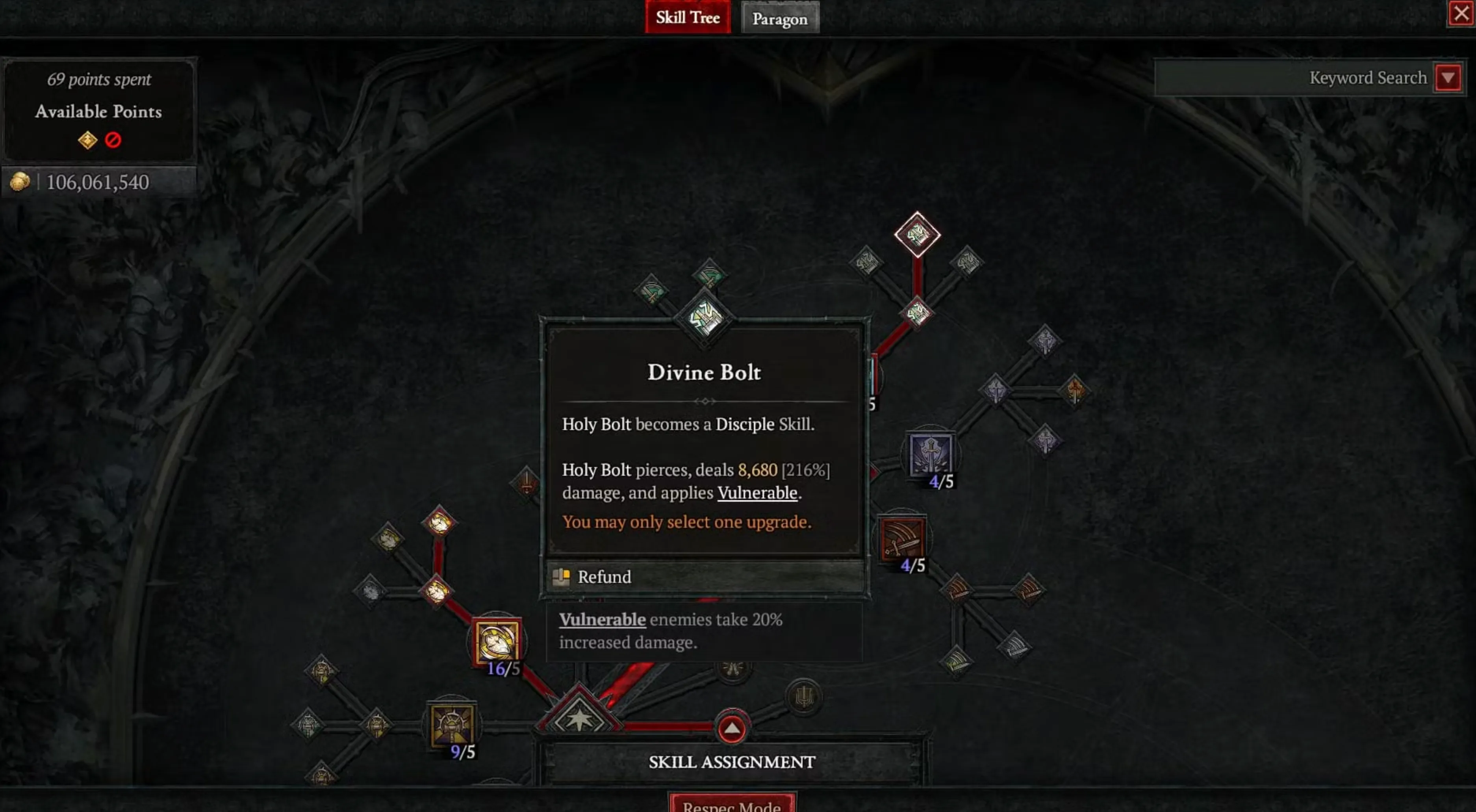
This Paladin leveling setup is built for smooth, low-effort clearing rather than rushing levels as fast as possible. It’s a simple, one-button playstyle that starts a bit slow but becomes extremely satisfying once the core pieces come together. When it clicks, you’ll be deleting entire packs with a single basic attack, very similar to how Bone Spear Necromancer feels when it’s online. If you like relaxed leveling with big screen-wide explosions, this build fits perfectly.
The Paladin in Diablo 4 arrives with the Lord of Hatred expansion and blends classic Diablo 2 Paladin identity with touches from Diablo 3’s Crusader, while still feeling fresh. This leveling build leans into the Judicator theme and prepares you for a much stronger endgame version later on.
The backbone of this build is Holy Bolt, which carries your damage through the early and mid game. It works so well for two main reasons: it can apply Vulnerable through its upgrade path, and it mirrors the core gameplay loop of the late-game Judicator setup, so nothing you learn here goes to waste later. Your goal early on is to turn Holy Bolt into a piercing, screen-clearing tool that chains explosions across packs.
To get this build functioning properly, you’ll want Holy Bolt maxed out with the Divine Bolt upgrade, along with the Judicator Oath once you hit level 15. Divine Bolt allows Holy Bolt to pass through enemies while applying Vulnerable, and when paired with the Judicator Oath, every hit also applies Judgement. Enemies marked with Judgement explode after a short delay, which is where most of your damage actually comes from.
The build truly comes alive once you add a few key Legendary Aspects. Aspect of the Moonrise, Aspect of Adaptability, and Aspect of the Golden Hour are the most important, and ideally you’ll want them slotted into your jewelry. On top of that, using Topaz gems in your weapons gives you a noticeable boost to early damage. Without these pieces, Holy Bolt will feel fine but not amazing; with them, it becomes absurdly strong.
If you’re unlucky with Legendary drops early on, you can easily patch the damage gap with a secondary skill. Blessed Shield with the Shield of Justice upgrade works well if you’re using a shield, while Spear of the Heavens with Fist of the Heavens is a great option if you prefer a two-handed weapon. Both options provide solid burst and area damage and transition cleanly into the final version of the build later.
Outside of your main damage skills, you have a lot of freedom. Pick defensive or utility abilities that feel good to you, but make sure your gear is tempered toward damage. Prioritize stats like Basic Skill Damage, Holy Damage, and generic Damage bonuses wherever possible. Once properly geared, this Paladin leveling build comfortably one-shots normal enemies and burns down bosses even on higher difficulties, all while keeping the gameplay simple and stress-free.
Best Judgement Paladin Build in Diablo 4 (Endgame)
Once you push past level 50 and start unlocking more Legendary Aspects, it’s time to shift this Paladin into a true endgame setup built for Torment difficulty. This version evolves directly from the leveling build, keeping the same core idea but adding more layers of damage, survivability, and utility. The playstyle stays familiar, but the power spike is massive once everything comes together.
At its core, this is a Judgement explosion build. You mark enemies, detonate them, and let chain reactions wipe entire packs in seconds. The difference at endgame is how fast and consistently those explosions happen, even against elite enemies and bosses.
Active Skills Breakdown
Divine Bolt (1/5)
Divine Bolt shifts into a setup tool rather than a damage skill. Its main job is to apply Judgement, Vulnerable, and Weakness so the rest of your kit can do the heavy lifting. One cast is usually enough to start a full chain reaction.
Blessed Shield – Shield of Justice (5/5)
This becomes your primary damage button. Blessed Shield hits extremely hard in both single-target and AoE situations, especially once boosted by passives and Legendary Aspects. It’s the skill that usually triggers massive Judgement detonations.
Fanaticism Aura – Rite of Vengeance (2/5)
This aura feeds directly into your damage scaling by increasing crit chance and crit damage whenever you land crits or spend Faith. It stays active naturally as you play, making it perfect for long fights.
Defiance Aura – Rite of Prayer (2/5)
A key survival tool. It provides passive healing, bonus armor, resistances, and Resolve generation. It also doubles as a way to break out of crowd control, which is crucial in Torment content.
Consecration – Hallowed Ground (5/5)
This skill creates a massive zone that does everything you want in endgame: healing, damage buffs, reduced resource costs, and enemy weakening. You’ll drop this during big fights and let it carry both offense and defense.
Heaven’s Fury – Triplicate
One of your strongest late-game tools. Heaven’s Fury melts elites and bosses while rapidly applying Judgement marks, making it perfect for high-health targets and crowded encounters.
The overall combat loop stays very clean: apply Judgement with Divine Bolt, throw Blessed Shield, and let the explosions do the work. Use your auras and Consecration when pressure ramps up, and save Heaven’s Fury for tougher fights.
Passive Skills
This build leans heavily on passives to scale both damage and toughness. Key passives include En Garde, Discipline, The Best Offense, Fortitude, Crack in the Armor, High Charity, Iron Sharpens Iron, Break the Line, Press the Advantage, Heavyweight, Shining Armor, and Giant Slayer. Together, these massively boost crit stats, armor, survivability, and raw damage output.
Judgement Day is the most important passive in the entire build. It acts as the capstone and completely changes how the build feels. Every time a Judgement mark detonates, your damage spikes and Judgement spreads to nearby enemies. Once this is unlocked, a single Divine Bolt can trigger a full-screen chain reaction, making mob clearing almost effortless.
Why This Build Works
This Judgement Paladin setup shines because it scales incredibly well into endgame without becoming mechanically demanding. It handles large packs, elites, and bosses with the same core rotation, making it reliable and efficient for Torment difficulty. Strong defenses, constant healing, and explosive damage all come together into one of the most satisfying Paladin playstyles available in Diablo 4.
If you enjoyed the leveling version of this build, this endgame Judgement Paladin feels like the same idea taken to its absolute limit.
Paladin Oath Choice (Judicator Oath)
Once your Paladin hits level 15, you unlock the Oath system and can choose one of five different Paladin Oaths. For this build, the Judicator Oath is the clear best option, and it’s the reason the entire setup works so well in both leveling and endgame.
The Judicator Oath does three extremely important things. First, it makes all of your Basic Skills apply Judgement, meaning every simple attack starts setting up explosions. Second, Judgement marks can be detonated by Core Judicator skills, turning setup hits into massive damage moments. And finally, any enemy that gets Judged takes increased damage from you until it dies, which stacks perfectly with AoE-heavy playstyles.
This combination is what allows the build to completely snowball fights. Once Judgement starts spreading, enemies don’t just die individually — they trigger chain reactions. With the Judicator Oath active, even a single Divine Bolt can tag multiple enemies, detonate Judgement, and wipe out entire packs almost instantly. It turns basic attacks into screen-clearing tools and makes the Paladin feel absurdly powerful once everything clicks together.
Gear and Legendary Aspect Setup
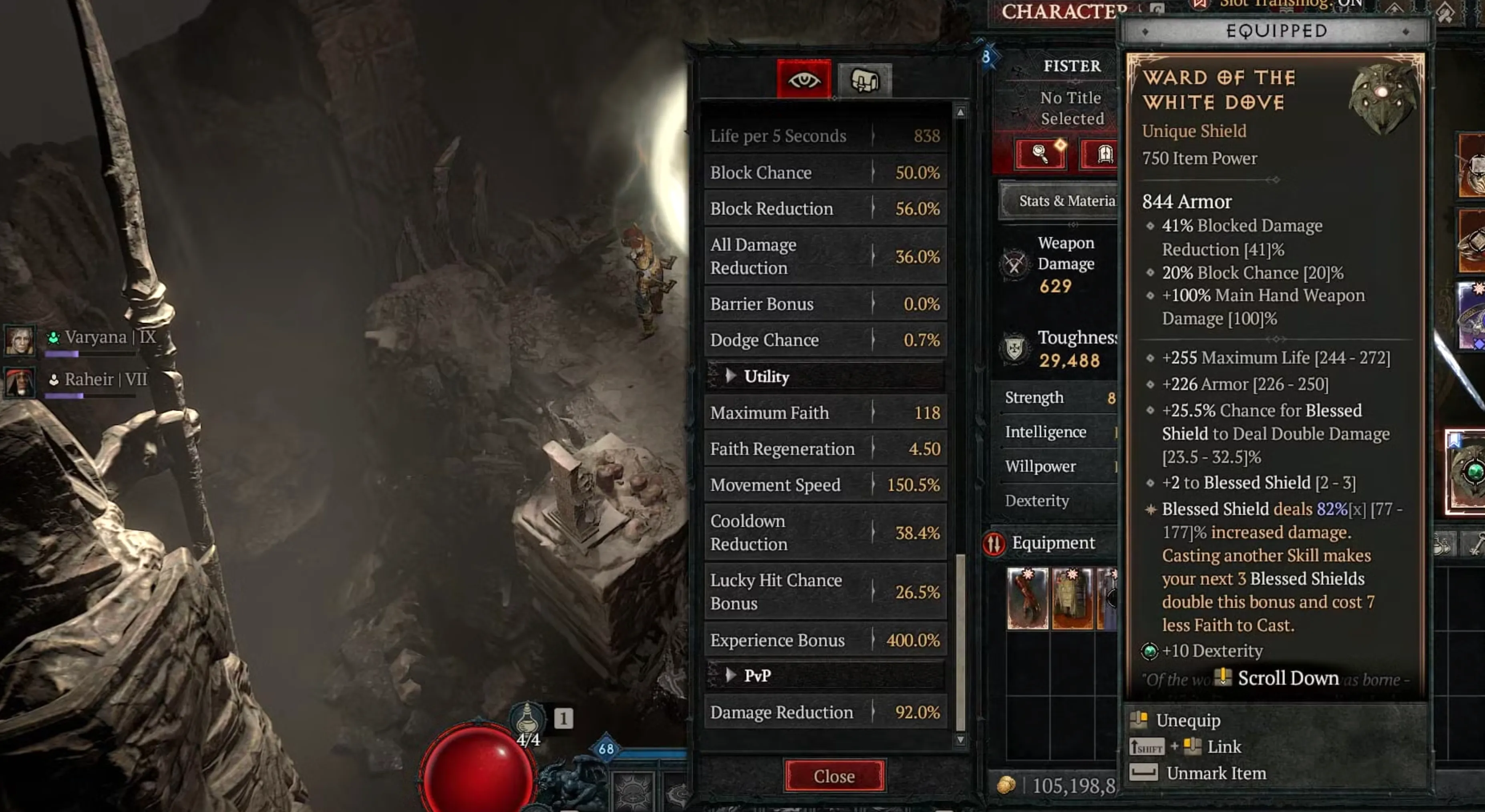
This build really comes together once your gear and Aspects start working in sync. The goal here is simple: boost Judgement damage, make explosions bigger, and stay tanky enough to stand your ground while everything around you detonates. Below is a clean breakdown of what to run in each slot and why it matters, written in a way that’s easy to follow and flexible if you’re missing a piece or two.
Helmet
Run Aspect of Firm Decree, which gives you bonus Armor every time you Judge an enemy. Since Judgement is constantly being applied, this turns into near-permanent extra tankiness. Prioritize maximum life, cooldown reduction, armor, and resistances so you’re harder to kill while cycling skills faster.
Chest Armor
Use Aspect of the Prudent Heart for extra survivability when things get messy. This slot should be stacked with maximum life, strength, armor, and resistances. If you can roll Consecration duration here, even better, as it keeps your strongest zone active longer.
Gloves
Squire’s Aspect is mandatory. Casting Basic Skills increasing Core Skill crit chance fits perfectly with the Judgement setup. Look for strength, critical strike damage, life on hit or kill, bonus ranks to Core skills, and extra damage to Judged enemies. This slot does a lot of heavy lifting for damage.
Pants
Equip Aspect of the Disciple, which causes Disciple skills to apply Weaken. Since Divine Bolt is always in rotation, this adds free damage reduction across the board. Aim for maximum life, strength, armor, resistances, and Consecration duration to stay durable in longer fights.
Boots
Wind Striker Aspect keeps the build from feeling sluggish. Movement speed is key, especially in higher difficulties. Prioritize movement speed, armor, faith regeneration, and resistances so you stay mobile without sacrificing defense.
Amulet
This is where Aspect of Watkin’s Law belongs. Judicator skills dealing more damage to Judged enemies directly scales your entire build. Stack maximum life, strength, crit chance, crit damage, and holy damage here. Amulets give stronger Aspect bonuses, so this placement matters.
Rings
One ring should always run Aspect of the Golden Hour, which allows Judgement explosions to chain into other Judgement marks. This is what creates screen-wide detonations. The second ring can be a resource-focused Aspect to smooth Faith management. On both rings, look for strength, raw damage, crit chance, crit damage, and resource restoration on Lucky Hit.
Weapon (1H Sword)
Use Aspect of the Judicator, which increases the size and damage of Judgement explosions. This is core to your AoE clear. Prioritize strength, damage, vulnerable damage, crit damage, and Core skill damage to maximize scaling.
Shield
Run Ward of the White Dove. This massively buffs Blessed Shield, letting it deal more damage, cost less Faith, and hit harder after casting other skills. Look for maximum life, armor, a chance for Blessed Shield to deal double damage, and bonus ranks to Blessed Shield.
When everything is set up correctly, this gear layout turns Judgement into a chain-reaction engine. You stay tanky, your crits skyrocket, and enemies rarely survive long enough to fight back. The best part is that while the setup looks strict, you can slowly build into it piece by piece without the build falling apart.
Paragon Boards and Glyph Choices
Once you start pushing deeper into endgame content, the Paragon Board setup is what truly takes this Paladin build over the top. The focus here is stacking as many multiplicative damage bonuses as possible while scaling naturally with stats you’re already building, like Armor, Fortify, and Block Chance. The Paladin has no shortage of strong Legendary Nodes, so the goal is picking the ones that give consistent value in every fight.
Start with the Sentencing board. This is your highest priority because it directly rewards your core mechanic. Any enemy you Judge takes massively increased damage from you until they die, which perfectly fits a build that constantly spreads Judgement across entire packs. This single node alone turns bosses and elites into much faster kills.
From there, you can branch out based on what stats your gear leans into. Castle is an excellent second choice, as it converts your Armor into bonus damage. Since you’re already stacking Armor for survivability, this node gives you free offense with no downside. Endure is another strong pickup if you’re reliably Fortified, boosting your damage while keeping you safe in tougher fights.
If you’re running with a mercenary or any ally-based setup, Beacon becomes extremely valuable. Staying inside your Aura radius gives you a massive damage bonus, making it ideal for coordinated or companion-focused playstyles. Finally, Shield Bearer is perfect if you’re leaning into a shield-heavy setup, scaling damage directly off your Block Chance and turning defense into raw power.
For Glyphs, prioritize ones that directly enhance Judgement and elite damage. Law is a must-have, as it increases Judgement damage and makes Judged enemies take even more damage from you. Challenger helps shred elites faster, which is crucial in higher-tier content. Judicator is another great option, boosting Judicator skill damage along with non-physical and holy damage against elites. Lastly, Honed adds strong synergy by generating Faith on crits while increasing your Critical Strike Damage, keeping your rotation smooth and your damage consistent.
Overall, this Paragon setup keeps things simple but extremely effective. You Judge enemies, scale damage off defensive stats, and let chain reactions do the rest. It’s flexible enough to adapt to different gear rolls while still hitting incredibly hard where it matters most.
Season 11 Mechanics – Essences Explained
Diablo 4 Season 11 introduces a new progression system built around Essences, which you earn and upgrade by defeating Lesser Evils. These Essences act as always-on passive bonuses, meaning their effects stay active no matter what activity you’re doing, from leveling to endgame content. Some Essences are Purified, offering clean defensive or utility buffs, while others are Corrupted, adding powerful effects with extra dangers attached. Completing content tied to Corrupted Essences also grants bonus rewards, making them a high-risk, high-value option.
Purified Essences focus heavily on survivability and consistency. Essence of Pain grants a temporary Maximum Barrier when you become Injured, giving you a clutch safety net in dangerous fights. Essence of Sin boosts your Armor by 20%, which directly benefits any build scaling damage or toughness from Armor. Essence of Lies steadily Fortifies you for a percentage of your maximum Life every second, while Essence of Screams increases all Resistances by 20%, helping smooth out elemental damage spikes.
Corrupted Essences, on the other hand, introduce chaos. Essence of Squalor causes maggots to spawn from falling meteors, with their attacks draining your health potions. Essence of Hellfire triggers meteors to rain down on you during World Boss encounters, forcing constant movement. Essence of Shadows summons Belial’s apparitions that can daze or knock you around, and Essence of Anguish spawns hostile manifestations in the Undercity that create slowing chains across the battlefield.
For Paladin builds in particular, this system is extremely powerful. Many Essence bonuses scale directly with Armor, Life, Fortify, and Resistances, all of which naturally feed into Paladin survivability and damage output. When combined correctly, Season 11 Essences don’t just make your Paladin tankier—they actively increase your overall DPS while keeping you alive in the most punishing content.
Conclusion
The Paladin is shaping up to be one of the most satisfying and flexible classes in Diablo 4, especially with the Lord of Hatred expansion bringing it back in a fresh but familiar way. Whether you’re leveling with a simple, comfortable setup or pushing into endgame with a full Judgement-focused build, the Paladin rewards smart planning, good positioning, and solid gear choices. By understanding how the skill tree, Oaths, Legendary Aspects, Paragon Boards, and Season 11 Essences all work together, you can turn the Paladin into a screen-clearing powerhouse that’s also incredibly hard to kill. With the right setup, this class excels in both solo play and tougher endgame content, making it a top-tier choice for players who enjoy a strong, holy-themed melee playstyle that scales well all the way to Torment difficulty.
Posted On: December 17th, 2025
Recent Articles


Our 1v9 support team is available 24/7 to help you with any questions or issues you may have.
support@1v9.gg


-a6d5b3e156bb.webp)





Loading...
1v9.gg is not endorsed or affiliated by any game developers or publishers.
2026 1v9, All Rights Reserved, Created By Ritesh (riteshsahoo.com)