- Home
Games
 League of Legends
 Valorant
-a6d5b3e156bb.webp) Fortnite
Fortnite Call of Duty
 Clash of Clans
 Counter-Strike 2
 Roblox
 Rainbow Six Siege
 Clash Royale
 Minecraft
 Rocket League
 Dota 2
 Genshin Impact
 Squad Busters
 Rust
Rust Apex Legends
 Pokemon Go
 XDefiant
 LoL: Wild Rift
 Hay Day
 Diablo 4
 FC 25
FC 25 Marvel Rivals
 World of Warcraft
 Destiny 2
 Deadlock
-9ede9dc6b01b.webp) PUBG Mobile
PUBG Mobile The Finals
 Growtopia
 Forza Horizon 5
 Honkai: Star Rail
 Warframe
 8 Ball Pool
 Zenless Zone Zero
 Path of Exile
 Runescape 3
 Raid: Shadow Legends
 Lost Ark
 WoW: Classic Era
 Summoners War
 WoW: Season of Discovery
 WoW Cataclysm
 WoW: Hardcore
 Throne and Liberty
 New World
 Mobile Legends
 Escape From Tarkov
 Path of Exile 2
 Blade Ball
 Fisch
Fisch Pet Simulator 99
 Pets Go
-d8bcef7708c7.webp) One Piece Bounty
One Piece Bounty Anime Adventures
 Blox Fruits
 Adopt Me
 Murder Mystery 2
 Fragpunk
 Wuthering Waves
 Teamfight Tactics
 Free Fire
 Albion Online
 Black Desert Online
 Honor of Kings
 Brawl Stars
 Arena of Valor
 Call of Duty: Mobile
 Rematch
 Steal a Brainrot
 Grow a Garden
 FC 26
FC 26 Old School Runescape
 Plants vs Brainrots
 Overwatch
 Battlefield
 Arc Raiders
 Dragon Ball Legends
 Fallout 76
 Jailbreak
 Type Soul
 GPO
GPO DonutSMP
 Escape Tsunami For Brainrots
 Watcher of Realms
 Roblox Rivals
 2XKO
2XKO Sailor Piece
 Forza Horizon 6
 GTA 5
GTA 5- Lootboxes
- Become Affiliate
- Blog
- Contact Us
- Sign In

How Long is a League of Legends Game?
League of Legends has been a staple of competitive gaming for years, drawing players into intense matches where strategy, teamwork, and decision-making matter just as much as mechanics. No two games ever feel the same, and match length can swing wildly depending on the mode you play, how aggressive both teams are, and whether the game snowballs early or drags into late-game chaos. In this guide, we’ll break down how long a League of Legends game usually lasts across all major game modes, explain why some matches end fast while others stretch on, and help you understand the real time commitment before you queue up.
Average League of Legends Game Duration by Mode
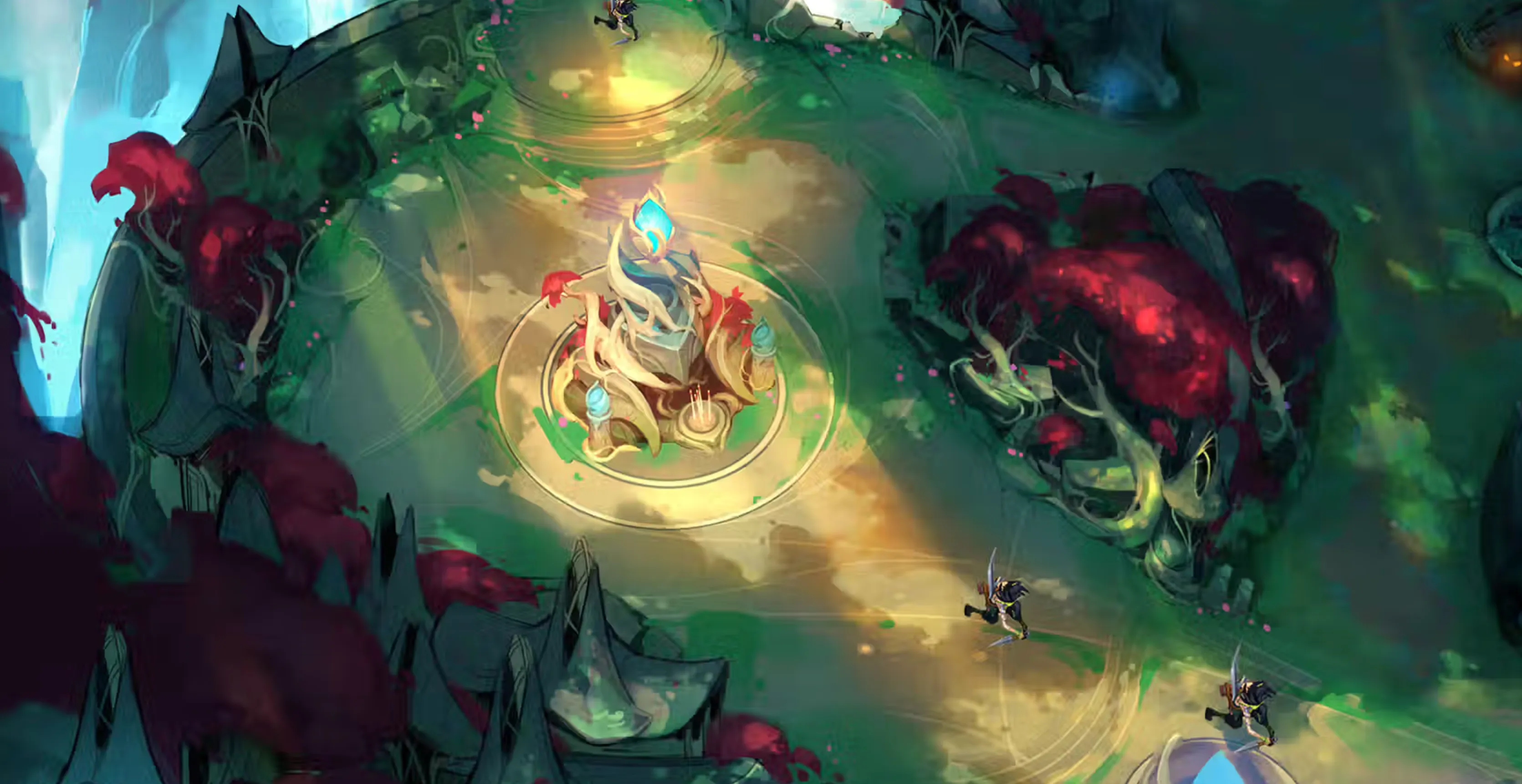
Game length in League of Legends varies a lot depending on the mode you queue for. Some modes are designed for longer, more strategic matches, while others focus on fast-paced action that ends quickly. Below is a clear breakdown of how long each major game mode usually lasts and what affects match duration.
Summoner’s Rift (Normal & Ranked)
Summoner’s Rift is the longest and most time-intensive mode in League of Legends. Most normal and ranked games last between 25 and 35 minutes, with the average sitting close to 30 minutes. This mode gives teams time to farm, scale champions, contest objectives, and set up late-game fights. Ranked matches in lower tiers like Iron, Bronze, and Silver often go past 35 minutes because games aren’t closed out efficiently. In higher ranks such as Platinum and above, matches are usually shorter, averaging 26 to 30 minutes, since players know how to snowball leads and end games faster.
ARAM Match Length
ARAM is the quickest standard mode in League of Legends. Most games finish within 15 to 20 minutes due to constant teamfighting, one lane, and limited resource management. Some ARAM matches can end in under 12 minutes if one team has a strong poke or snowball composition. Longer ARAM games, sometimes reaching 25 minutes, happen when both teams have heavy wave clear and strong defensive tools that stall pushes.
Arena and URF Match Time
Arena matches usually last 15 to 25 minutes in total. Each round is short, but teams must survive multiple rounds to win, which adds up over time. URF games also tend to finish quickly, most commonly within 15 to 20 minutes, thanks to reduced cooldowns and nonstop fighting. In rare cases, URF games can stretch closer to 25 minutes if both teams can defend well and keep trading kills.
Teamfight Tactics (TFT)
TFT matches typically run between 25 and 35 minutes. Faster games happen when players lose health early and get eliminated quickly. Competitive TFT lobbies often last longer, especially when several players reach the late game with strong boards. In rare situations, TFT games can go past 40 minutes when the final players are evenly matched and continuously trade rounds.
Overall, League of Legends offers modes for every schedule. Whether you want a quick ARAM, a chaotic URF game, or a full-length ranked match on Summoner’s Rift, knowing the average game length helps you plan your time before queueing up.
When Can You Surrender in League of Legends
In League of Legends, surrendering follows a clear timeline designed to save time in games that are no longer realistic to win. At 15 minutes, teams can start an early surrender vote, but it requires all four teammates to vote yes for it to pass. This option exists mainly for games that spiral out of control early, like heavy snowballs, multiple lost lanes, or situations where the enemy team has complete map control and the match is clearly one-sided.
Once the game reaches 20 minutes, surrender rules become more forgiving. From this point on, only four out of five players need to agree, which is why most surrenders happen between 20 and 25 minutes. By then, gold differences, objective control, and scaling usually make it obvious whether a comeback is realistic or not.
League also has a remake system for games that start unfairly. If a player disconnects or never connects at the start of the match, a remake vote becomes available at 3 minutes. As long as no first blood has occurred and the player is still AFK, the game can be ended with no LP loss for the active players. These matches typically end around the 3–4 minute mark, making remakes the fastest way out of a doomed game.
Choosing not to surrender in matches that are already lost often stretches games by an extra 10 to 15 minutes, which can drain mental energy and tilt teammates. While comebacks do happen, forcing every losing game to continue usually costs far more time than it’s worth across a long ranked grind.
Shortest and Longest LoL Matches Ever
League of Legends games can swing wildly in length, and history has produced some extreme examples on both ends. The longest professional match ever recorded went just over 94 minutes, played between Jin Air Green Wings and SK Telecom T1 in 2018. That game turned into a marathon because both teams had exceptional wave clear and played ultra-safe, avoiding risky fights that could instantly lose the game. Instead of constant skirmishes, the match dragged on with slow pushes, resets, and cautious decision-making, testing not only the players’ endurance but also the viewers’ patience.
Outside of pro play, non-professional matches have occasionally stretched beyond two hours, though these cases are extremely rare. When this happens, it’s usually due to intentional stalling, custom games, or very unusual scenarios where neither team can realistically end the game because of strong defensive champions on both sides. These matches aren’t representative of normal gameplay and shouldn’t be expected in standard ranked or casual queues.
On the opposite end of the spectrum, the shortest League of Legends games happen through the remake system. If a player never connects or disconnects early, a remake vote becomes available at 3 minutes, ending the match around the 3–4 minute mark with no LP loss for active players. Excluding remakes, the fastest real games end at 15 minutes, which is the earliest point a team can surrender without needing a unanimous vote. These ultra-short stomps usually involve massive early leads, multiple objectives taken quickly, and scorelines so lopsided that the losing team chooses to exit the game immediately rather than drag it out.
What Makes League of Legends Matches Longer or Shorter?
The length of a League of Legends match isn’t random. Several key factors decide whether a game wraps up quickly or stretches well past the 40-minute mark, and most of them come down to champion choices, player decision-making, and how well teams use their leads. Team composition is one of the biggest influences on match time. Lineups built to dominate early usually aim to close games fast, often ending between 20 and 28 minutes. Champions like Pantheon, Renekton, or Lee Sin are strongest early and rely on snowballing leads into towers, dragons, and Baron before scaling champions catch up. On the other hand, late-game focused comps are designed to stall. Picks like Kayle, Veigar, Vayne, Cho’Gath, Smolder, or similar scaling champions naturally push games beyond 35 minutes because they need time, items, and levels to take over fights. Siege and wave-clear heavy teams can also drag matches out, even when they’re behind. Champions such as Ziggs or Anivia make it extremely hard to break bases, forcing long stalemates where neither side can end cleanly.
Player skill level also plays a huge role in how long games last. In Bronze and Silver, matches frequently go far longer than they should because players struggle to close games, miss Baron timings, or fail to group for final pushes, turning clear wins into 40-minute grinds. Gold and Platinum games are more structured, but hesitation and inconsistent macro still keep average match times around 30 to 33 minutes. Diamond and higher lobbies are noticeably faster, often ending around 27 to 29 minutes, since mistakes are punished immediately and objective control is far more decisive. Early advantages matter too. Teams that secure early kills and convert them into vision, jungle control, and objectives usually finish games several minutes faster than average. Even a small lead around the 10-minute mark can snowball hard when used correctly. At the same time, comeback mechanics like Baron Nashor can completely flip a game, turning what should have been a quick stomp into a long, tense battle that pushes past the 40-minute mark.
FAQs
What is the average length of a League of Legends game?
Most League of Legends matches last between 25 and 35 minutes. The exact time depends on the game mode, player skill level, and how well teams convert early advantages into objectives.
Why do low-rank League games last longer?
Games in Iron, Bronze, and Silver often drag on because teams struggle to end matches efficiently. Missed Baron calls, poor grouping, and hesitation around objectives can turn winning positions into long games.
Which champions usually cause longer matches?
Late-game scaling champions like Kayle, Veigar, Vayne, Cho’Gath, and Smolder tend to extend games since they need time to reach full strength. Strong wave-clear champions can also stall games for a long time.
Can League of Legends games end very quickly?
Yes. Games can end in around 3–4 minutes through a remake if a player disconnects early. Outside of remakes, the fastest real games usually end at the 15-minute surrender mark after a heavy stomp.
Does surrendering affect game length a lot?
Absolutely. Most matches that feel “too long” could end much earlier if teams surrender once a game is clearly unwinnable. Refusing to surrender often adds 10–15 extra minutes to a lost match.
Conclusion
League of Legends game length can vary a lot depending on the mode you play, the champions on the Rift, and how well each team understands when to push an advantage or call it quits. From fast ARAM and URF matches that end in under 20 minutes to Summoner’s Rift and TFT games that regularly sit around the 30-minute mark, every mode offers a different time commitment. Player skill, team composition, and decision-making all play a huge role in whether a match ends quickly or drags on. Understanding these factors helps you plan your sessions better, manage expectations, and avoid frustration when games run longer than expected.
Posted On: February 6th, 2026
Recent Articles


Our 1v9 support team is available 24/7 to help you with any questions or issues you may have.
support@1v9.gg
Loading...
1v9.gg is not endorsed or affiliated by any game developers or publishers.
2026 1v9, All Rights Reserved, Created By Ritesh (riteshsahoo.com)